
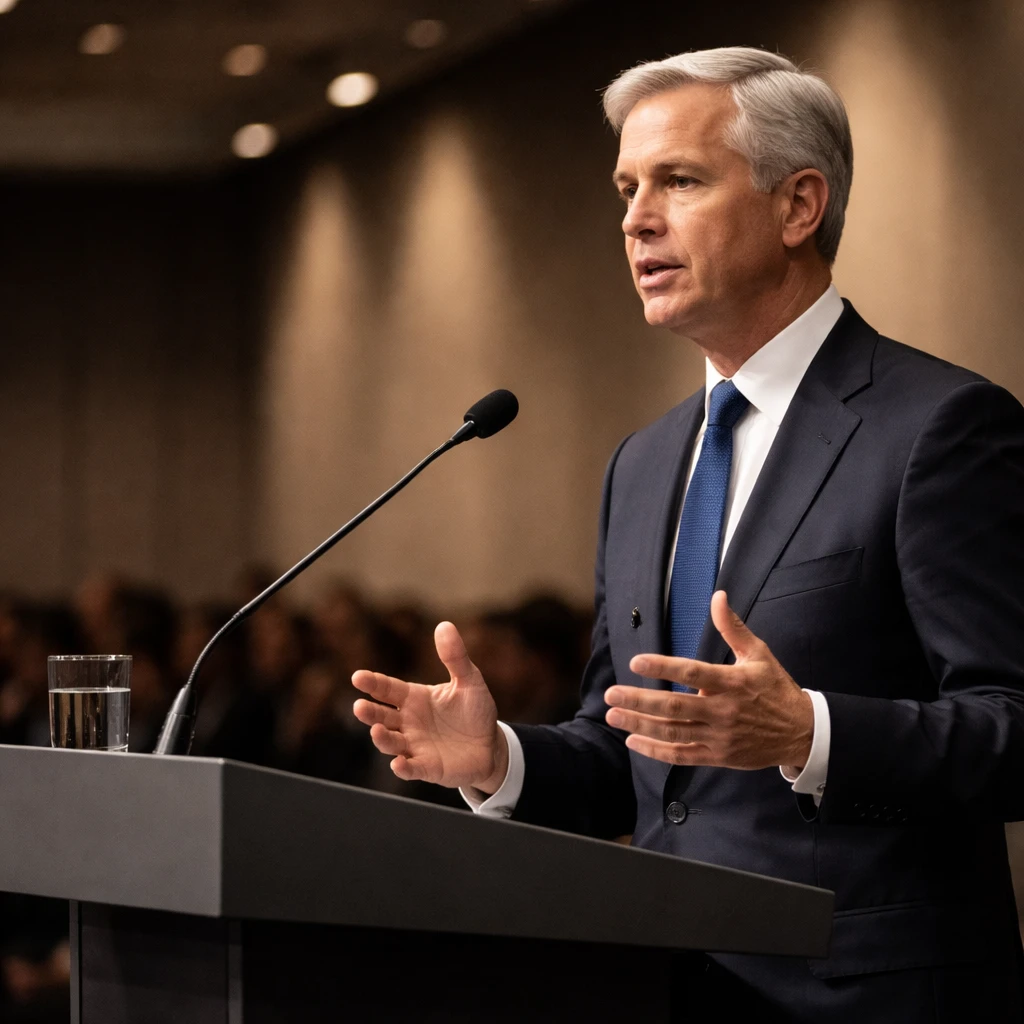
Wells Fargo Chief Executive Charlie Scharf said on Monday that reducing interest rates before there is clarity about an end to the Iran conflict would be "the wrong thing to do." He framed the decision as contingent on a clearer view of how the situation evolves, warning of the risks that remain while the conflict's trajectory is uncertain.
"Until it’s clear what the end is in sight, there’s real risk out there," Scharf said, adding that there is a clear consensus supporting this view.
Scharf also commented on the condition of U.S. households, noting that American consumers continue to step up spending even as they face higher gasoline expenses. He presented this as a key dynamic in assessing economic resilience and the timing of any prospective monetary easing.
On the topic of monetary policy institutions, Scharf emphasized the institutional independence of the Federal Reserve, describing that independence as "critically important." He framed the Fed's autonomy as a central consideration when evaluating policy moves.
Turning to private credit markets, Scharf dismissed the notion that the sector posed a systemic threat to the broader financial system. He stated that he does not believe private credit will "crumble" and argued that its risks are not comparable to those seen during the financial crisis.
The remarks touched on three distinct areas: the relationship between geopolitical uncertainty and the timing of rate cuts, the persistence of consumer spending in the face of higher fuel costs, and the health of private credit as distinct from systemic banking vulnerabilities. Scharf conveyed a cautious stance on immediate rate reductions while defending the solidity of private credit markets and underlining the role of the Federal Reserve as an independent policymaker.
Note: The article reports direct comments by Charlie Scharf on rate policy, consumer spending, Federal Reserve independence, and private credit markets as described above.