
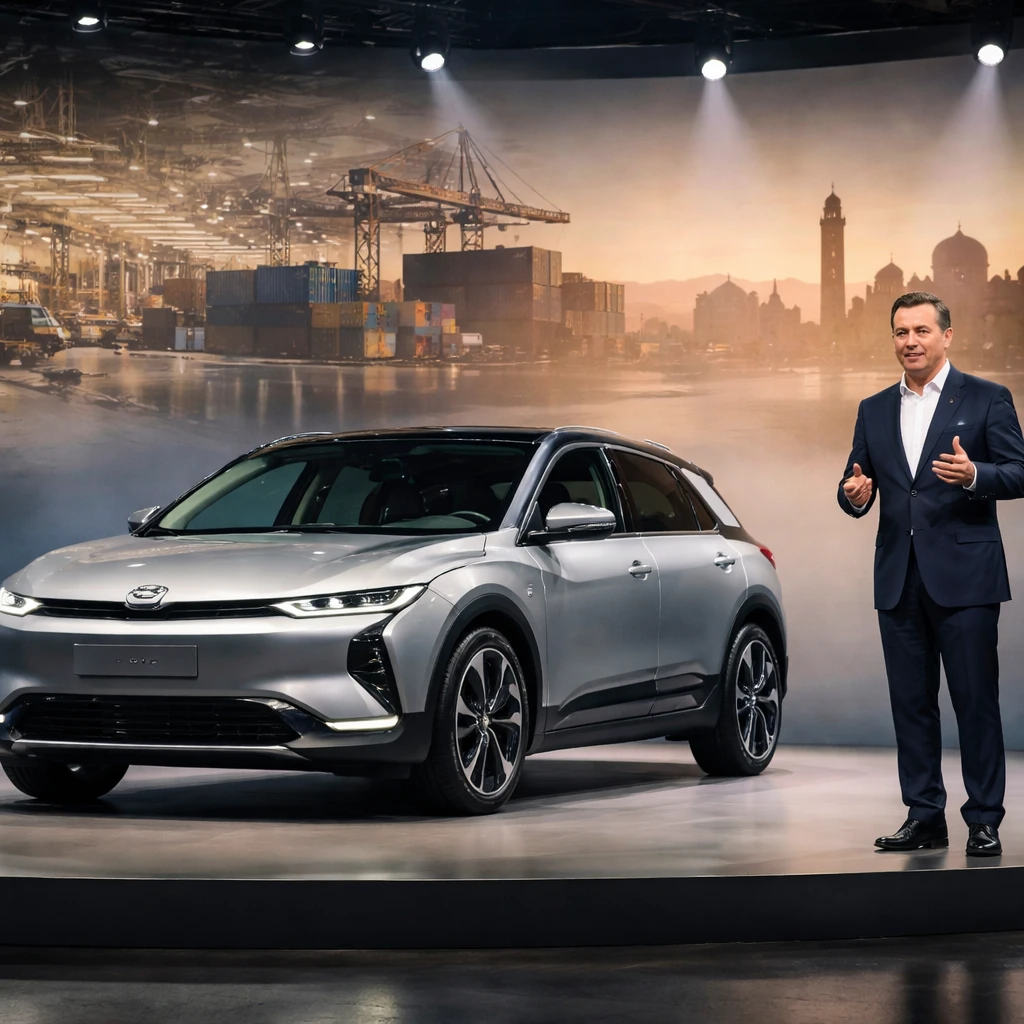
MILAN, April 20 - Hyundai’s leadership said the automaker will struggle to fully replace the volumes lost in the Middle East as a result of the regional crisis, pointing to manufacturing and logistics constraints that prevent a rapid reallocation of cars to other markets.
The company’s Spanish chief executive, Jose Munoz, made the comments while presenting Hyundai’s new Ioniq 3 electric vehicle at Milan Design Week. He described the Middle East as Hyundai’s highest-margin market, while noting it did not deliver "mass" profits.
Munoz emphasized that models built for one region often cannot be simply sent to another. "You cannot just simply derive cars that are meant to go from one market to another," he said, explaining that differing equipment specifications and regulatory requirements across regions make straightforward swaps impractical.
To blunt some of the impact, Hyundai is attempting to redirect cars originally destined for the Middle East into other markets. But the chief executive warned that manufacturing capacity limits how much can be done in the near term. "I can tell you that there are many volunteers now that try to get those cars," he said. "One of the regions that can accommodate is the North America region. But there are more as well."
The automaker had been steadily building its presence in the Middle East prior to the crisis, with plans to expand sales across Gulf states and parts of North Africa. Munoz said logistics disruptions have compounded the decline in demand, making any recovery contingent on the duration of the conflict.
"It needs some time to do that. It’s not as immediate as reroute the ships from one place to another," Munoz said, signaling that supply-chain recovery will not be instantaneous.
At the same time, Hyundai is pursuing longer-term moves to boost resilience, including expanded manufacturing and supply-chain investments in Europe and the United States intended to underpin growth through more localized production rather than reacting to short-term shocks.
Hyundai’s regional strategy for the Middle East also includes a planned manufacturing plant in Saudi Arabia, originally slated to open by the fourth quarter of this year. Munoz said the opening remains a target but added that the timeline is now dependent on developments in the region. "Hopefully we will still be able to open," he said.
As the world’s third-largest automaker, Hyundai is juggling immediate operational limitations with strategic investment plans, while the pace of recovery in Middle East sales will be shaped by how long the current crisis persists and how quickly logistics and regulatory mismatches can be addressed.