
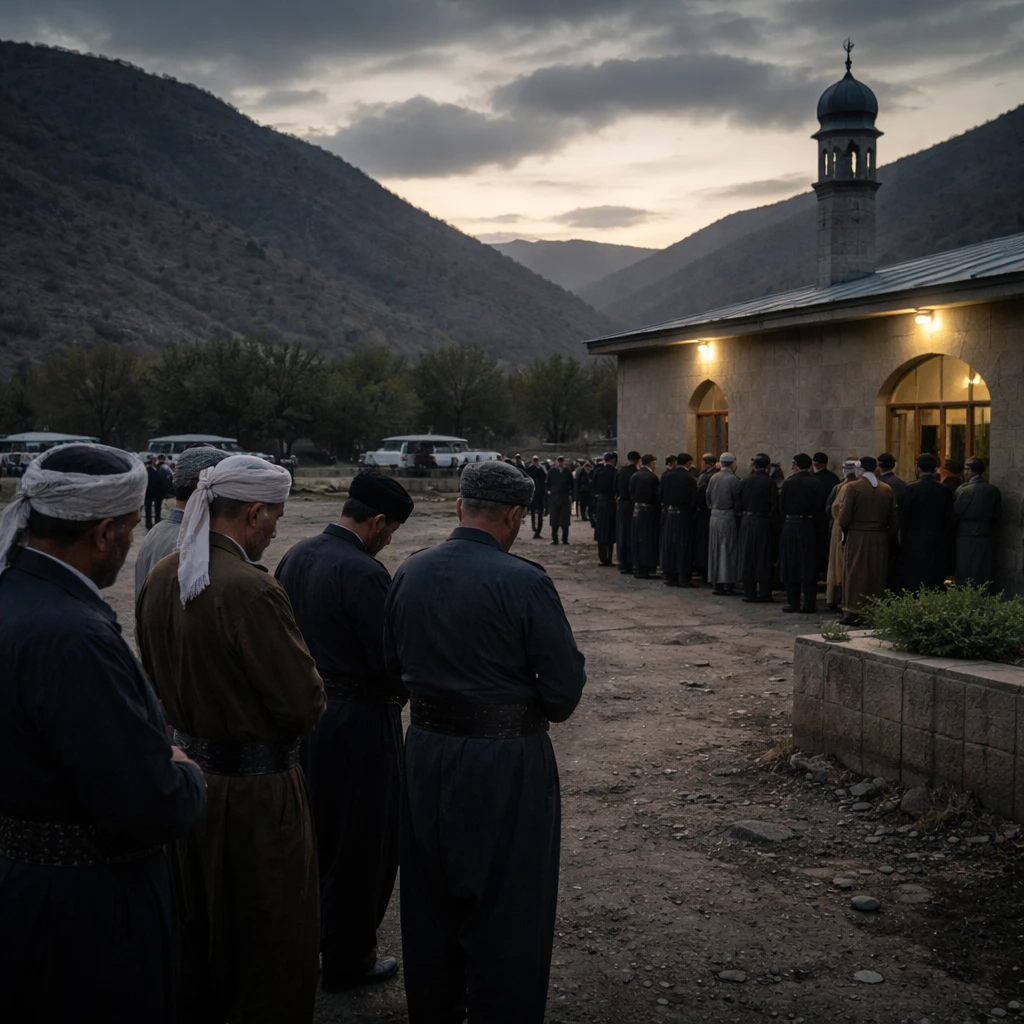
The Revolutionary Guards announced the killing of Sunni Kurdish cleric Mamosta Mohammad Nezhati in northwestern Iran, saying the attack was carried out by what they described as "Zionist-American Kurdish separatist groups," according to a statement published by semi-official media.
The Guards' West Azerbaijan provincial command characterized the slaying as an effort to create divisions between Sunni and Shi'ite Muslims and to weaken security within the province. The statement tied the act to a broader attempt to undermine local stability.
State-affiliated coverage on the Telegram platform from the semi-official Fars news agency described Nezhati as a member of Basij, the paramilitary force associated with the Revolutionary Guards. The Guards' statement, as quoted by the agency, said Nezhati had an extended record of cooperation with Basij bodies that work with professors, seminarians and clerics.
The killing of Nezhati follows the slaying in July of Molavi Mohammad Anvar Rigi, a Sunni Baluch Friday prayer leader in the southeastern border town of Mirjaveh, who was shot dead by unidentified gunmen. Both incidents occurred in provinces that the Guards and state-affiliated outlets say have long faced militancy targeting security forces and figures linked to the state.
Authorities, through the Guards' provincial command, framed Nezhati's death as part of an effort to exploit sectarian differences and to damage security in the region. The statement singled out groups it labeled as "Zionist-American Kurdish separatist groups" as responsible, reflecting the specific attribution set out by the Guards.
Reporting cited by state-affiliated agencies emphasized the victim's connections to Basij organizations and presented his cooperation with those bodies as a notable aspect of his profile. Beyond those details, the information released by the Guards focused on the accused perpetrators and the motive the command assigned to the killing.
The incidents involving Nezhati and the earlier killing of the Sunni Baluch prayer leader underscore continued security concerns in Iran's border provinces with large ethnic minority populations, where authorities say militancy has targeted security forces and individuals associated with the state.
Key points
- Mamosta Mohammad Nezhati, a Sunni Kurdish cleric, was killed in northwestern Iran; the Revolutionary Guards blamed Kurdish separatist groups described as "Zionist-American."
- State-affiliated media reported Nezhati was a member of the Basij and had a history of cooperation with Basij organisations for professors, seminarians and clerics.
- The incident follows the July killing of a Sunni Baluch Friday prayer leader in the southeast and highlights persistent militancy in border provinces with large ethnic minority populations.
Risks and uncertainties
- Attribution uncertainty - the Guards have named specific groups as responsible, but information released by authorities is the primary basis for this claim.
- Sectarian tension - authorities warned the killing was intended to create divisions between Sunni and Shi'ite communities, posing risks to social cohesion in affected provinces.
- Continued militancy - border provinces with large ethnic minority populations have experienced attacks targeting security forces and state-linked figures, indicating ongoing security risks.