
World April 22, 2026 11:00 PM

South Korea's Air Force Issues Apology After Audit Attributes 2021 Fighter Jet Collision to In-Flight Filming

State auditors fault pilots for personal filming during formation flight; military pledges stricter safety controls after probe finds sharp manoeuvres caused mid-air impact

By Caleb Monroe
South Korea's Air Force Issues Apology After Audit Attributes 2021 Fighter Jet Collision to In-Flight Filming

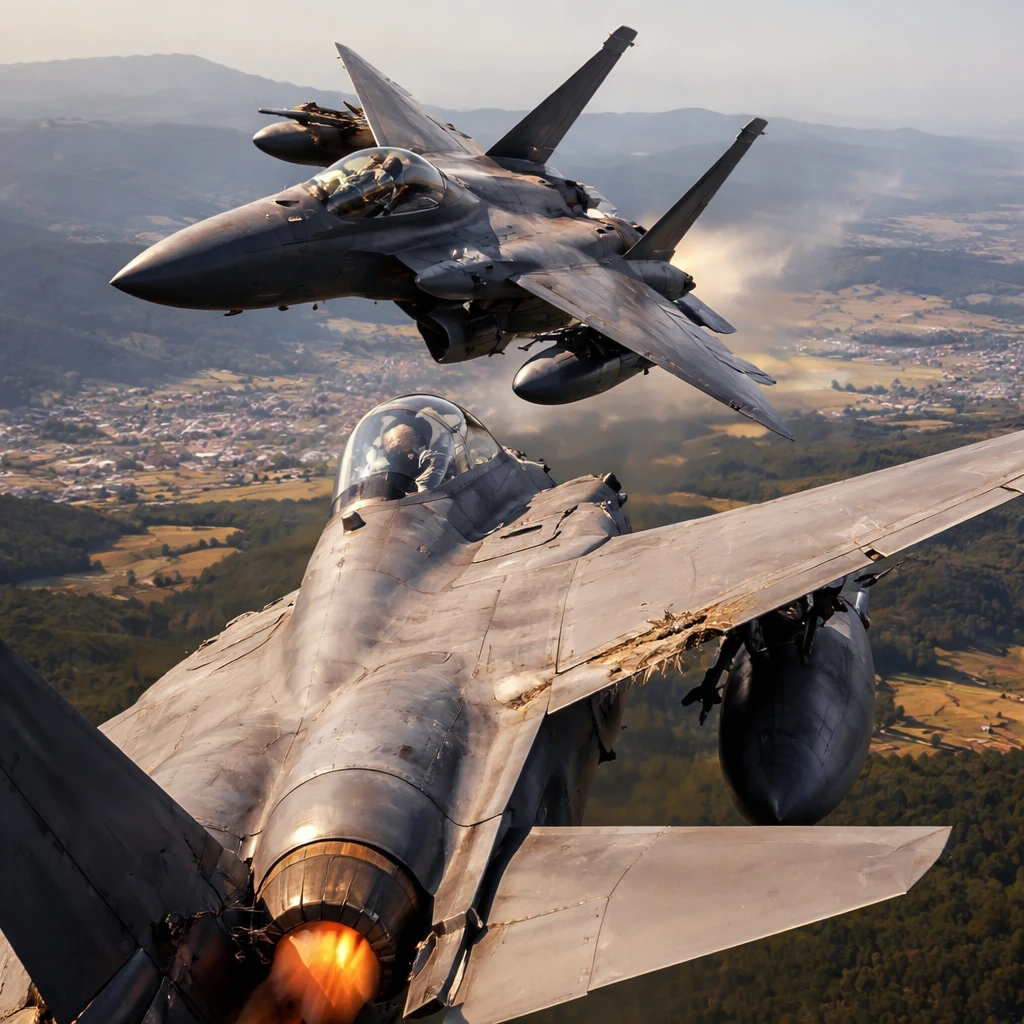
South Korea's air force apologised following a government audit that concluded a December 2021 mid-air collision between two F-15K jets resulted from pilots taking personal footage during a formation flight. The audit found an unapproved climb and bank by a wingman trying to capture images, leading to a tail striking the lead jet's wing. No injuries were reported; the military says it will tighten flight safety rules.

Key Points

  • A state audit found the December 2021 mid-air collision between two F-15K jets resulted from unplanned manoeuvres made for personal filming during a formation flight; no injuries occurred. - Sectors affected: defense, aviation maintenance
  • The air force publicly apologised and confirmed disciplinary action: one pilot was suspended from flying duties, received severe discipline, and subsequently left the military. - Sectors affected: defense, military personnel management
  • The audit blamed a wingman pilot primarily and criticised the air force for lax controls on in-flight filming, ordering the pilot to repay about a tenth of repair costs; the service said it will tighten flight safety rules. - Sectors affected: defense, aviation safety

On April 23, South Korea's air force issued a public apology for a mid-air collision between two fighter jets that occurred in December 2021, acknowledging the findings of a state audit that blamed the incident on pilots taking personal footage while airborne.

"We sincerely apologise to the public for the concern caused by the accident that occurred in 2021," an air force spokesman said during a press briefing. The spokesman added that one of the pilots involved was suspended from flying duties, subjected to severe disciplinary measures, and has since left military service.

The apology followed a report released on Wednesday by the state Board of Audit and Inspection, which determined that unplanned manoeuvres carried out for the purpose of personal filming precipitated the collision between two F-15K fighters during a formation flight near the city of Daegu in December 2021.

According to the audit, a wingman pilot attempted to record images to commemorate his final flight with the unit. To improve the camera angle, the wingman sharply climbed and banked the aircraft without receiving clearance. At the same time, another pilot aboard the lead jet filmed video from that aircraft. As the jets converged, both crews undertook evasive action, but the wingman’s tail struck the lead jet’s wing.

The impact inflicted roughly 880 million won in damage to the aircraft. The audit report noted that no personnel were injured in the collision. The Board of Audit and Inspection placed primary responsibility on the wingman pilot for initiating the unsafe manoeuvre, while also criticising the air force for permitting lax controls on in-flight filming practices in place at the time.

As part of its findings, the audit ordered the wingman pilot to repay about one tenth of the repair costs. The air force said it is implementing measures to tighten flight safety procedures and to prevent a recurrence of similar incidents.


While the audit singled out the pilot who made the unplanned move as principally responsible, it also highlighted institutional shortcomings related to oversight of personal filming on operational flights. The service's response included punitive action against the individual and a pledge to reinforce rules governing behaviour during formation flights.

The collision and subsequent audit have prompted the air force to publicly address both individual accountability and broader procedural weaknesses that contributed to the event. The military's stated steps to strengthen safety rules aim to reduce the risk of similar in-flight incidents in the future.

Risks

  • Persisting gaps in operational oversight - if flight safety controls are not fully strengthened, there is a risk of repeat safety incidents during formation flights. - Sectors impacted: defense, aviation safety
  • Financial exposure from aircraft damage - significant repair costs (about 880 million won) highlight the potential for material maintenance expenses tied to preventable incidents. - Sectors impacted: defense, aviation maintenance
  • Accountability and personnel implications - disciplinary measures and loss of trained pilots could affect unit readiness if administrative and policy responses are not managed to maintain operational capability. - Sectors impacted: defense, military workforce

More from World

Houston Revises Ordinance Limiting ICE Cooperation After Governor’s Threat to Withhold $114 Million Apr 23, 2026 Taiwan Coast Guard Minister Visits Itu Aba for Drills Including Armed Boarding Exercise Apr 22, 2026 Zelenskiy warns prolonged Iran conflict could raise risks to Ukraine's anti-missile procurement Apr 22, 2026 Youth Suicide Rates Fell After U.S. Launched 988 Hotline, Harvard-Led Study Finds Apr 22, 2026 Louisiana Man Indicted in Connection with Firearm Used in Shreveport Children’s Killings Apr 22, 2026