
SYDNEY, April 23 - Asian share markets advanced on Thursday, following Wall Street to fresh record territory in a session that highlighted investor focus on corporate earnings even as oil climbed and shipping tensions intensified in the Gulf.
Overnight in the United States the S&P 500 rose 1% and the Nasdaq added 1.6%, both closing at new records on the back of an encouraging start to earnings season that has calmed some concerns over U.S. consumer resilience despite rising energy costs tied to the Iran conflict. That lift came even as oil prices strengthened for a fourth consecutive day.
Market attention turned to the Strait of Hormuz after Iran captured two container ships on Wednesday while they sought to leave the Gulf, a move that tightened control of a critical maritime chokepoint and underscored an uncertain ceasefire situation. Brent crude futures were trading at $102.45 a barrel, up 0.5% on the day after a 3.5% overnight jump that pushed prices back above $100.
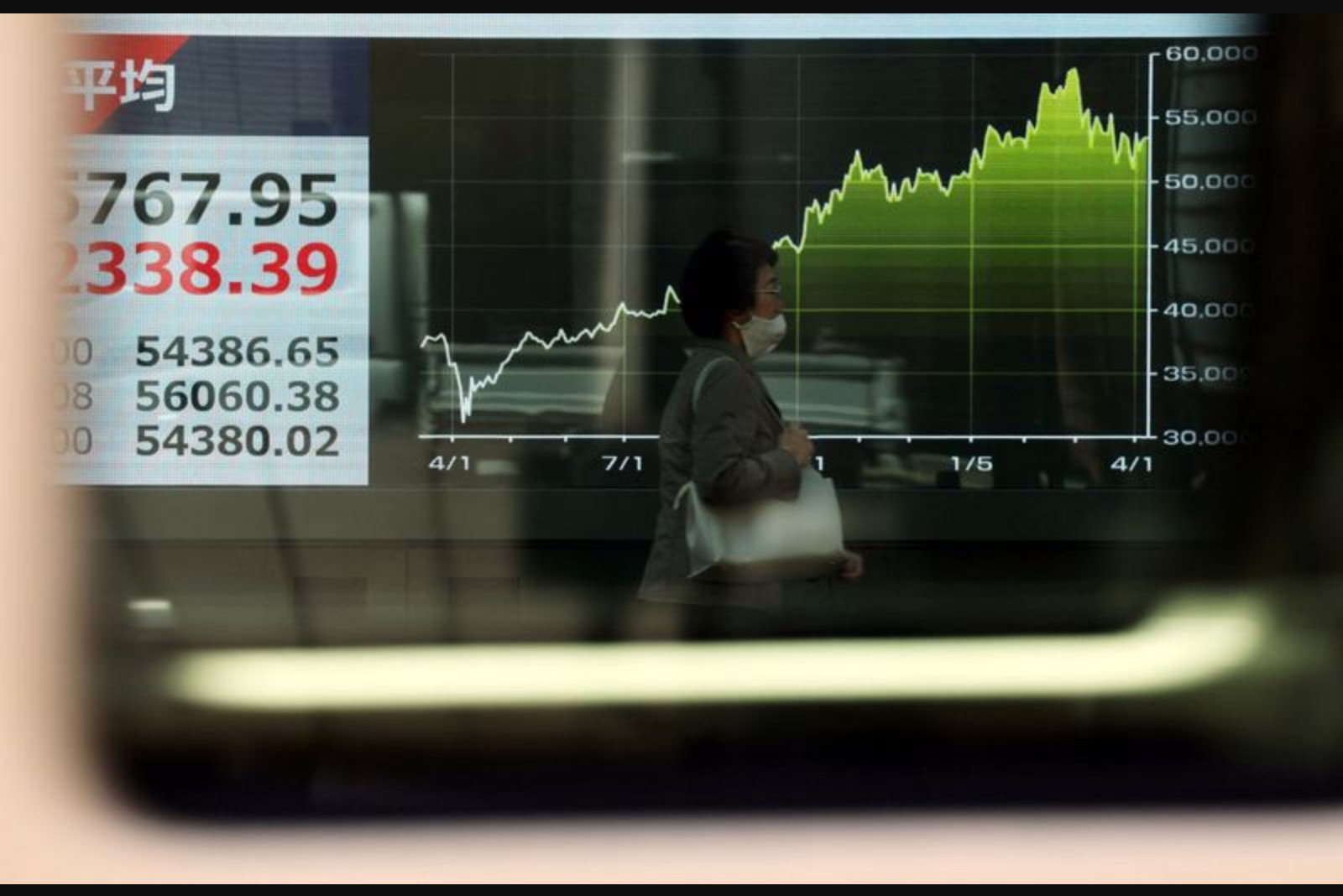
Regional equities broadly participated in the rally. MSCI’s index of Asia-Pacific shares excluding Japan climbed 1% to a record high as technology leaders in the region delivered outsized gains. Japan, South Korea and Taiwan all recorded fresh highs for a second day, with Japan’s Nikkei surpassing the 60,000 level.
China’s blue-chip stocks gained 0.3%, while Hong Kong’s Hang Seng index eased 0.3% on the session.
Investors and strategists noted the growing list of risks that markets are currently discounting. "Markets have been remarkably effective at looking through risks - and may continue to be. But the list of risks is growing as resolutions remain elusive," said Laura Cooper, global investment strategist at asset manager Nuveen. "The dissonance cannot hold indefinitely ... At some point, the weight of what is being ignored could become the only one that matters."
After the earnings-driven rally, U.S. futures pared some gains in Asian trade. Nasdaq futures were down 0.2% and S&P 500 futures were 0.3% lower.
At the individual stock level, shares of GE Vernova jumped 13.75% after the power equipment business raised its annual revenue forecast amid stronger demand tied to the AI-driven boom. Boeing rose over 5% following a quarterly loss that was smaller than expected. Electric vehicle maker Tesla posted a surprise positive free cash flow for the first quarter, but investor concern about the company’s plans for sharply higher spending on AI and robotics saw its shares fall about 2% in after-hours trading.
U.S. Treasuries were mostly steady despite the oil price increase. The two-year Treasury yield stood at 3.8064%, effectively unchanged after moving up 1 basis point on Wednesday. The 10-year yield inched 1 basis point to 4.3094% following a session that had finished little changed.
Currency markets showed limited movement, with the dollar retaining modest overnight gains. The euro traded at $1.1709, just above a 10-day low of $1.1691, having slipped 0.3% overnight.
Commenting on energy markets, Skye Masters, head of markets research at the National Australia Bank, warned of persistent supply constraints. "It is questionable whether financial markets are correctly pricing the reality that supply constraints will remain an issue for some time," she said.
Market takeaway
- Strong corporate earnings have supported risk appetite and helped U.S. indices reach record levels, a factor that has reverberated through Asian markets.
- Higher oil prices and renewed shipping tensions in the Strait of Hormuz present a supply-side risk that could challenge the current market optimism if the situation escalates.
- Fixed income and currency moves have been contained for now, but the trajectory of energy prices remains a key variable for both inflation expectations and policy outlooks.