
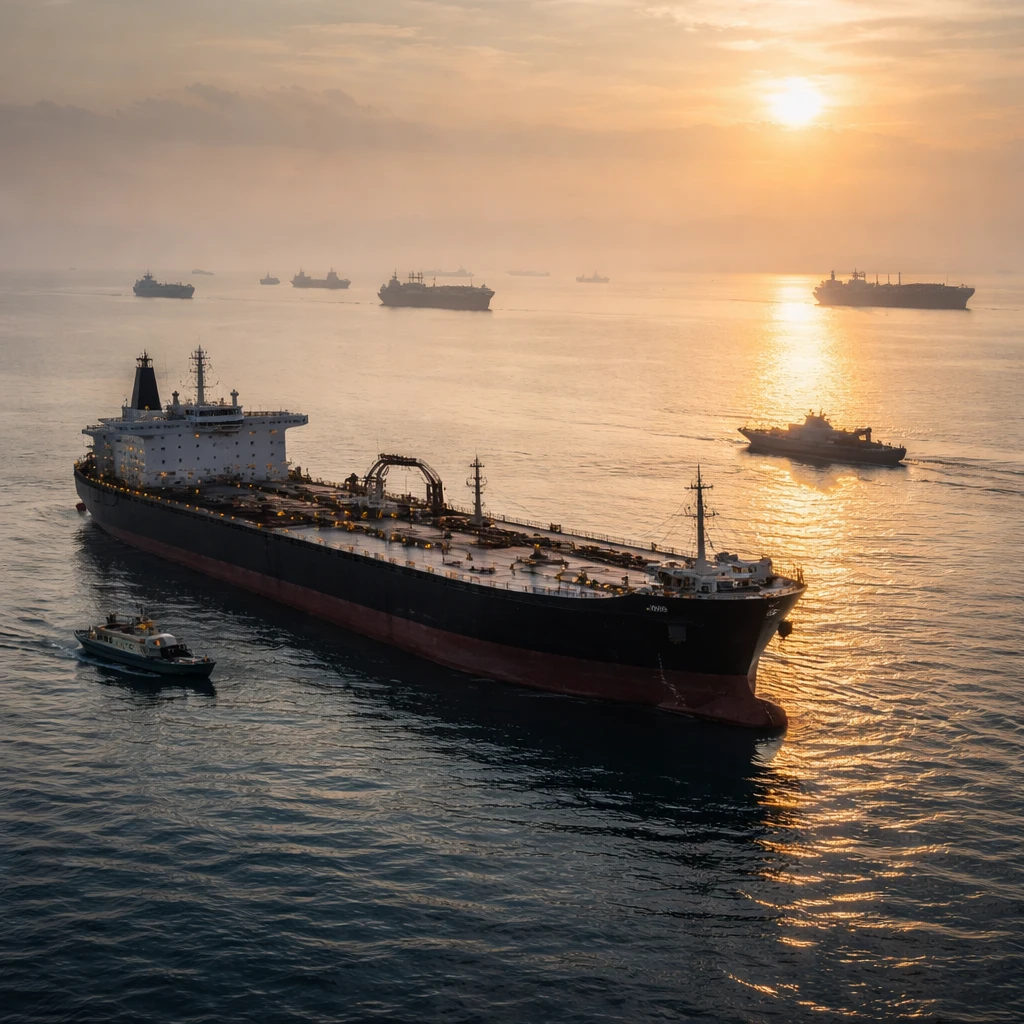
Oil markets extended gains in Asian hours on Thursday as maritime traffic through the Strait of Hormuz stayed light and there were scant indications of fresh negotiations between the United States and Iran.
Brent futures traded up 0.4% at $102.33 a barrel, while West Texas Intermediate futures advanced 0.6% to $93.52 a barrel as of 21:24 ET (01:24 GMT). The moves followed volatile price action earlier in the week before markets steadied on Wednesday.
Price momentum earlier in the week was driven in part by events in the Strait of Hormuz, where Iran attacked and seized two vessels, keeping the strategic waterway largely closed. That action was followed by a U.S. naval blockade of Iranian shipping, a measure that Tehran publicly protested. Reports this week also indicated Washington was tracking Iranian vessels in wider Asian waters.
Diplomatic developments have done little to remove uncertainty. U.S. President Donald Trump announced an indefinite extension of a ceasefire, but both Washington and Tehran subsequently stepped back from potential talks scheduled in Pakistan, leaving the status of further negotiations unclear. Iran has said it will not engage in ceasefire discussions while the U.S. continues its naval blockade. The White House has linked any comprehensive peace agreement to Tehran fully reopening the Strait of Hormuz, a condition the two sides have not reconciled.
The Strait of Hormuz has emerged as a focal point of the conflict given the potential supply implications. Closure of the passage would disrupt roughly 20% of global oil shipments, a level that would most directly affect economies in Asia and the Middle East.
Market participants are watching both the security situation in the Gulf and the pace of any revived diplomacy. With shipping activity remaining constrained and no clear path to resumed talks, traders continue to price in the risk that supply flows through the Hormuz corridor could stay limited.
Summary
Crude rose in Asian trade as limited vessel movements in the Strait of Hormuz after attacks this week and an absence of fresh U.S.-Iran negotiations supported prices. Brent was above $102 and U.S. crude near $93.50, with the waterway's closure present as a key risk to global supplies.
Key statistics cited
- Brent: $102.33 per barrel (up 0.4%)
- WTI: $93.52 per barrel (up 0.6%)
- Time of quoted prices: 21:24 ET (01:24 GMT)