
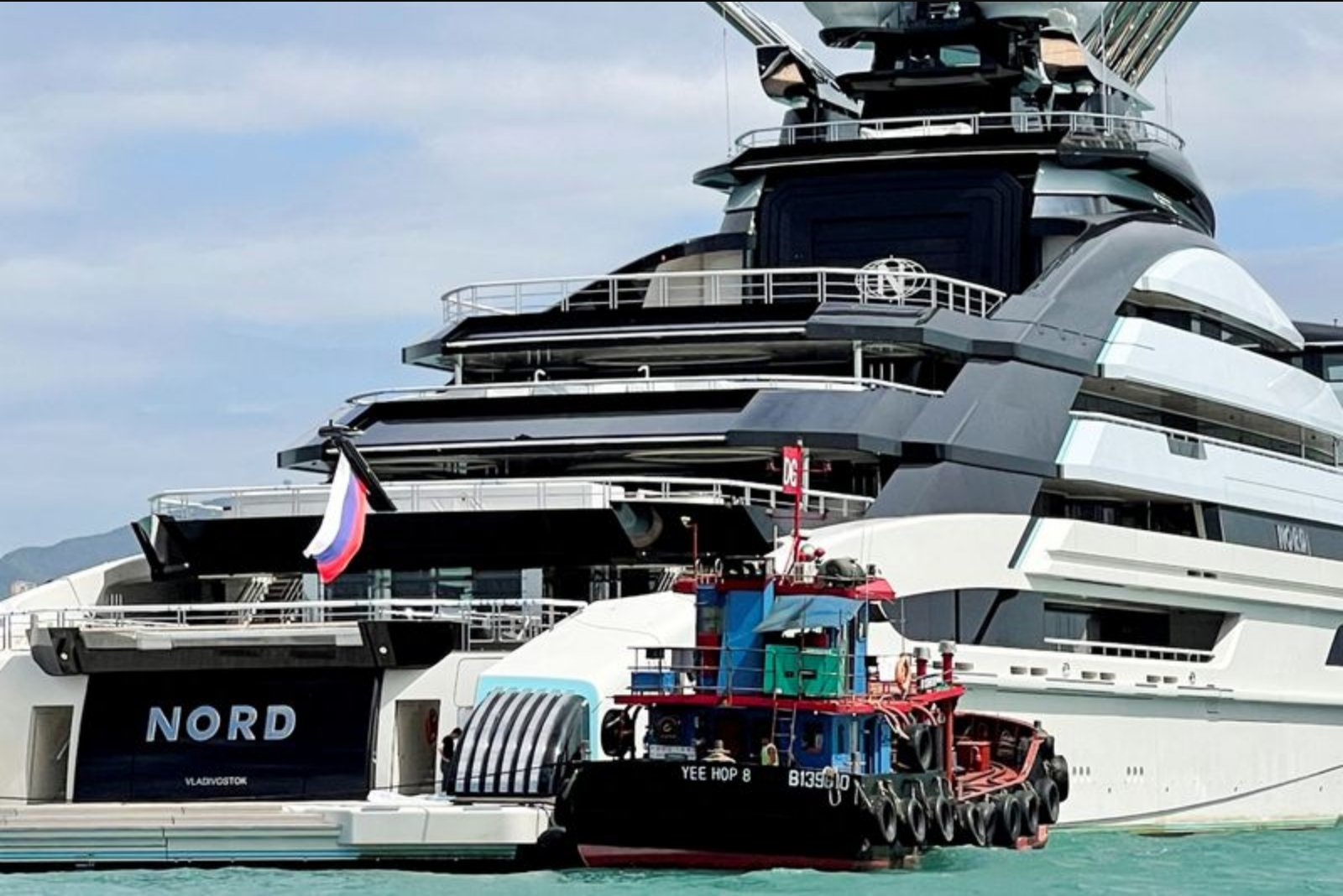
World April 28, 2026 09:51 AM

Russian Superyacht 'Nord' Crossed Strait of Hormuz with No Objection from Iran or U.S., Source Says

The multi-deck vessel, owned by Alexey Mordashov, transited a restricted waterway after maintenance in Dubai under a Russian flag, the source said

By Ajmal Hussain
Russian Superyacht 'Nord' Crossed Strait of Hormuz with No Objection from Iran or U.S., Source Says

A source close to Russian billionaire Alexey Mordashov said his superyacht Nord was permitted to pass through the Strait of Hormuz following maintenance in Dubai because neither Iran nor the United States raised objections. The yacht, valued at over $500 million and sailing under a Russian flag, followed an approved route in line with international maritime law and has since been located off the coast of Oman, according to LSEG data.

Key Points

  • A source close to Alexey Mordashov said the superyacht Nord transited the Strait of Hormuz after maintenance in Dubai without objections from Iran or the United States - sectors impacted: maritime shipping, international law.
  • The Nord is a multi-deck civilian vessel valued at over $500 million and sailed under a Russian flag along an approved route in compliance with international maritime law - sectors impacted: maritime insurance, luxury marine industry.
  • Daily passages through the Strait have fallen sharply to a handful of mainly merchant vessels, compared with pre-conflict averages of 125 to 140 daily passages; the U.S. has imposed a blockade of Iranian ports - sectors impacted: commercial shipping, regional trade and logistics.

April 28 - A superyacht owned by Russian billionaire Alexey Mordashov was able to navigate the blockaded Strait of Hormuz last weekend after undergoing maintenance in Dubai, a source close to Mordashov told reporters on Tuesday. The vessel, known as Nord and flying a Russian flag, transited the strategically sensitive waterway on Saturday using an approved passage, the source said.

The yacht is described as a multi-deck pleasure craft with an estimated value in excess of $500 million. How the vessel was cleared to sail through the commercially important strait - an area at the center of heightened tensions between Washington and Tehran - had not been clear until the source provided an account of the transit.

According to the source, Iran did not interfere with the yacht’s movement because it was a civilian vessel from what the source termed a "friendly country" and was conducting a peaceful transit. The source added that U.S. authorities also did not raise objections, noting that the yacht did not call at Iranian ports and had no connection to Iran.

The strait has seen sharply reduced traffic since February, when hostilities began to affect routine shipping. Just a few vessels, principally merchant ships, have been passing daily at the entrance to the Gulf as Washington and Tehran maintain an uneasy ceasefire. That level represents only a fraction of the typical 125 to 140 daily passages recorded before the Iran war began on February 28.

In parallel with the restricted movement through the strait, the United States has imposed a blockade of Iranian ports, further curtailing regional maritime activity.

Russia maintains long-standing ties with Iran. Iranian Foreign Minister Abbas Araqchi travelled to St Petersburg on Monday for a meeting with Russian President Vladimir Putin, after holding talks with peace mediators in Pakistan and Oman over the preceding weekend, the source said.

After completing its transit, Nord was tracked near the coast of Oman from Sunday onward, according to LSEG data cited by the source. The vessel’s movement followed an approved route and, the source said, complied with international maritime law.


Context and implications: The passage of a high-value civilian yacht through a tightly controlled waterway highlights how certain maritime movements can proceed when they meet legal transit criteria and face no objections from regional and external powers. The incident occurred against the backdrop of limited commercial traffic and diplomatic activity involving the countries named by the source.

Risks

  • Continued restrictions on traffic through the Strait of Hormuz create uncertainty for merchant shipping and trade flows - impacts: shipping, logistics and ports sectors.
  • The presence and movements of high-profile vessels in a contested maritime zone may draw diplomatic scrutiny and could complicate regional relations between involved states - impacts: diplomacy and defense-related markets.
  • Reduced transit volumes and a blockade of Iranian ports maintain pressure on regional maritime activity and could influence insurance costs and operational routing for commercial carriers - impacts: maritime insurance and global supply chains.

More from World

Wartime Command Consolidates in Iran as Guards Supplant Clerical Primacy Apr 28, 2026 Drone Diplomacy: Ukraine Converts Battlefield Innovations into Strategic Partnerships — Now the Hard Work Begins Apr 28, 2026 Trump Says Iran Asked U.S. to Reopen Strait of Hormuz as It Sorts Leadership Apr 28, 2026 Three Palestinians Killed in Gaza Strikes, Including 9-Year-Old Boy Apr 28, 2026 UNICEF issues emergency 'Child Alert' as five million children in Darfur face extreme deprivation Apr 28, 2026