
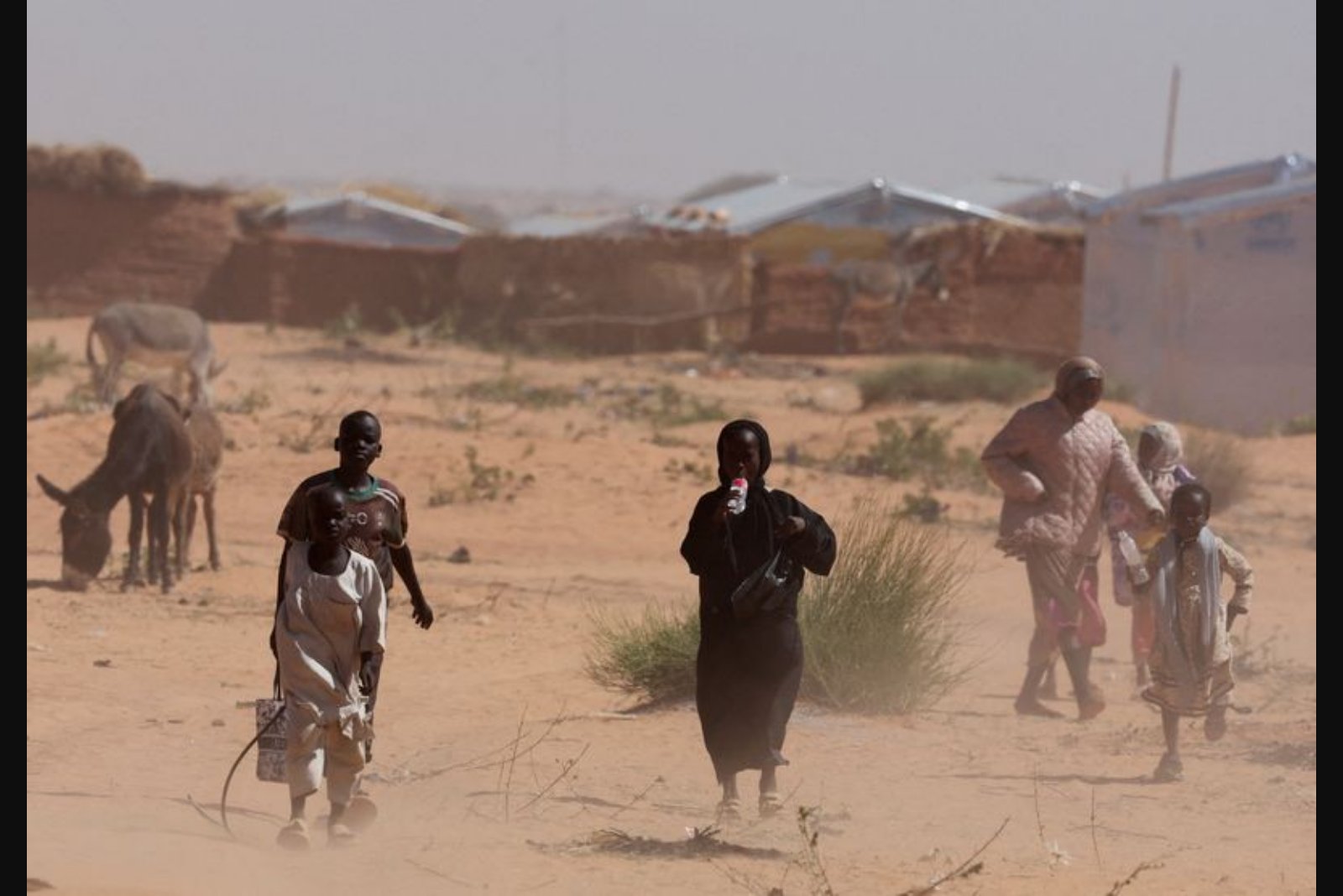
The United Nations children’s agency has raised a formal emergency alarm over conditions facing children in Sudan’s Darfur region, saying five million youngsters are now suffering extreme deprivation as the country’s civil war moves into its fourth year.
UNICEF applied its rarely-used "Child Alert" to signal that conditions for children in Darfur have crossed a critical threshold. The agency said the measure is designed to denote exceptionally severe circumstances and that this is the first time it has been issued for Darfur in 20 years.
"Children are at a breaking point across the region, childhood is again defined by fear, by loss. Homes have been burned, schools and health facilities have been damaged or destroyed," said Sheldon Yett, UNICEF’s representative in Sudan, speaking to reporters in Geneva via video link from Port Sudan.
Yett detailed the toll on children, saying: "Children are bearing the heaviest weight of the war in Darfur, children are being killed and maimed, uprooted from their homes and pushed into extreme hunger, disease and trauma."
Darfur, a vast area in western Sudan, has been a central theatre of violence in the conflict that began in April 2023 between the Sudanese army and the paramilitary Rapid Support Forces. UNICEF noted the region’s long history of violence, including atrocities and mass displacement in a separate conflict that escalated in 2003 after rebels took up arms and the government employed Arab militias in efforts to suppress the revolt.
Despite the intensifying crisis, UNICEF said Darfur has drawn comparatively little global attention in recent weeks and months. The agency pointed to the low level of funding for its broader humanitarian appeal: the UNICEF humanitarian appeal for Sudan for the year is only 16% funded.
Across Sudan as a whole, UNICEF reported a sharp rise in child casualties in the early months of 2026. At least 160 children were reportedly killed and 85 injured in the first three months of 2026, an increase from the same period in the previous year, the agency said.
UNICEF identified the city of al-Fashir as experiencing the most severe impact on children. Since April 2024, at least 1,300 children in al-Fashir were killed or maimed, and there have been reports of sexual violence, abductions and recruitment of children by armed groups.
The agency also cited alarming levels of malnutrition: in February, the U.N.-backed Integrated Food Security Phase Classification found that acute malnutrition in two additional areas of North Darfur had reached famine levels.
UNICEF’s alert underscores the combined effects of violence, displacement, damaged infrastructure and worsening food insecurity that are eroding child wellbeing across Darfur. The agency’s warning is intended to galvanize attention and resources to address the urgent needs of millions of children at heightened risk.
Contextual note: The information above reflects UNICEF statements and UN-backed classifications cited by the agency. Where the agency indicates limited global attention and underfunding, that condition is reported as described by UNICEF.