
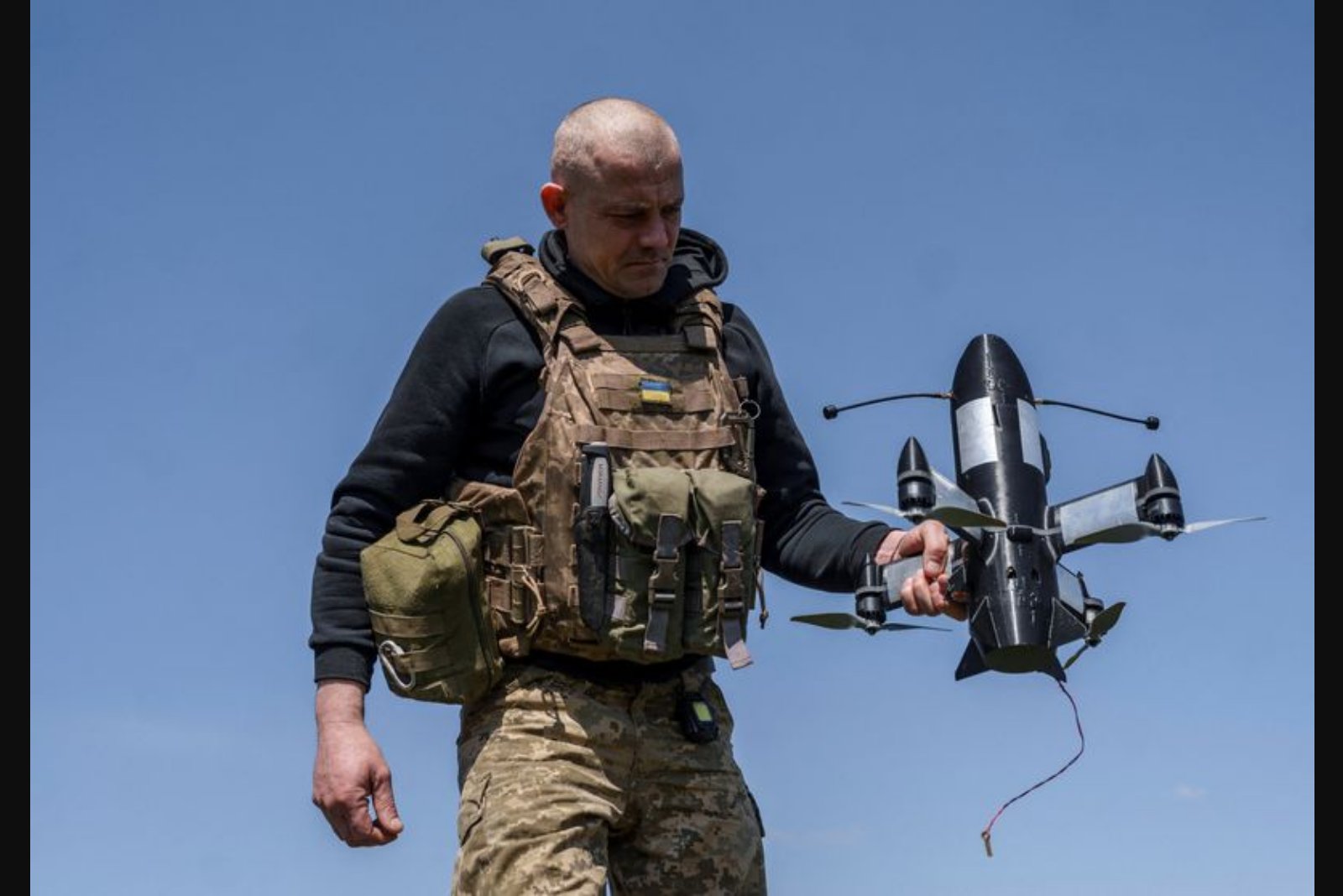
KYIV, April 28 - President Volodymyr Zelenskiy has turned Ukraine’s battlefield proficiency with drones into diplomatic leverage, securing a sequence of defence and drone-related agreements during recent trips to the Middle East and Europe. This month alone Ukraine finalised pacts in Germany, Norway and the Netherlands, building on earlier long-term security partnerships with Saudi Arabia, Qatar and the United Arab Emirates in late March.
In the weeks since, Kyiv has also reached security cooperation arrangements with Turkey and Syria, and over the weekend signed defence and energy accords with Azerbaijani President Ilham Aliyev. Those moves reflect a broader effort by Zelenskiy, initiated after Russia’s 2022 invasion, to broaden Ukraine’s international alignments - both with Western nations and with countries in the so-called global south - as a counterweight to Moscow’s diplomatic influence.
Analysts say recent events in the Middle East have underscored how central drones are to modern warfare, giving Kyiv an operational advantage that can be converted into diplomatic currency at a time when U.S. support appears uncertain. Since the 2022 invasion, Ukrainian engineers and forces have prioritised low-cost, effective answers to drone threats rather than relying solely on high-end missile defences such as the U.S. Patriot systems deployed by Washington in the Gulf. In parallel, Ukraine has developed long-range attack drone capabilities that can threaten Russian energy infrastructure.
"Zelenskiy is really trying hard to show that Ukraine is an asset and not a liability and that it has an answer to the changing nature of war," said Orysia Lutsevych, head of the Ukraine Forum at Chatham House. "Ukraine now needs to organize itself to actually deliver." The thrust of that observation highlights a central tension facing Kyiv: demonstrating capability is one thing; creating the industrial, regulatory and logistical pathways to export and sustain that capability is another.
Export controls and production constraints
Ukraine’s drone manufacturers report they have sizeable spare production capacity, yet Kyiv has issued only a limited number of defence export licences. Some Ukrainian production has moved overseas, including to Germany and Britain, but outputs produced abroad are primarily reserved for Ukraine’s own military needs rather than for foreign customers.
"In Ukraine, the choke point is the export control: basically it’s an export ban," Lutsevych said, urging a streamlining of the rules so the country can balance wartime requirements with export opportunities. Those internal controls could frustrate the very diplomatic momentum Kyiv has built if partners cannot be supplied in a timely manner.
Another limitation is technological character: much of Ukraine’s success has come from building effective, integrated systems - for example coordinated layers of interceptor drones, machine guns and jamming devices for drone defence - rather than from single, cutting-edge components. As a practical demonstration of those layered techniques, Ukraine has deployed roughly 200 experts to the Gulf to assist with defence against Iran’s Shahed long-range drones.
Kurt Volker, a former U.S. NATO ambassador and Ukraine envoy, said Kyiv is cautious about widely sharing wartime systems. "Much of what the Ukrainians have done is develop process and mentality," Volker said, noting Ukrainian concern that Russia could learn operational methods if those systems were too widely distributed. "What any business would do is protect your IP for as long as possible. That’s what makes it valuable. So of course they’re doing that."
Dependence on human skill and the move toward autonomy
Ukraine’s low-cost air defences have been effective in large part because of the training and skill of human operators guiding interceptor drones, said Fabian Hoffmann, a senior researcher at the Norwegian Defence University College. Those operators have been particularly successful against slower propeller-driven systems such as Russia’s Geran-2.
Yet the battlefield is evolving. Jet-powered drones capable of reaching about 400 km (250 miles) an hour are becoming more common, creating a margin where human reflexes are less effective. Hoffmann noted that Ukraine has been moving toward autonomously guided interceptor drones, but that to date operators have carried much of the operational burden.
European suppliers are also advancing in autonomous solutions, with companies such as Tytan in Germany and Frankenburg in Estonia developing systems that could narrow or eliminate some of Ukraine’s current comparative advantages.
Economic stakes and missile defence urgency
Military exports could deliver important economic benefits for Ukraine. The defence sector already employs about 400,000 people, according to UCDI, a manufacturers’ association. A better-capitalised industry could reduce Kyiv’s long-term dependence on external financial and military assistance and help drive economic growth after any future ceasefire.
Zelenskiy has signalled that drone diplomacy aims not only to expand security ties but also to secure energy supply agreements with Middle Eastern partners and open markets for Ukrainian agricultural exports. Strengthening missile defences is another priority. The U.S.-Israel conflict with Iran has stoked worries in Kyiv that Patriot systems - used to intercept Russian ballistic missiles - could become scarcer as Washington attends to other regional demands.
Ukraine’s $4-billion defence pact with Germany this month includes Patriot deliveries and pledges to cooperate on a European ballistic missile defence architecture. Zelenskiy has said Ukraine needs its own anti-ballistic missile defences within a year.
Hoffmann stressed how difficult that objective is to realise. The Patriot PAC-3, he noted, achieves perhaps a 60% success rate and is the result of decades of development. Building an interceptor capable of reliably downing modern manoeuvring ballistic missiles remains an enormous technical and industrial challenge.
Geopolitics and the calculus of alliances
Underlying Ukraine’s intensified outreach is concern about the reliability of its largest security patron. "He (Zelenskiy) understands that America stopped being an ally," Lutsevych said. "The Ukrainians also understand that they need to walk a fine line by keeping America on side as long as possible." That strategic balancing act helps explain Kyiv’s simultaneous push to deepen ties with Europe and to cultivate partnerships in the Middle East and beyond.
For drone diplomacy to evolve from a headline-grabbing selling point into a sustainable instrument of statecraft, Ukraine will need to resolve export rule bottlenecks, scale manufacturing capacity for both domestic and partner needs, protect operational know-how, and accelerate the shift toward more autonomous systems as threats evolve. The diplomatic momentum is real; now the operational and industrial follow-through will determine whether the promise of drone-enabled influence endures.