
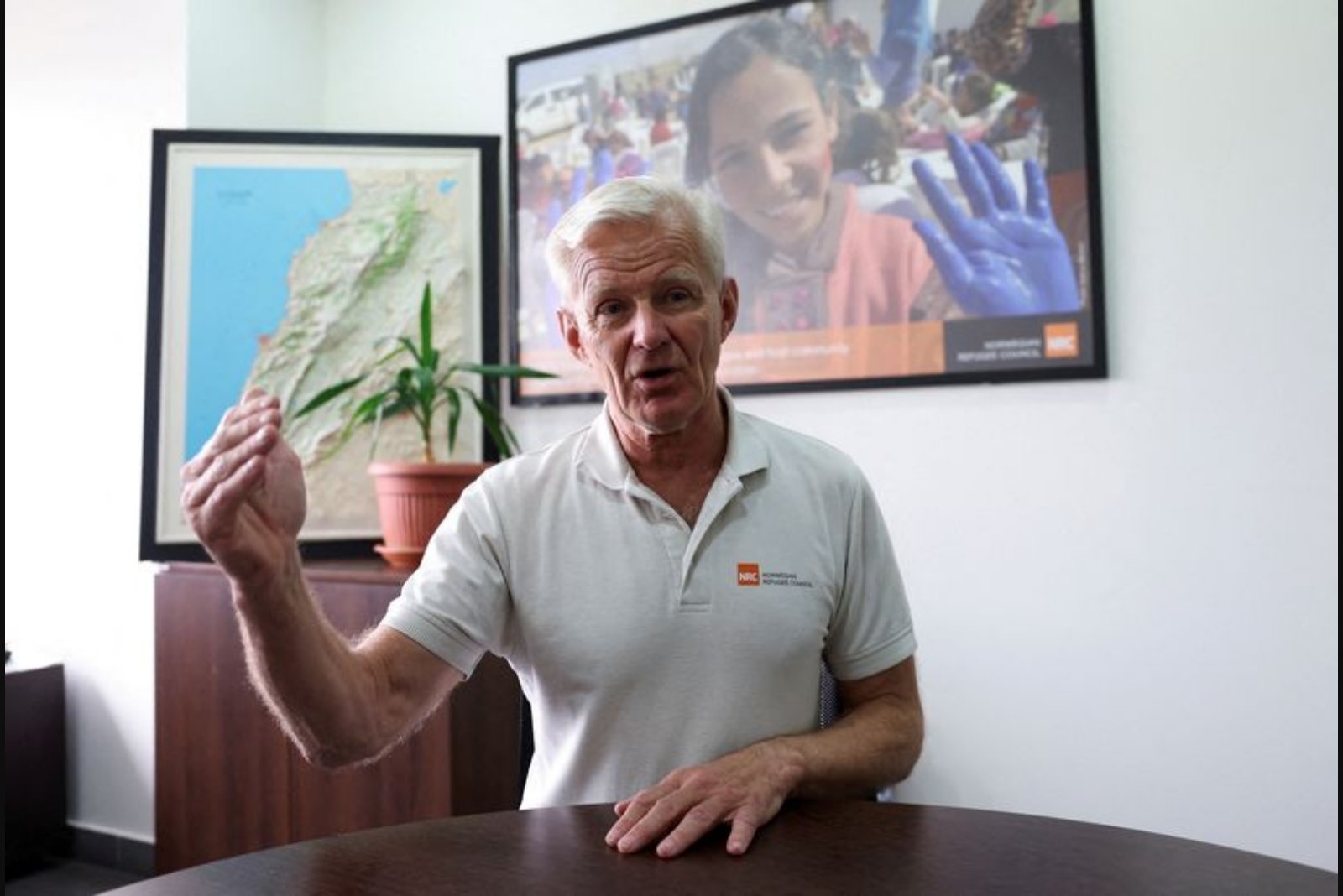
The humanitarian fallout linked to the Iran war is reverberating across relief operations worldwide, with rising energy prices increasing the cost of everything from running aid vehicles to powering generators and buying food for displaced families, the head of the Norwegian Refugee Council said on Thursday.
The NRC, a major non-governmental organisation focused on people displaced by conflict, has seen operating costs surge, Jan Egeland, its secretary general, told foreign reporters at NRC headquarters in Oslo. Egeland, who served as the United Nations' top humanitarian official between 2003 and 2006, said the combined effect of higher fuel and food prices and constrained donor support will leave fewer people receiving assistance this year.
"We have 1,500 vehicles in our operations; they run on diesel. In some countries, it’s twice the cost now to run those," Egeland said. He added that where relief operations still depend on fuel-powered generators, the expense of providing services such as schools and hospitals has risen: "The generators needed in the places we haven’t solarized yet are much more expensive, so running a school or a hospital (is more expensive)."
Beyond transport and power, Egeland highlighted increasing market prices for food: "The food that we have to purchase on the market - local markets, regional markets - has become much more expensive per family in need." He also warned that aid staff face growing financial strain because organisational pay scales have not kept pace with higher living costs: "And our staff find it very hard to live on the salary that we can give them compared to before."
As a result of these cost pressures and a shift in government spending priorities, the NRC expects to assist fewer people during the year even as needs rise. Egeland said much donor funding has been redirected to defence budgets, reducing the pool of resources available for humanitarian relief. "Through this year, fewer people will get assistance because of the cost increase," he said.
Gaza operations constrained
The NRC has been operating in the occupied Palestinian territories since 2009 and remained active during the Gaza war. In February, Israel’s Supreme Court temporarily blocked the government from closing the Gaza operations of dozens of aid organisations that had petitioned the court over new rules requiring them to name Palestinian staff. Despite that ruling, Egeland said the NRC lost its registration with Israeli authorities.
Because of the loss of registration, the NRC still employs local staff in the Gaza Strip but is unable to deploy international staff to support those teams. "We have already had to relocate our headquarters to Amman," Egeland said, adding that leadership is now conducted remotely: "We do remote leadership management from Amman."
Egeland offered a stark assessment of the situation on the ground: he praised U.S. President Donald Trump’s 20-point plan for Gaza as "wonderful" because, in his view, "it stopped the massacres and the full-scale war." But he said implementation has stalled: "We are now frozen in some halfway house where Israel is still militarily there," he said. "They’re still destroying homes. Hamas is not disarmed and the aid groups are denied access. This is no peace. This is no implementation. The Trump peace plan is in grave danger."
Israel, which controls access to the Gaza Strip, denies that it is withholding supplies intended for more than 2 million residents. Nevertheless, Palestinians and international aid organisations say that supplies reaching the territory remain inadequate, even after a ceasefire reached in January that included guarantees of increased aid.
The combined pressures of rising operating costs, constrained humanitarian access in Gaza, and donor funds being diverted to defence spending create a scenario in which fewer people worldwide will receive assistance from the NRC and potentially other relief organisations, even as demands for aid grow.