
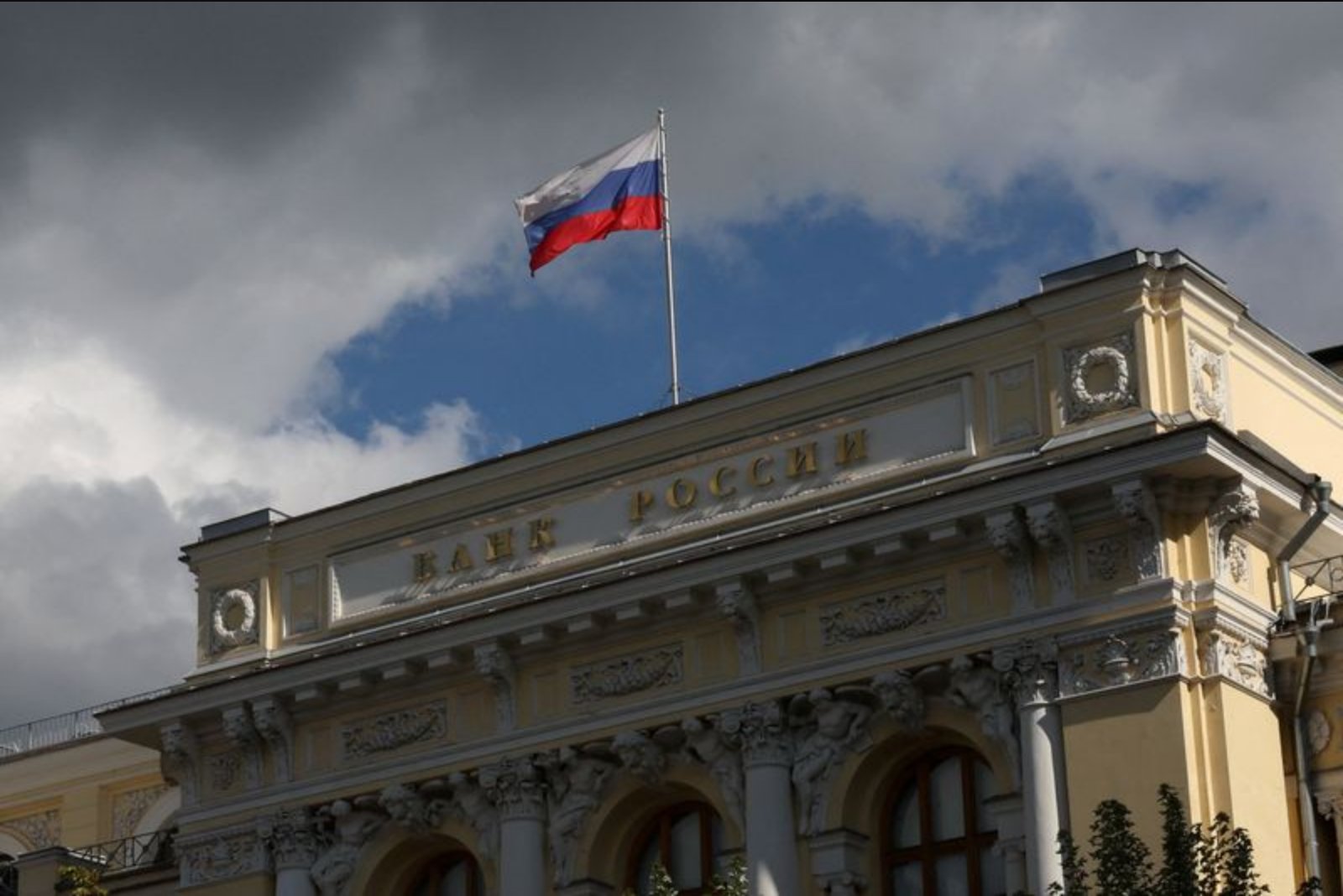
Growth data that showed Russia's economy contracting in the first two months of the year has prompted some analysts to change their expectations for the central bank's April 24 policy meeting, with a number now anticipating a quicker cut to the key rate than they previously forecast.
A poll of 23 analysts taken on April 20 had indicated an expectation that the central bank would lower the key rate by 50 basis points to 14.5%. However, the emergence of early signs that the economy may have shrunk in the first quarter of 2026 has led some firms to rethink that view and consider the possibility of a faster easing trajectory.
Monetary policy and the near-term growth outlook
Raiffeisen analysts highlighted the recent weakness in the economy, saying: "The potential economic downturn in the first quarter of 2026 remains a pressing issue and could be a key factor in the central bank's decision to further ease its policy this Friday." That assessment reflects growing concern that the first quarterly contraction since the initial quarter of 2023 could influence the central bank to act more aggressively on interest rates.
Political pressure has accompanied the economic wobble. President Vladimir Putin reportedly reprimanded senior officials after figures showed a 1.8% contraction in the economy during the first two months of the year, urging the development of fresh measures to stimulate growth.
Corporate results and official comments
Corporate earnings have illustrated the strain from tighter financial conditions. Steelmaker Severstal recorded a first-quarter profit close to zero, while aluminium producer Rusal posted a quarterly loss; both companies cited the central bank's tight monetary stance as a contributing factor to their weak results.
On April 17, Economy Minister Maxim Reshetnikov acknowledged the difficulties facing the economy, attributing the challenging environment to several forces: the strong rouble, elevated interest rates, labour shortages, and the budget deficit.
The Russian Science Academy's Economic Forecasting Institute presented one of the more pessimistic assessments for the first quarter, estimating a contraction of 1.5%.
Policy thresholds and the central bank's own outlook
Some business groups have identified a 12% key rate as the level at which economic growth could resume. By contrast, the central bank's projection for this year anticipates an average key rate between 13.5% and 14.5%, which would, in effect, leave little scope for a near-term recovery under its baseline scenario.
New activity data and upcoming GDP figures
Fresh data released on April 23 showed industrial output rising by only 0.3% in the first quarter of 2026, a sluggish pace that suggests the wider economy may have posted similar muted growth during the same period. Preliminary GDP data for March is due on April 29.
The industrial indicator recorded a 2.3% year-on-year increase in March, which exceeded expectations and followed year-on-year declines of 0.9% and 0.8% in the two preceding months. Analysts had been modelling a 0.9% year-on-year increase in March output.
Renaissance Capital analyst Andrei Melashchenko said the latest industrial output figures did not change his forecast for a 0.9% economic contraction over the full year. Raiffeisen strategists, however, suggested the full-year contraction could be smaller than their current estimate of 1%.
Finam brokerage analyst Olga Belenkaya pointed to factors that may have supported the March industrial outcome, noting that elevated budget spending and windfall energy revenues tied to the Middle East crisis could have boosted the data. She added: "Early data for March, indicating a 2.3% year-over-year rise in industrial production, suggest that GDP may have turned positive in March."
Implications for markets and policymakers
The interplay between weak early-year activity, corporate stress linked to high borrowing costs, and volatile external revenues is sharpening the debate over the pace and scale of monetary easing. With key decisions approaching, policymakers will need to weigh these often competing signals as they determine the path for the key rate.