
World April 20, 2026 01:35 AM

Rights Commission Rebukes Military After Dozen Civilians Killed in Papua Operation

Investigation launched as uncertainty remains over whether fatalities were caused by security forces or separatist fighters

By Caleb Monroe
Rights Commission Rebukes Military After Dozen Civilians Killed in Papua Operation

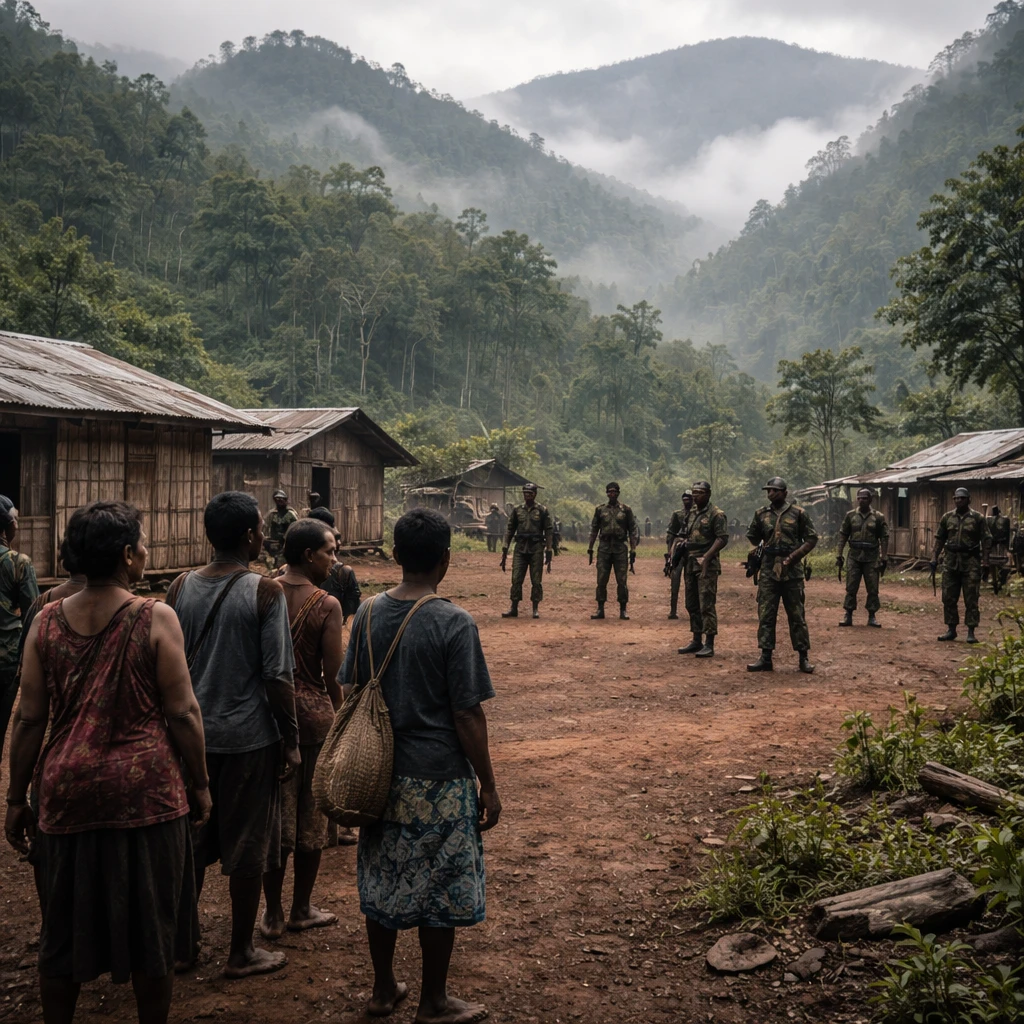
Indonesia's National Human Rights Commission has strongly criticised the military after reporting that 12 civilians, including women and children, were shot dead during a security operation in central Papua on April 14. The commission said dozens more were seriously injured and has opened an inquiry. Military spokespeople have said they have no information about the civilian deaths, while a Papuan rebel group attributes the killings to military action. Separate accounts by military taskforce spokespeople describe a related operation in which four rebels were killed and an unrelated child fatality occurred in a neighbouring village.

Key Points

  • Indonesia's National Human Rights Commission reported that 12 civilians, including women and children, were shot dead during an operation in central Papua on April 14 and has launched an investigation.
  • Military spokespeople said they had no information on civilian fatalities, while a Papuan rebel group claims the deaths resulted from military operations; the Habema taskforce says four rebels were killed in a related operation in Kembru village.
  • Papua's status as a resource-rich region, home to the world's second-largest gold and copper mine, links the security situation to potential impacts on the mining sector and regional stability.

Indonesia's National Human Rights Commission on Monday issued sharp criticism of military operations in Papua as it pursues an investigation into the deaths of 12 civilians during a security action earlier this month. The commission reported that the fatalities - which included women and children - occurred on April 14 in central Papua, and that dozens of other civilians sustained serious injuries.

Commission chief Anis Hidayah condemned the operation in a public statement, saying the enforcement activity against Papuan separatists resulted in civilian casualties. She reminded authorities that attacks on civilians, by either state or non-state actors, constitute violations of human rights and International Humanitarian Law, and called on the military to reassess its approach to operations against rebels.

The commission has opened an inquiry into the events that produced the civilian deaths, but it says it is not yet clear whether the victims were struck by fire from Indonesian forces, rebel fighters, or a combination of both.

Representatives of the military in Papua said they had not received information concerning civilian fatalities during the period in question. At the same time, a Papuan rebel group has asserted that military operations led to the deaths of 12 civilians.

The operation in question was carried out by the military's Habema taskforce on April 14 in the Puncak region after taskforce personnel received reports from villagers about the presence of armed rebels in their community, according to Habema spokesperson Wirya Arthadiguna.

Wirya told authorities that four rebels were killed during the engagement in Kembru village. He also reported a separate incident in a nearby village in which a child died from a gunshot wound. According to the taskforce, no military personnel were present at that village at the time of the child's shooting, and the two incidents occurred at different locations and times and are not connected.


Resource-rich Papua, which is home to the world's second-largest gold and copper mine, has long been the location of an active separatist movement since the territory was incorporated under Indonesian control following a 1969 United Nations-supervised vote. The commission's investigation and the differing accounts between military spokespeople and rebel claims add to the immediate uncertainty surrounding who was responsible for the civilian deaths.

For now, the National Human Rights Commission has urged the military to reconsider the conduct and oversight of operations in the region while it continues its inquiry.

Risks

  • Uncertainty over responsibility - it remains unclear whether civilian deaths were caused by state forces, rebel fighters, or both, complicating accountability and legal processes; this directly affects the military and human rights oversight.
  • Ongoing violence and unclear security dynamics may heighten operational risks for extractive industries and local economies in Papua, given the region's major gold and copper resources.
  • Divergent accounts between military spokespeople, the rights commission, and rebel groups create reputational and governance risks for state security forces and could prompt further scrutiny from rights bodies.

More from World

Israeli Strikes Kill Two in Gaza as Clashes Erupt Between Hamas and Israeli-Backed Militia Apr 20, 2026 China Widens Global Push as Tensions with Taiwan and Japan Intensify Apr 20, 2026 Israel Consolidates Military Presence in Southern Lebanon as Residents Urged to Stay Away Apr 20, 2026 Pope Leo Condemns Exploitation by 'Authoritarians' During Angola Visit Apr 20, 2026 Pakistan Suspends $1.5 Billion Arms and Jet Sale to Sudan After Saudi Withdrawal of Financing Apr 20, 2026