
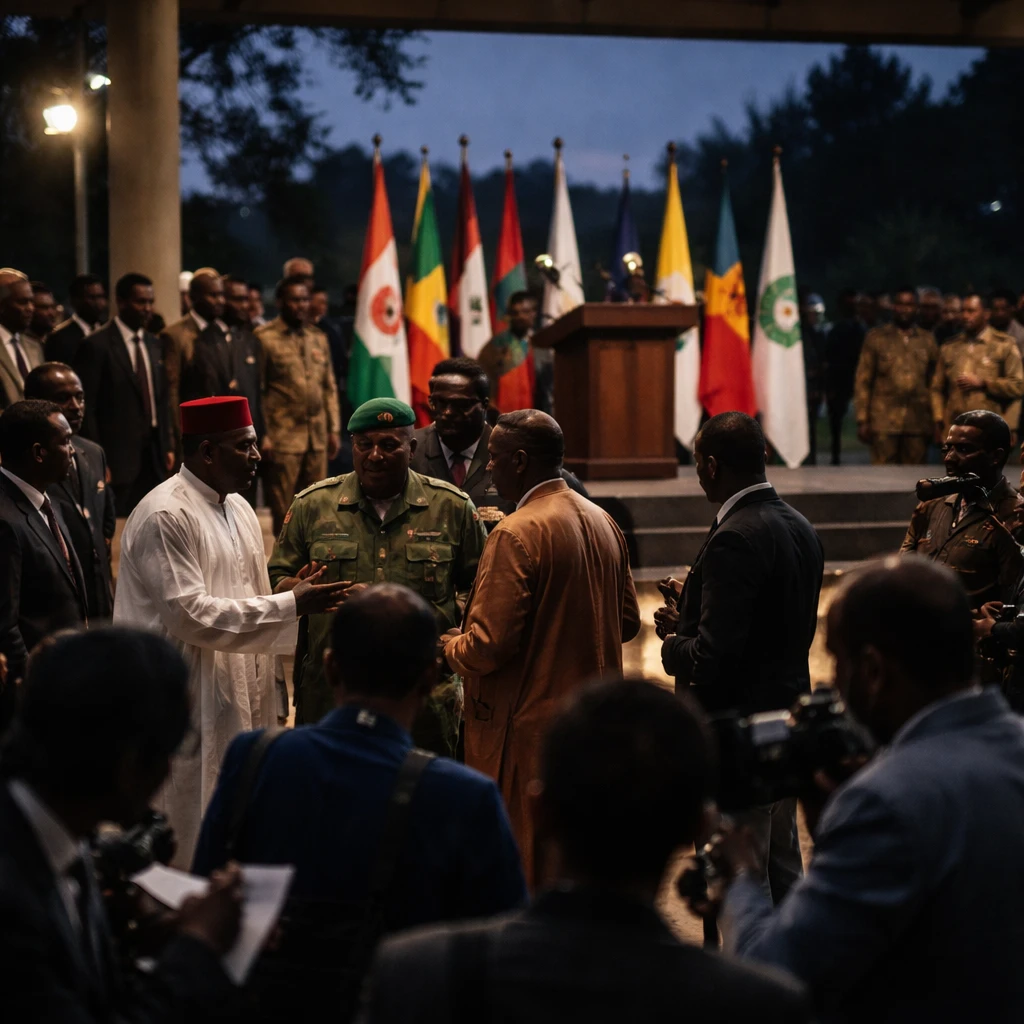
DIAMNIADIO, Senegal, April 21 - The foreign ministers of Niger and Mali used a security forum in Senegal to level sharp accusations at neighbouring countries, saying some states are providing sanctuary or support to terrorist groups. At the same time, both ministers said there remains room for selective cooperation with the Economic Community of West African States - ECOWAS - despite their governments' formal split from the bloc.
The comments highlight deepening diplomatic fractures across the Sahel region that observers say can complicate efforts to counter jihadist violence stretching across a semi-arid band of West and Central Africa.
Mali, Niger and Burkina Faso have each confronted insurgencies for more than a decade. All three are currently governed by military administrations that came to power in coups and subsequently withdrew from ECOWAS to form the Alliance of Sahel States - AES.
"There are neighbouring countries that are currently harbouring terrorist groups, supporting terrorist groups, or frequently receiving hostile forces that carry out operations against us," Malian Foreign Minister Abdoulaye Diop told Reuters on the sidelines of the forum late on Monday. Diop did not identify specific neighbours by name, and he also accused foreign powers from outside the region of playing a role.
Diop additionally said Ukrainian mercenaries had attacked Mali and taken responsibility, a remark that appears to reference earlier comments attributed to a spokesperson for Ukraine's military intelligence agency about fighting in northern Mali in 2024. At the time, Ukraine said there was no evidence it had participated in those clashes and later denied supplying drones to rebels in northern Mali.
Tensions have been particularly strained between Mali and Mauritania in recent weeks. Mali has alleged that two of its soldiers were being held by armed groups across the border, a claim Mauritania said offended it and denied.
Niger's Foreign Minister Bakary Yaou Sangare used his speech at the same forum to contend that some countries seeking to assist Niger on counterterrorism are also "fuelling, financing and sustaining" terrorism within its borders. When asked by Reuters which country he was referring to, Sangare named France. The French foreign ministry did not immediately respond to a request for comment.
In January, Niger's military ruler Abdourahamane Tiani publicly accused the presidents of France, Benin and Ivory Coast of sponsoring an assault on the country's international airport - allegations he made without presenting evidence.
Meanwhile, the current chair of ECOWAS, Sierra Leonean President Julius Maada Bio, appealed directly to the AES states to either rejoin the regional body or increase collaboration with it. Bio's plea reflected concerns in the regional bloc about the security and economic consequences of the split.
But Mali's Diop reiterated his government's position, saying, "Mali, Burkina Faso, and Niger, politically speaking, have withdrawn from ECOWAS." He added that the withdrawal was final and that calls for them to return were therefore pointless.
Despite the political rupture, Diop indicated the AES could still pursue a pragmatic line of engagement with ECOWAS on operational issues such as maintaining freedom of movement and preserving the region's common market. Those economic and mobility concerns remain salient for states and populations within the Sahel even amid the broader diplomatic standoff.
Location and context: Statements were made on the sidelines of a security forum held in Senegal on April 21.