
Economy April 21, 2026 10:23 AM

Senate Hearing on Warsh Puts Fed Rate Path and Independence in the Spotlight

Confirmation proceedings focus attention on interest-rate direction, central bank autonomy and political friction around the Fed

By Caleb Monroe
Senate Hearing on Warsh Puts Fed Rate Path and Independence in the Spotlight

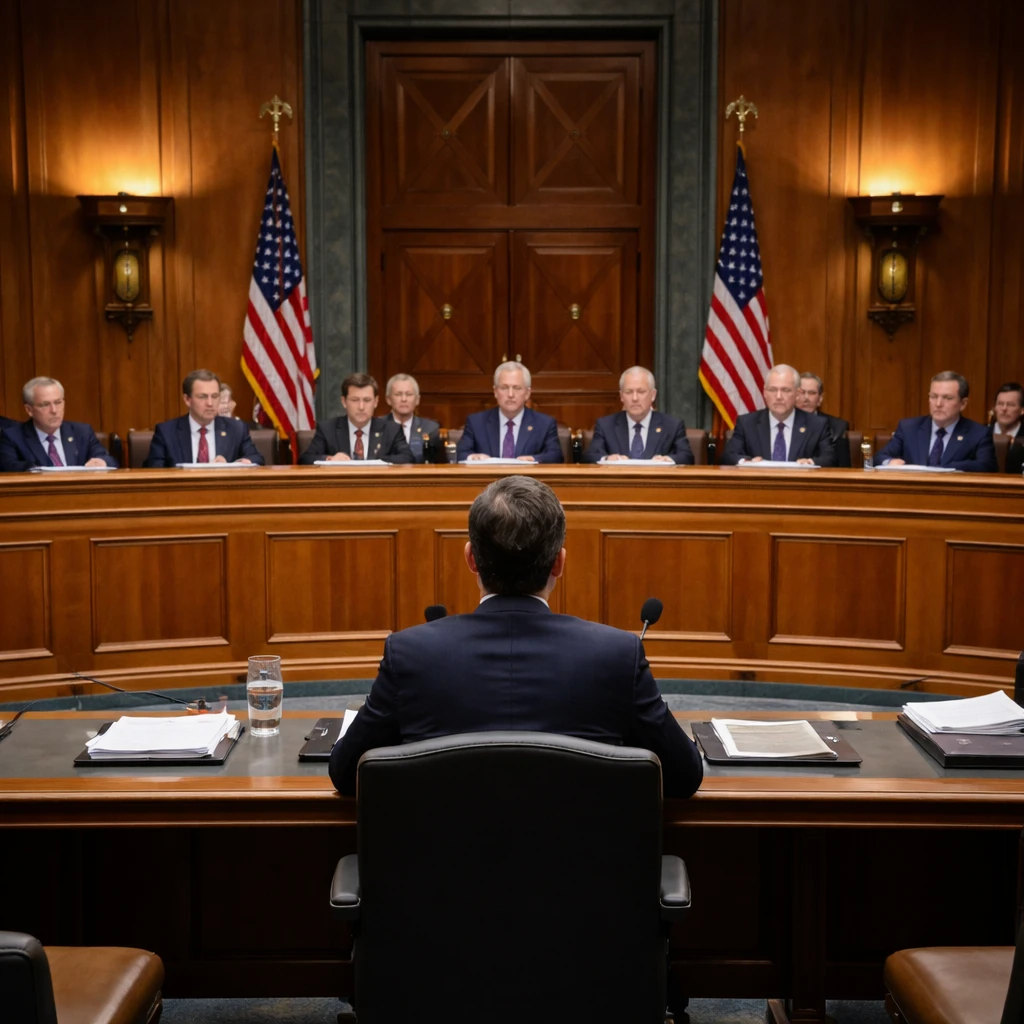
The U.S. Senate Banking, Housing, and Urban Affairs Committee has opened confirmation hearings for President Trump's nominee to lead the Federal Reserve, Kevin Warsh. Senators and markets are watching for signals about the Fed's likely interest-rate trajectory and broader questions about the central bank's independence after a Justice Department probe and public tensions with the White House.

Key Points

  • Kevin Warsh's confirmation hearing is taking place before the Senate Banking, Housing, and Urban Affairs Committee; markets are focused on signals about the Fed's interest-rate outlook and independence.
  • Warsh was nominated at the end of January and was initially seen as having a hawkish record; markets had reacted with a notable U.S. dollar move on the view he might shrink the Fed's balance sheet, though his recent remarks have leaned toward advocating rate cuts - sectors affected include financial markets, banking, and currency markets.
  • Senator Thom Tillis has pledged to block Warsh's appointment while a DOJ probe into Fed Chair Jerome Powell remains open, introducing political uncertainty that could affect policy clarity and market confidence - sectors impacted include capital markets, bond markets, and sectors sensitive to interest-rate shifts such as housing and consumer credit.

The Senate's Committee on Banking, Housing, and Urban Affairs convened Tuesday to begin confirmation hearings for Kevin Warsh, President Trump's pick to become the next chair of the Federal Reserve. The session has drawn close attention from markets and policymakers for indications of how the Fed might handle interest rates and for signs about the agency's capacity to act independently.

Warsh was formally nominated at the end of January. At the time of his selection, many market participants interpreted the choice as cautious, reflecting Warsh's past reputation for a hawkish bent while serving as a Fed governor. That view drove a measured market reaction, including a notable move in the U.S. dollar tied to increased odds that Warsh would pursue a reduction in the Fed's balance sheet.

In recent public remarks, however, Warsh has given more emphasis to cutting interest rates. Those comments, coming against the backdrop of the Senate hearing, are being parsed for what they imply about near-term monetary policy.


Political dynamics are complicating the confirmation process. Senator Thom Tillis, a prominent Republican, has said he will block Warsh's appointment while a Department of Justice probe into current Fed Chair Jerome Powell remains outstanding. That opposition leaves Warsh's confirmation uncertain and places the hearing under heightened scrutiny.

The White House has repeatedly signaled a preference for lower interest rates. President Trump told CNBC he "would be disappointed" if the next Fed chair does not move to cut rates. The president has a recent history of public disputes with Chair Powell over rate policy, at times using sharp language and suggesting Powell could be removed from his post.

Separately, the administration initiated an investigation into a Federal Reserve project related to the renovation of office buildings. The inquiry has factored into tensions between the Fed and the executive branch.

Chair Powell addressed the investigation in January with an unusually forceful public statement. He said the DoJ probe and the "threat of criminal charges" were the "consequence of the Federal Reserve setting interest rates based on our best assessment of what will serve the public, rather than following the preferences of the President." Powell's comments underscore the extent to which questions about institutional independence are central to the confirmation debate.


As the hearing progresses, market participants will be watching closely for concrete signals regarding rate strategy and the Fed's institutional autonomy. The outcome of the confirmation process, and any further political or legal developments tied to the DOJ inquiry, could shape monetary policy expectations and market positioning.

Risks

  • Confirmation uncertainty tied to Senator Tillis's opposition and the DOJ probe into Chair Powell could delay or disrupt leadership transition at the Fed - this poses risks for financial market stability and interest-rate-sensitive sectors.
  • Political pressure on the Federal Reserve, including the administration's investigation into Fed property projects and the president's public demands for lower rates, raises uncertainty about central bank independence and could influence monetary policy expectations - risks concentrate in banking, fixed income, and currency markets.
  • Shifts in Warsh's public comments from a historically hawkish posture toward advocating rate cuts add ambiguity to forecasts for policy direction, creating risk for investors and businesses that rely on predictable rate trajectories - affected areas include consumer lending, mortgage markets, and corporate financing.

More from Economy

Meta to Deploy Internal Tracking Tool to Capture Employee Input for AI Model Training Apr 21, 2026 Warsh Pressed by Senate Democrats Over Plan to Shed Financial Holdings if Confirmed as Fed Chair Apr 21, 2026 SARB flags Middle East conflict as upside inflation risk as markets price in two hikes Apr 21, 2026 GPUs Become Top Alternative Asset, Survey Finds Apr 21, 2026 BRB and Quadra Capital agree fund to transfer 15 billion reais of Banco Master-linked assets Apr 21, 2026