
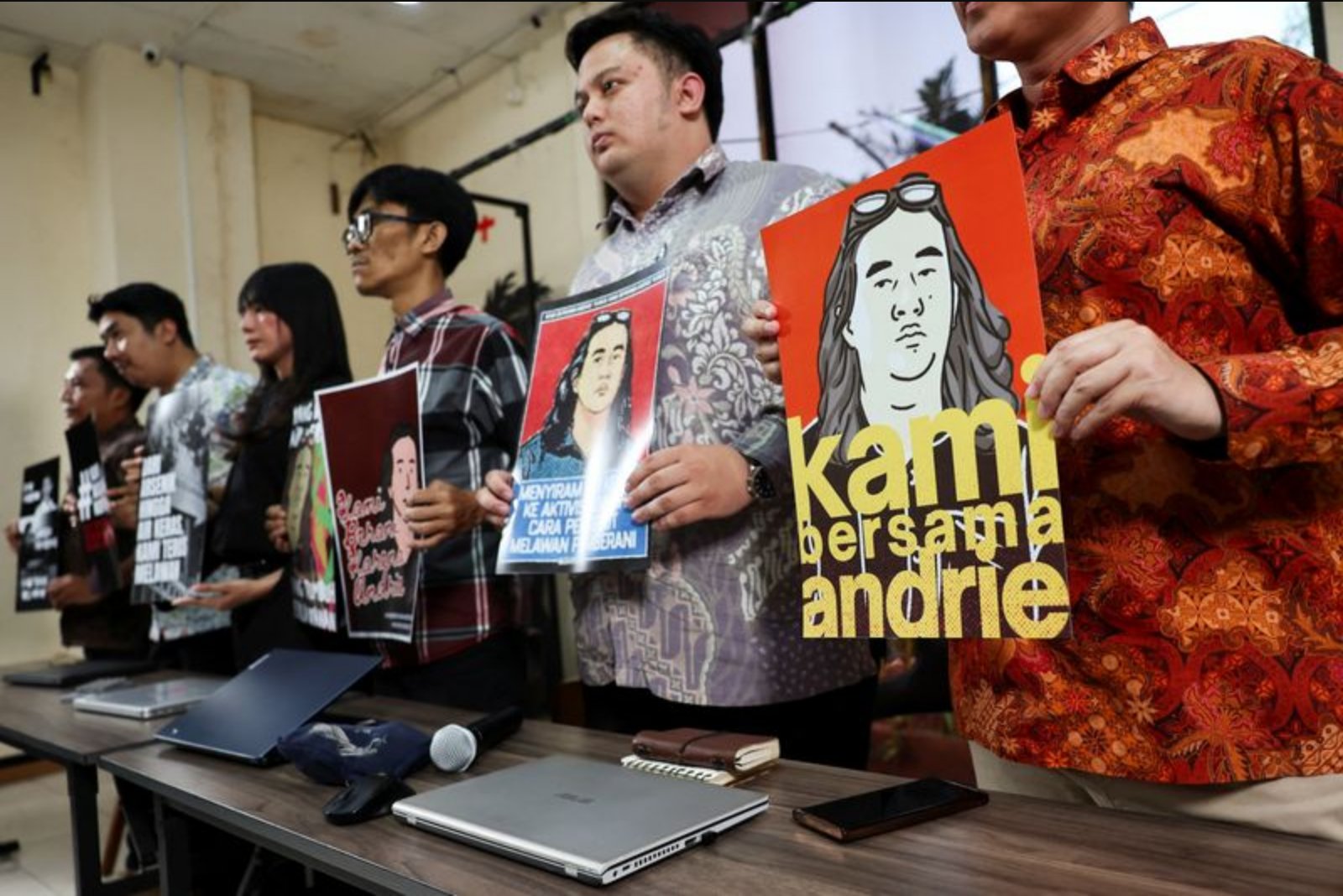
JAKARTA, April 29 - Indonesian military prosecutors formally charged four officers on Wednesday in connection with an acid attack that targeted a prominent activist who had been critical of the armed forces’ expanding role in civilian government appointments.
The victim, Andrie Yunus, serves as a deputy coordinator with the Commission for Missing Persons and Victims of Violence, widely known as KontraS. Prosecutors say assailants on a motorcycle threw acid at Andrie on March 12, resulting in burns covering roughly 20% of his face and body. The attack left Andrie permanently scarred and inflicted heavy damage to his right eye.
Military court documents show the four officers have been charged under Indonesia’s criminal code with serious premeditated assault, an offense that carries a maximum punishment of 12 years in prison. All four men attended the hearing; their ranks were reported to range from captain to second sergeant.
At the hearing, military prosecutor Mohammad Iswadi described the alleged motive for the attack. He said the officers, who are attached to the military’s intelligence unit, felt affronted by Andrie’s public protest last year against legal amendments that allow more military officers to be appointed to civilian government posts. "With the incident, the suspects deemed Andrie Yunus to have insulted and stomped on the military as an institution," Iswadi said, adding that the accused used a mixture of car battery acid and rust remover in the assault.
None of the four officers or their legal representatives were immediately reachable for comment. The proceedings are being conducted in a military court rather than in civilian courts.
Indonesia’s national human rights commission, Komnas HAM, has reported a wider probe that identifies at least 14 people linked to the March attack. The watchdog said the assault could create a climate of fear among civilians considering criticism of government officials. Komnas HAM also raised concerns about the case being handled by a military tribunal, arguing that this limits public participation and could result in more lenient treatment of the accused.
The commission urged police to pursue investigations of the additional individuals it has linked to the attack within civilian courts, rather than limiting adjudication to the military justice system.
Observers and rights groups have framed the attack against the broader backdrop of anxiety about democratic norms in Indonesia. Komnas HAM and other critics point to a notable increase in military involvement in civilian affairs and state-run enterprises under the administration of President Prabowo Subianto, a retired general, as a factor heightening concern over the erosion of democratic checks and balances.
Shortly before the attack, Andrie had recorded a podcast episode focused on the military’s expanding authorities and presence in civilian roles. President Prabowo publicly described the assault last month as an act of "terrorism" and pledged a thorough investigation into the incident.
The trial now underway will test whether allegations of a coordinated, retaliatory assault by serving military personnel will be adjudicated through the military justice system alone or prompt broader civilian inquiries into the network of individuals Komnas HAM says may be involved.