
BEIJING/TAIPEI, April 29 - China told Taiwan on Wednesday that its economy would gain rare opportunities if the island accepted union under Beijing’s terms, part of a continuing push to persuade Taipei to accept Chinese rule - a proposition Taiwan’s government has repeatedly dismissed.
At a routine briefing in Beijing, Chen Binhua, a spokesperson for China’s Taiwan Affairs Office, framed reunification as an economic boon. He said Taiwan’s economy would be "reinvigorated with new vitality", citing the combination of China’s huge market and Taiwan’s strengths "in science, technology, and talent." He added that "Peaceful reunification will inject greater certainty and growth potential into Taiwan’s investment and business environment, representing an unprecedented opportunity and the greatest source of confidence for Taiwan’s economic development."
Beijing has portrayed this outreach as part of a campaign launched since late last year to promote what it calls "peaceful reunification," even as it has declined to renounce the use of force. China regards democratically governed Taiwan as its own territory and has been pressing the island with political and messaging efforts designed to emphasize the benefits of closer ties under its framework.
Taipei, however, has firmly rebuffed those overtures. President Lai Ching-te’s administration has repeatedly rejected Beijing’s claims. Speaking to senior military officers in Taipei on Wednesday, Lai said that only Taiwan’s people can decide their future and that Beijing has no right to claim the island. He argued that strengthening Taiwan’s defence capabilities is the only route to ensuring genuine peace.
"Unification packaged as peace will inevitably bring endless troubles to our nation," Lai said. He also accused China of mounting persistent pressure around the strait: "At present, China is frequently conducting grey zone operations and military exercises in the waters surrounding the Taiwan Strait, while simultaneously employing a combination of military, legal, informational, and psychological means, in an attempt to alter the status quo in the Taiwan Strait and the broader region."
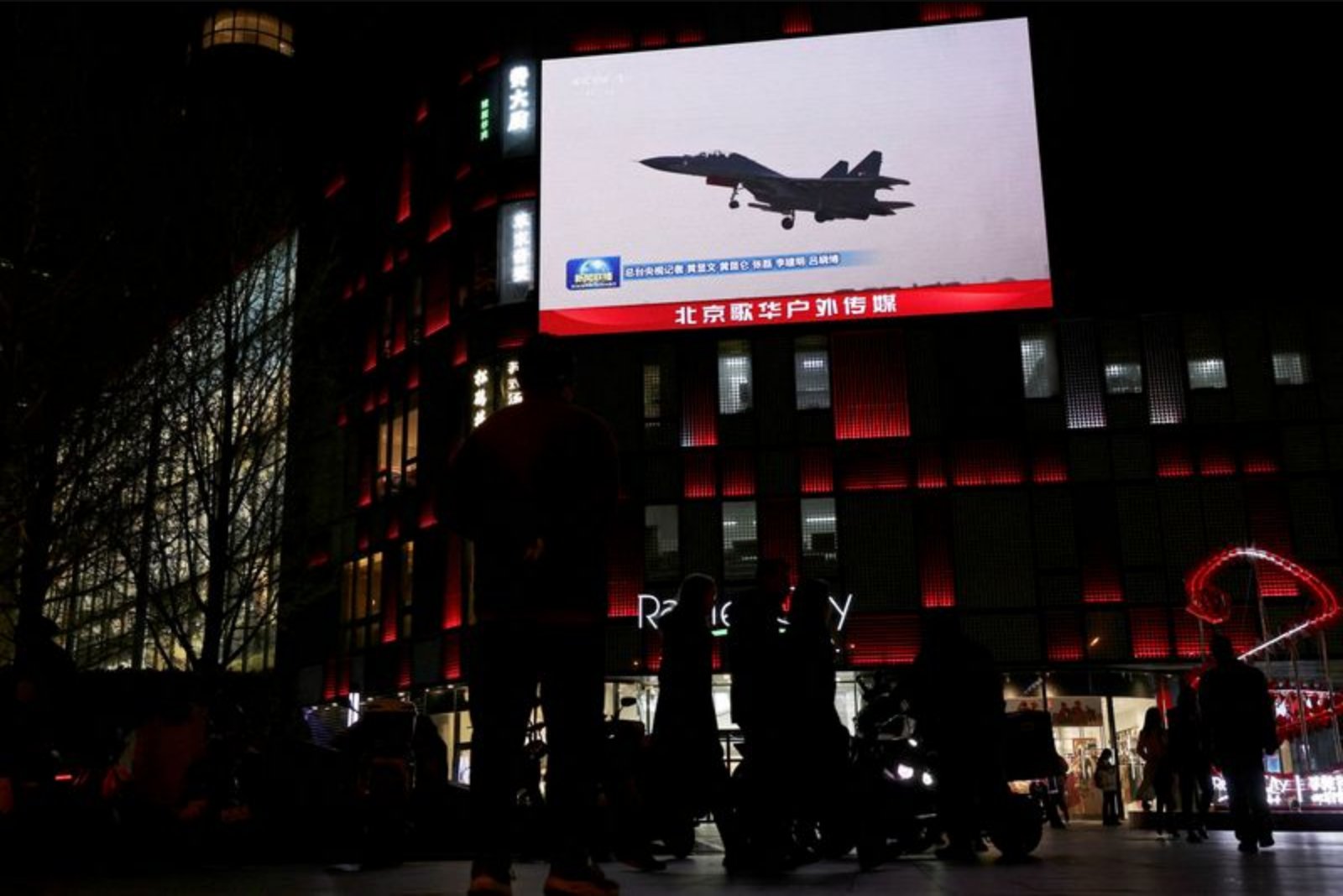
Taiwan accuses China of daily grey-zone activity - irregular tactics intended to exhaust an opponent without open combat - including the regular deployment of warships and warplanes close to the island. Beijing describes its routine military operations near Taiwan as "entirely justified and reasonable."
China has offered Taiwan a model of autonomy resembling the Hong Kong-style "one country, two systems" arrangement, though no major political party in Taiwan supports that proposal.
The backdrop to the political clash is Taiwan’s strong economic position. Taiwan is a leading producer of the world’s most advanced semiconductors, central to the global artificial intelligence trend. The island’s economy has been expanding rapidly, described in official commentary as growing 8.68% in 2025 - the fastest rate in 15 years - and is expected to expand 11.3% in the first quarter.
Beijing is pitching the economic argument as part of a broader strategy to sway opinion in Taiwan, while Taipei emphasizes sovereignty, democratic choice, and bolstering defence as safeguards against what it sees as coercive tactics.
Key points
- Beijing says Taiwan would receive major economic benefits from reunification, highlighting market access and Taiwan’s technological strengths.
- Taipei rejects Beijing’s claims and stresses that only Taiwan’s people can determine their future, while calling for stronger defence capabilities.
- Ongoing tensions include frequent Chinese grey-zone activities and military exercises near Taiwan, and competing narratives over the legitimacy of China’s actions.
Risks and uncertainties
- Military escalation risk from frequent Chinese operations around the Taiwan Strait - impacting defence and regional security sectors.
- Political and economic pressure on Taiwan that could affect supply chains in semiconductors and technology-related markets.
- Uncertainty over cross-strait relations given Beijing’s refusal to renounce force and Taiwan’s firm rejection of reunification - with implications for investor confidence in regional markets.