
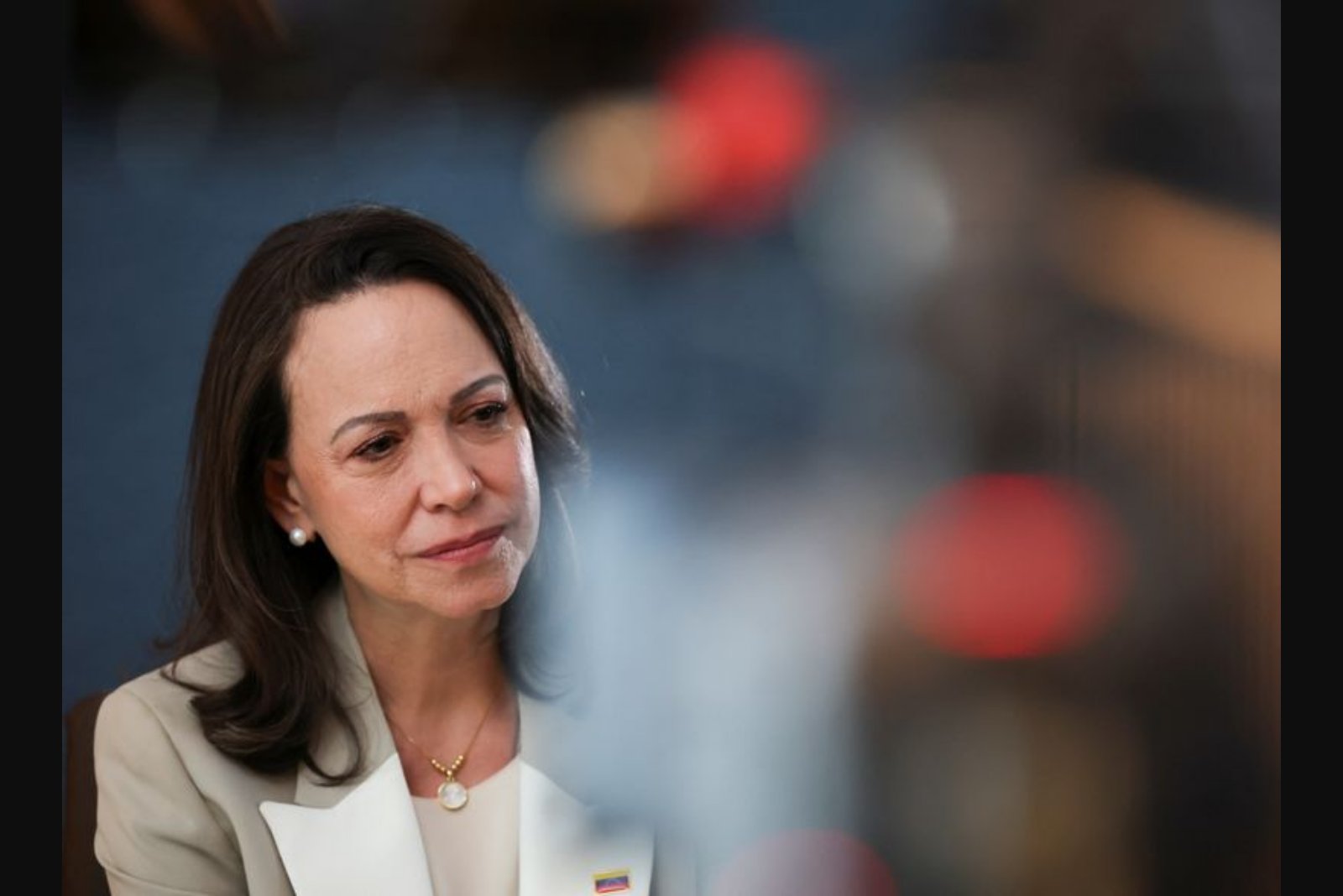
MADRID, April 20 - Venezuelan opposition leader Maria Corina Machado said she expects to return to Venezuela before the end of 2026 and urged a faster timetable for organizing elections, warning that prolonged delays could increase the danger of unrest.
In an interview late on Sunday, the Nobel Peace Prize laureate said she "absolutely" saw herself back in the country soon and stressed the need for an orderly political process to channel growing public demands and expectations. "We believe that in order to (manage) the anxiety and expectations and the urgency of the Venezuelan people in an orderly, civic way, it is very important to start taking steps towards what the whole country requires and demands, which is free and fair elections," she said.
Machado’s remarks followed the capture of President Nicolas Maduro in January, an event she said had raised expectations among many Venezuelans for major changes in government and the economy. She cautioned that those expectations must be addressed rapidly to prevent the risk of "anarchy." "It’s like a huge dam that’s been (gathering) more and more and more energy, frustration, and courage, and expectations," she said. "My challenge, our challenge, is to channel those energies peacefully, civically, with one objective, which is an electoral process. If people feel that this is not the purpose of all that’s going on, these forces could get out of hand."
On the question of leadership following Maduro’s capture, Machado criticized the U.S. decision to install Delcy Rodriguez - Maduro’s former deputy - rather than her, saying U.S. President Donald Trump had concluded she did not have the short-term support required to run the country. "What I heard was President Trump praising how she follows his instructions," Machado said, rejecting any suggestion this implied long-term U.S. support for Rodriguez.
Rodriguez, she acknowledged, has received praise from the U.S. administration for her performance. Machado nevertheless expressed the view that the Rodriguez government had not been as weak as it appeared until recently, saying "they are starting to realize that things have changed and this is a totally different moment."
Machado, 58, left Venezuela in December after defying a decade-long travel ban to accept the Nobel Prize. Prior to leaving, she had spent more than a year largely in hiding following disputed elections in 2024, in which Maduro was declared the winner over opposition candidate Edmundo Gonzalez amid nationwide protests.
She noted specific practical requirements she considers necessary before elections can be held. Machado said the electoral roll must be updated to include those previously blocked from voting and that new members of the electoral council need to be selected, work she estimated could be completed "in eight or nine months." She declined to directly say whether President Trump was moving fast enough, while acknowledging U.S. actions she credited with advancing the current situation. "We wouldn’t be where we are right now, moving ahead, if it wasn’t for the U.S. administration and President Trump’s decision to bring Nicolas Maduro to justice," she said. "But certainly I understand the urgency and demands of my people and I think we should move ahead in the democratic and electoral process."
During her visit to Madrid, Machado drew thousands to a rally for exiled Venezuelans in a city square, where she told attendees they would soon be able to return home. Around a quarter of Venezuela’s population has left the country since 2014, dispersing across Latin America, the Caribbean, Spain and the United States, she said, fleeing an economy that she described as oil-dependent and crippled by mismanagement.
Machado met with right-wing opposition leaders in Spain but declined to meet with Prime Minister Pedro Sanchez, telling Reuters that the Spanish government had not done enough to confront the Maduro regime. "We expected Spain to be perhaps the main voice in highlighting the horrible situation of our country, the crimes against humanity that have been committed, the terrorism of state that has been deployed. Unfortunately, it didn’t happen," she said. Machado added that she had met with other European voices and that she sees Europe as an ally in restoring institutions in Venezuela.
On a personal note, Machado said that since leaving Venezuela she has largely been based in the United States and welcomed the opportunity to reunite with her three adult children. She said she had asked her children to live abroad for security reasons after she became a lawmaker. "As a mom I’ve always felt very guilty in terms of the consequences my family, especially my children, have suffered because of my decisions," she said. "I tell myself every day that I do it for them, for every single young Venezuelan and those that have not been born yet, that they will have a country that they feel proud about and they can live as free citizens."
Machado also recounted small personal discoveries during her time abroad, noting that she had enjoyed catching up with technological developments that had not reached Venezuela in the past two decades. She singled out finding Uber taxis as one particular revelation, but added that she feels drawn back to her homeland and is "counting the days" until her return.
What Machado says needs to happen before elections
- Update the electoral roll to include those previously blocked from voting.
- Select new members of the electoral council.
- Complete those steps within a timeframe she estimates at "eight or nine months" to prepare for an electoral process.
Context and public expectations
Machado warned that Venezuelans expect significant changes following the capture of Maduro in January and that the speed of implementing reforms or electoral steps will affect whether those expectations remain peaceful and civic or spill into unrest. She described public sentiment as accumulating energy and frustration that needs to be channelled into an electoral objective.
Political diplomacy in Madrid
While in Madrid, Machado criticized the Spanish government for not being more vocal against the Maduro administration and emphasized Europe as a potential partner in rebuilding Venezuelan institutions. She declined to meet with Spain’s prime minister but met opposition figures and addressed a large gathering of exiled Venezuelans.
Personal reflections
Machado spoke about the personal costs of her political stance and the sacrifices made by her family. She described relief at reuniting with her children and reinforced her stated motivation: to secure a future in which Venezuelans can live freely and be proud of their country.