
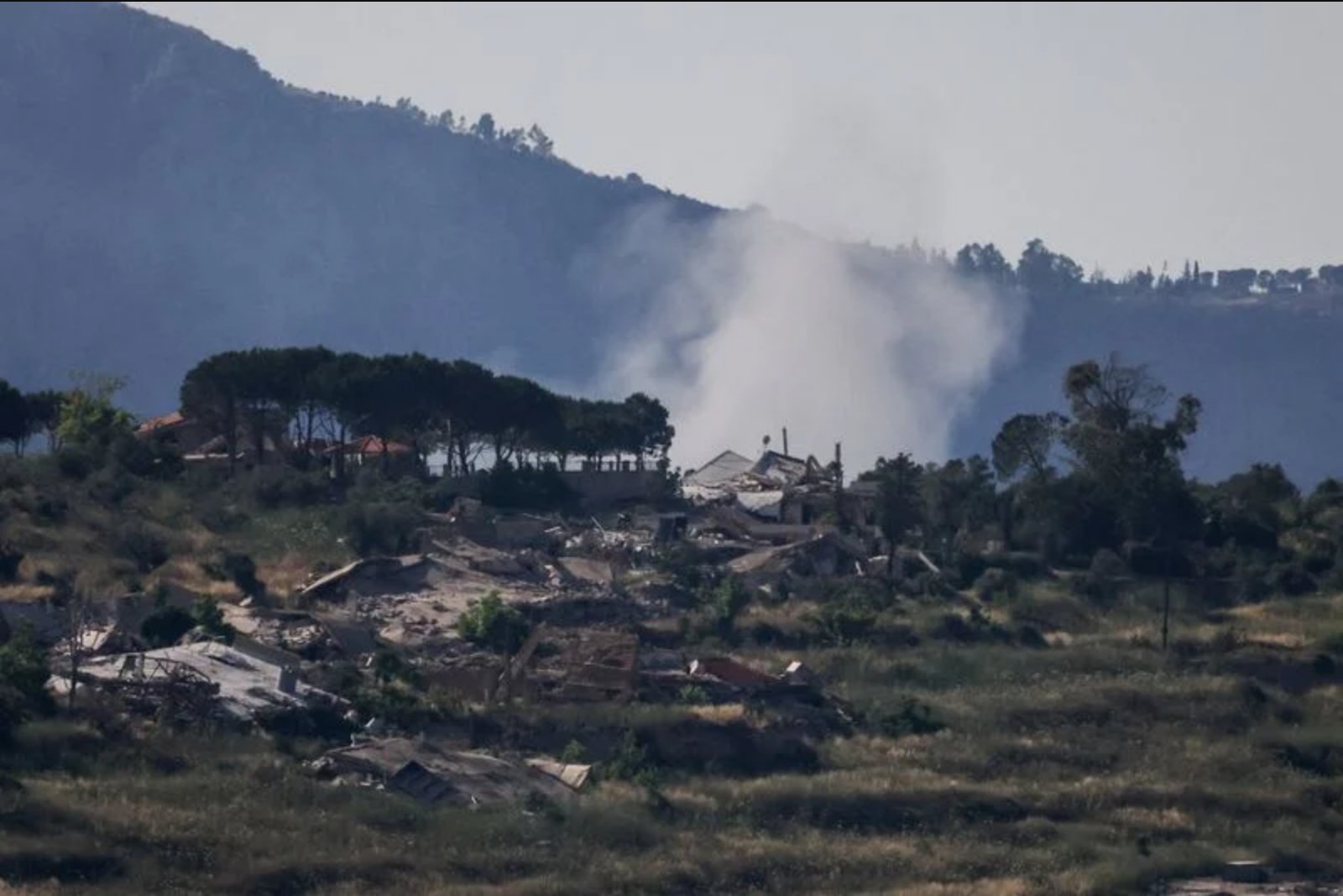
Iran has mounted a deliberate campaign to keep Lebanon as a central instrument of its regional strategy, tying the country’s trajectory to a potential grand bargain with Washington. The objective, as portrayed by Tehran, is to end the Hezbollah-Israel confrontation on terms that secure its strategic leverage in the eastern Mediterranean rather than those set by Beirut.
That push now collides with an unprecedented U.S.-sponsored negotiating effort aimed at defusing long-standing frontier disputes between Lebanon and Israel and reshaping the balance of power inside Lebanon. The two tracks - Tehran’s demand for a Lebanon ceasefire as part of negotiations with Washington and the separate talks in Washington between Beirut and Jerusalem - are producing a high-stakes diplomatic impasse.
President Joseph Aoun has presented the domestic position as one of national sovereignty, telling interlocutors that "Lebanon's future is in the hands of the Lebanese, not Iran - nor Israel." He framed the parallel negotiations as a contest over the country’s independence and authority. "Cooperation with Iran is one thing, but we do not accept that the Iranians dictate to us," Aoun said. "We are a sovereign state. Iran cannot speak in our name. We do not accept that Lebanon becomes a field for other people’s wars." He reiterated his commitment to a diplomatic path, asserting that "there is no military solution. We have no choice but to negotiate to end this conflict, and neither do the Israelis."
Yet Aoun’s determination has collided with practical obstacles. Hezbollah has rejected direct talks with Israel, publicly denouncing them as shameless, and has not provided the government with a distinct plan to bring the fighting to a close. The president warned that if Hezbollah opts to remain in a sustained war posture, the group risks damaging the Shi’ite community it claims to protect and extending a conflict that first erupted on March 2 in parallel to the Iran war. That continued hostility has intensified sectarian and political strains across Lebanon.
Tehran, for its part, has made a halt to hostilities in Lebanon a precondition for any wider settlement with Washington. In doing so, Iran retains influence over a process in which it is not an official participant but whose outcome it attempts to shape - most notably by insisting that any effort to weaken Hezbollah, normalise strikes on Lebanese territory or target Shi’ite areas would cross Tehran’s red lines. An Iranian official said those warnings had been communicated to Washington and Tel Aviv, accompanied by cautions that ongoing fighting could derail ceasefire initiatives and risk broader regional spillover, including threats to maritime chokepoints.
Analysts and officials alike stress Lebanon’s elevated importance to Iran since the late 2024 ouster of Syrian President Bashar al-Assad, which had been a principal pillar in Tehran’s so-called Axis of Resistance. "Lebanon is the ground zero of Iran’s resistance narrative," said Andreas Krieg of the School of Security Studies at King’s College London, describing it as Tehran’s primary frontline against Israel and a base for operations across the Levant. This posture was underscored by a recent Iranian strike on Israel, launched in response to an attack on Beirut’s southern suburbs - an action that marked Tehran’s first direct intervention in the Hezbollah-Israel war, and that signalled Tehran’s willingness to enforce its declared red lines, especially regarding Lebanon.
Stalled, fractious talks in Washington
The U.S.-backed negotiations in Washington have so far yielded limited public progress and exposed deep disagreements. At the core of the impasse are incompatible demands: Lebanese negotiators are seeking a durable ceasefire that would pave the way for a full Israeli withdrawal and the return of hundreds of thousands of displaced civilians under the supervision of the Lebanese army. Israel, by contrast, insists that Hezbollah be dismantled as a military force - at least in southern Lebanon - and that concrete proof of such dismantlement be provided before any occupied territory is relinquished.
Lebanese officials directly involved in the talks described the sessions as tortuous. One account described a particularly fractious meeting last week that ran for five hours before Lebanese negotiators concluded that Israel was unwilling to offer meaningful concessions. Chief negotiator Simon Karam reportedly told U.S. mediators that talks should be paused and walked out of the room. The meeting only resumed after what those Lebanese officials described as the direct intervention of U.S. Secretary of State Marco Rubio and Vice President JD Vance. When the session continued, participants said the outcome was a "last-minute, take-it-or-leave-it proposal" with little substantive detail. The package proposed a ceasefire contingent on Hezbollah stopping hostilities and withdrawing from southern Lebanon as an initial step, echoing an earlier April announcement that likewise did not explicitly guarantee Israeli troop withdrawal.
U.S. officials have publicly accused Iran of attempting to sabotage the Washington process. Meanwhile, Beirut has responded with proposed parallel negotiating tracks designed to ensure that an Israeli withdrawal and the gradual extension of Lebanese state authority proceed together. Lebanese officials involved in formulating the proposal said a ceasefire would trigger a 24-hour window for Hezbollah to begin withdrawing, which would allow the establishment of "pilot zones" starting around Beaufort Castle. The concept calls for a phased approach: zone by zone, Israeli forces would pull back, Lebanese troops would take their place, and displaced civilians would begin returning with international reconstruction support.
Hezbollah immediately rejected Beirut’s plan, framing it publicly as capitulation to Israeli demands.
Perspectives from inside and outside Lebanon
A Lebanese source familiar with Hezbollah’s thinking argued that the Washington-led track is doomed to fail so long as hostilities persist, pitting an Israel unwilling to halt its offensive against a Lebanese delegation that lacks authority over the armed group. According to that source, meaningful negotiations will only commence once a ceasefire is produced by a U.S.-Iran agreement - at which point Lebanon would press for Israeli withdrawal and Israel would press for security measures addressing Hezbollah’s weapons. The source said Hezbollah’s leadership is not prepared to confront the issue of its armaments while the war continues.
That position has left Beirut attempting to steer a narrow path between Israel’s demand for Hezbollah’s military dismantling and Iran’s insistence on preserving the group as a regional lever. Lebanese officials say their stance is bolstered by an unusual cross-sectarian domestic consensus - outside the Shi’ite community - and rising support from Western and Arab partners for an independent national diplomacy free from Iranian direction.
But the prospect of a prolonged deadlock carries tangible human and strategic costs. Continued stalemate risks institutionalising a new reality in southern Lebanon that could prevent the return of large portions of the Shi’ite population. It also heightens the risk of wider regional spillover - a concern heightened by Tehran’s own warnings about possible disruptions to maritime chokepoints and the broader implications of renewed hostilities.
Conclusion
Lebanon sits at the intersection of two competing strategies: Tehran’s effort to preserve a state in which Hezbollah remains a central instrument of influence, and Beirut’s attempt to reclaim sovereign control through diplomacy with Israel under U.S. auspices. The outcome will depend on how these competing pressures - from Tehran, from Israel, and from Lebanon’s own fragile political consensus - resolve themselves in a negotiation environment that so far has produced little tangible progress.