
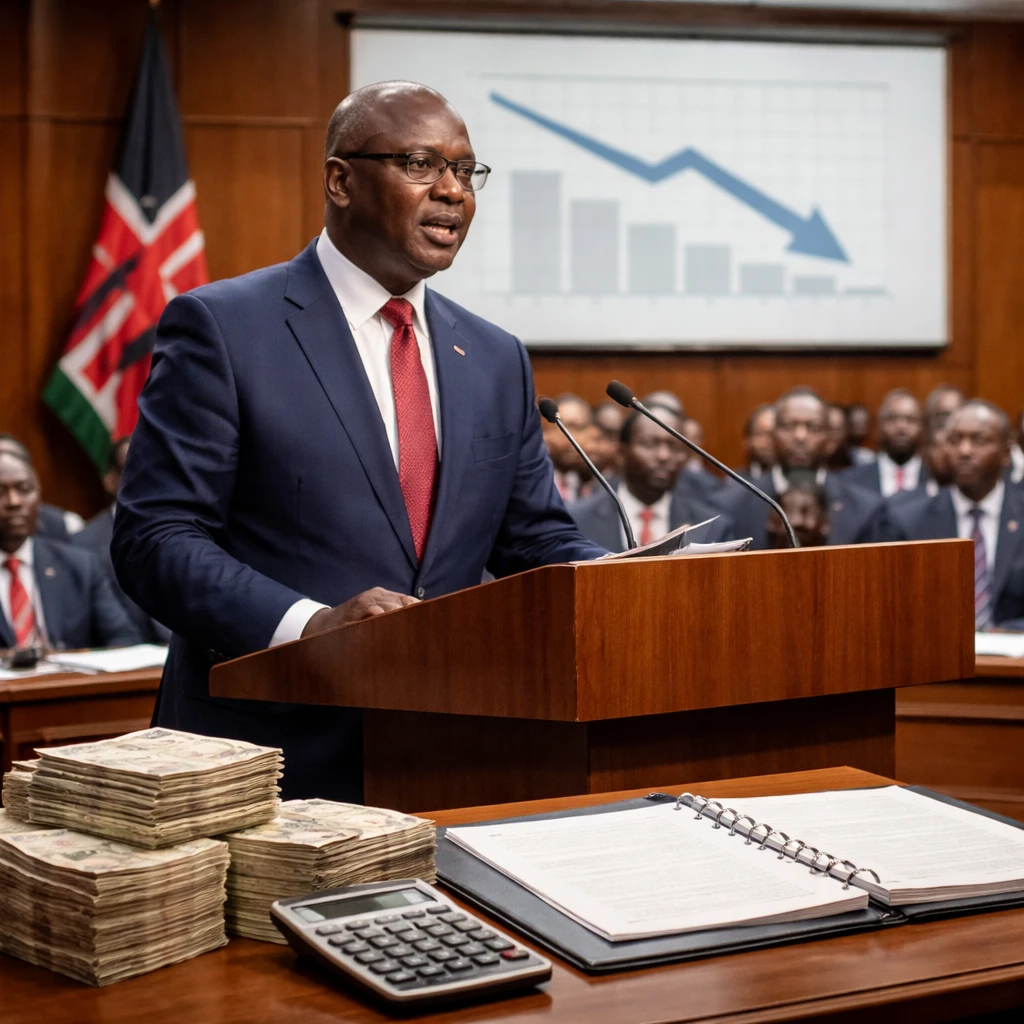
Treasury Secretary John Mbadi announced a lower growth outlook for 2026, saying the economy is now expected to expand by 5.3% in the coming year. The revision was explained as a response to the effects of the ongoing conflict in the Middle East on domestic economic activity, according to Mbadi's 2026-27 budget speech.
The budget presentation set out expectations for prices and inflation. The government anticipates that food prices will remain steady, a projection Mbadi linked to favourable weather conditions and a stable exchange rate. In that context, officials expect inflation to remain within the target range in the near term.
On fiscal pressures, the Treasury highlighted an annual infrastructure financing deficit of roughly $5 billion. Mbadi said that reliance on debt to fund infrastructure projects has raised debt service costs, which in turn has squeezed fiscal space and reduced allocations available for health, education and social protection.
Addressing outstanding government obligations, the budget speech said the administration intends to settle 155.3 billion shillings of verified bills owed to suppliers and contractors. The government plans to use a mix of direct budget allocations and securitisation to meet those obligations, and will repay 68 billion shillings of arrears during the 2026-27 fiscal year.
The Treasury also announced an extension to a banking sector deadline. Banks were given an additional three years, moving the timeframe to increase their capital tenfold out to 2032.
The measures outlined in the budget speech combine macroeconomic projections with specific fiscal actions aimed at addressing arrears and easing near-term price pressures, while acknowledging ongoing financing constraints for infrastructure investment.