
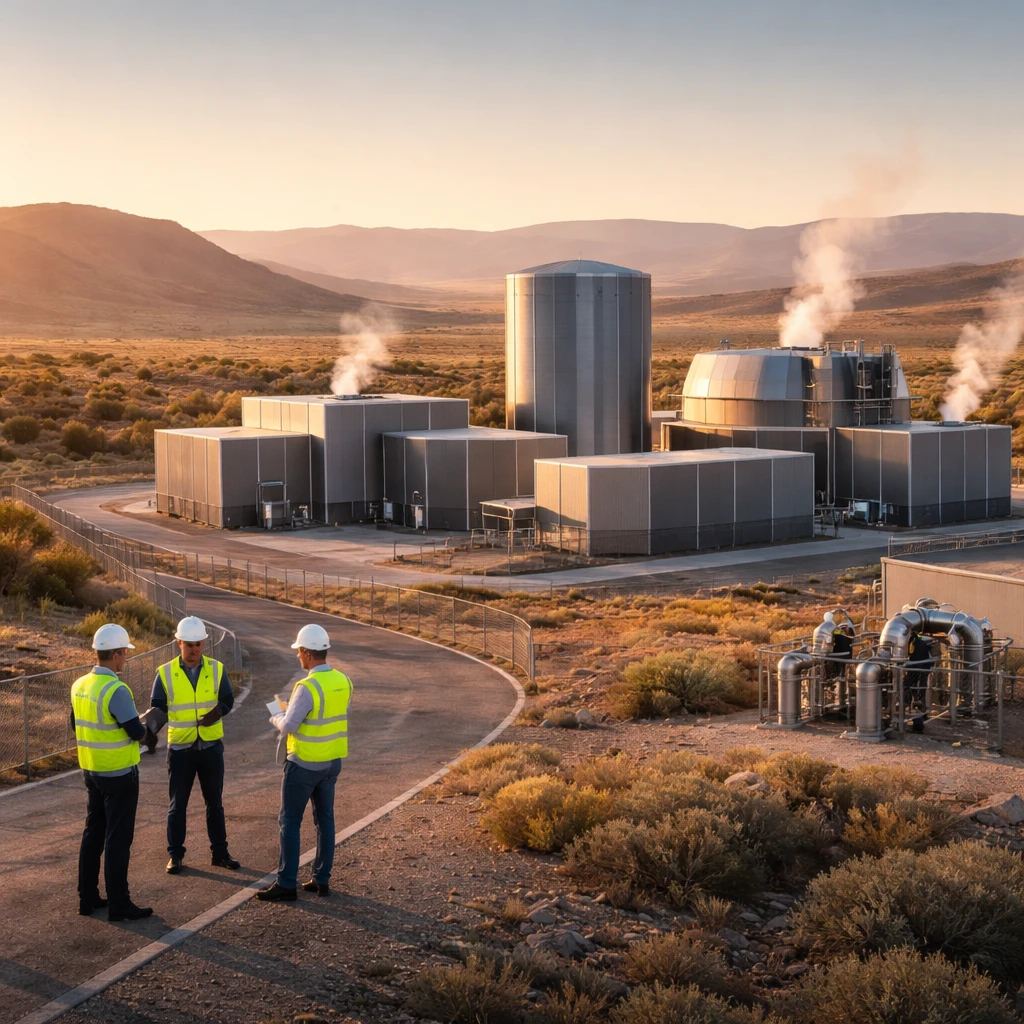
Oklo Inc. (NYSE:OKLO) saw its shares rise 2.5% in premarket trading Thursday following formal approval from the U.S. Department of Energy's Idaho Operations Office of the Preliminary Documented Safety Analysis for the Aurora powerhouse to be sited at Idaho National Laboratory.
The Idaho office's sign-off represents a substantive regulatory milestone under the DOE's Reactor Pilot Program authorization pathway. The review covered the preliminary safety basis for Aurora-INL, including the project's hazard analysis, accident analysis, safety controls, and design commitments.
Aurora-INL is the first of Oklo's planned fast fission power plants and has secured access to recovered fuel from the Experimental Breeder Reactor-II through a DOE competitive process that dates back to 2019. That same year, Oklo received a site-use permit at INL for the Aurora powerhouse.
The reactor project is advancing in parallel with Oklo's Aurora Fuel Fabrication Facility, where the company intends to fabricate the initial fuel assemblies for Aurora-INL from EBR-II fuel. The DOE's Idaho Operations Office approved the fuel facility's Preliminary Documented Safety Analysis in December 2025, making it the first facility approved under DOE's Fuel Line Pilot Program.
Under the Reactor Pilot Program, Oklo anticipates gaining early deployment and operating experience with Aurora-INL while continuing to pursue licensing from the U.S. Nuclear Regulatory Commission to enable future commercial operations. The program establishes a framework for building and operating advanced nuclear projects under DOE oversight.
Oklo's stated development program centers on fast fission power plants designed to deliver clean energy, build a domestic supply chain for critical isotopes, and advance nuclear fuel recycling to convert used nuclear fuel into clean energy. The company's regulatory approvals within DOE pilot programs mark sequential steps in that broader agenda.
Market reaction to the safety-analysis approval was modest but positive in premarket sessions, reflecting investor attention to regulatory progress for novel nuclear projects. The approval of both the Aurora-INL safety analysis and the prior fuel facility safety analysis signals coordinated movement across Oklo's site and fuel components of the program.
What comes next
Oklo will continue to operate within the DOE pilot program framework to gain operational experience and must keep pursuing NRC licensing to support future commercial deployment. The company will also move forward with fuel fabrication plans at its Aurora Fuel Fabrication Facility in support of Aurora-INL.