
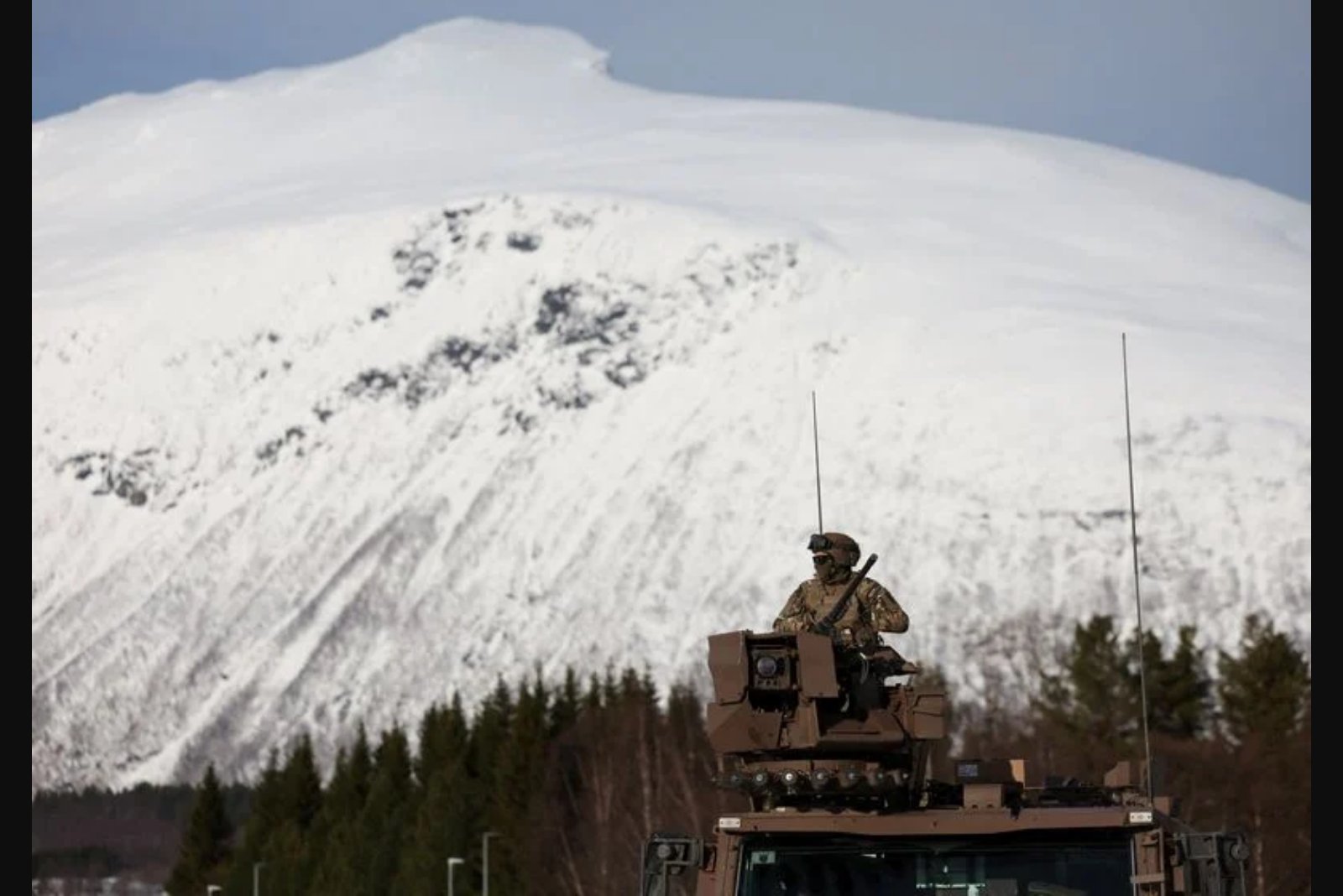
On a cold morning in Arctic Norway, British and Norwegian troops moved quietly through a birch wood draped in snow as part of a simulated reconnaissance operation. The scene was one element of a larger exercise in March that involved roughly 30,000 soldiers rehearsing a counter-attack against an invading "enemy to the east" - a phrase used as a stand-in for Russia, which shares a long Arctic border with Norway.
These manoeuvres were conducted under Arctic Sentry, an intensified Allied initiative intended to show Washington that Europe and Canada can contribute to defending NATO's northern approaches. The programme was announced in February by Secretary General Mark Rutte while he lobbied U.S. President Donald Trump to drop an effort to acquire Greenland. The diplomatic push succeeded, but NATO faces a more complex task in bolstering its Arctic posture, according to interviews with a wide range of current and former alliance officials and Arctic specialists.
Over the last decade, Russia has moved rapidly to strengthen its presence above the Arctic Circle. The Kremlin has modernised the world's largest ice-breaking fleet as retreating sea ice opens potential shipping routes and resource access, and revived numerous Soviet-era bases across a region that also provides the most direct route for Russian intercontinental nuclear missiles to reach the United States. Those developments have helped put the Arctic higher on NATO's strategic agenda.
Strategic context and allied signalling
Arctic Sentry is led by Joint Force Command Norfolk in Virginia, created in 2019 with an eye to Russia's growing northern capabilities. Reuters was not able to determine whether U.S. contributions to collective Arctic defence have increased or decreased under Arctic Sentry. A NATO official told questions from the news agency that the United States remains a key contributor to NATO's Arctic defence, and noted a renewed commitment in a June joint statement among the Arctic allies. The Pentagon and White House declined to answer Reuters' enquiries for this story, including questions on whether planned U.S. force reductions in Europe would affect American participation in Arctic defence.
Concerns about U.S. policy direction have shadowed allied planning. Alongside lingering unease about President Trump's past comments regarding Greenland and his broader threats to withdraw from NATO, an impending U.S. security review and announced cuts to its NATO crisis force contributions - including reductions in fighter jets, drones and ships - have created anxiety among European capitals. Those issues are expected to figure when leaders meet at a NATO summit in Ankara in July.
Russia's capabilities and the Kola Peninsula
A central allied worry is activity on Russia's Kola Peninsula, which neighbours Finland and Norway. The peninsula houses approximately two-thirds of Russia's second-strike nuclear capacity and is home to the Northern Fleet, which operates six of Russia's 12 nuclear-armed submarines. From Kola, Russia could launch hypersonic missiles toward the United States or send submarines into strategic waterways such as the Bear Gap in the Barents Sea and the GIUK Gap between Greenland, Iceland and Britain.
NATO and Norwegian monitoring efforts focus on the GIUK Gap and the Barents Sea. These waterways are strategically important and have seen incidents of undersea cable damage, some observers have linked to Russian activity. Norway conducts surveillance of Kola Peninsula facilities and shares intelligence with American partners. Still, experts argue these monitoring capacities need enhancement.
Mauro Gilli, professor of military strategy at the Hertie School in Berlin, said NATO must improve intelligence, surveillance and reconnaissance (ISR) capabilities to keep pace. He pointed out that operating in the Arctic imposes unique costs and technical challenges: standard equipment often fails in extreme cold and investments in specialized platforms are expensive.
Hardening the northern theatre requires costly, specialised assets
Because much of the High North is ocean - spanning Greenland, Iceland, northern Norway and the Barents Sea - any security posture in the region will be primarily naval. That requirement is expensive. Grimsson, former president of Iceland and chair of the Arctic Circle forum, noted that a 21st-century great power needs a strong Arctic presence to maintain a global standing.
One glaring capability gap is icebreakers. The United States currently operates two functional icebreakers, while Russia has 42, including nuclear-powered vessels. Satellites and satellite communications that function at high latitudes are also essential to permit real-time detection of adversary moves, Gilli said. Long-endurance drones capable of enduring extreme cold, expanded underwater surveillance arrays and a variety of ground-based radars are additional requirements.
Gilli estimated that investments to close these capability gaps could reach into the hundreds of billions of dollars. He highlighted that climate change complicates submarine detection, calling for a new generation of underwater sensors to offset changing ocean conditions. NATO Defence College research from 2025 cited in discussions for this story found that warming in the North Atlantic is changing salinity and currents, which in turn alters how sound travels underwater and reduces the range at which submarines can be detected.
Norwegian Defence Minister Tore Sandvik told reporters in January that allies currently can "listen to and track submarines in the Barents Sea and follow them," but warned that losing that ability would create a serious problem. The point underscores the operational importance of undersea detection and continued surveillance.
Signs of allied response, but uneven progress
There are indications that NATO members are moving to address Arctic weaknesses. Nordic countries rank among the alliance's largest defence spenders and are on track to reach NATO's target of 5% of GDP defence spending by 2035. Norway is investing in new frigates and submarines while pooling air force resources with other Nordic states to assemble a fleet comparable in size to that of Britain.
The United States and Finland have announced a partnership to build up to six icebreakers, with the first due to be delivered next year. Canada, mindful of its northern geography and a desire to reduce reliance on U.S. defence support, revealed a C$35 billion Arctic defence plan in March focused on infrastructure including military airfields and has signalled closer coordination with Nordic nations. Canada and Denmark have also pledged investment in ice-capable vessels.
At the operational level, Arctic Sentry exercises aim to accustom more NATO forces to polar conditions. Vice-Admiral James Morley, deputy commander of JFC Norfolk and a British officer, said the programme will expose more allied soldiers to the challenges of operating in the polar environment and provide a more realistic training arena. At Bardufoss air base in northern Norway, British Royal Marines were seen training on snowmobiles, skis and helicopters; the United Kingdom plans to double the number of Royal Marines permanently stationed in Norway to 2,000.
In June, NATO also activated a new formation of 600 troops based in the Lapland regions of Sweden and Finland, another sign of increased allied focus on the High North.
Political and strategic hurdles
Despite these measures, allied officials acknowledge that sustaining and scaling Arctic defences is difficult. Iris Ferguson, a former U.S. deputy assistant secretary of defence for Arctic and global resilience from 2022 to 2025, noted that when active combat is underway elsewhere - she was referring to Russia's war in Ukraine - it is politically and logistically challenging to redirect investment to a theatre that does not feel immediately "hot."
Allies also remain preoccupied with keeping the United States engaged. During Arctic Sentry's Cold Response exercise, U.S. military officers sought to reassure European partners about American commitments. Major General Daniel Shipley, commander of the U.S. Marine Corps Forces for Europe and Africa, said in Bardufoss that "Our commitment is to defend every last inch of NATO territory." Still, European unease persists after public signals from Washington that have raised doubts about long-term U.S. engagement in the alliance.
Norway has also taken measures to underline the importance of sustained U.S. attention. Prime Minister Jonas Gahr Stoere has highlighted the proximity of Russia's large nuclear arsenal to Norway's borders and framed continued American involvement in northern defence as being directly aligned with U.S. interests.
Surveillance and counter-surveillance dynamics
The region's strategic waterways are actively monitored by multiple actors. The Icelandic government reported that a Russian intelligence ship was observed shadowing NATO exercises in the North Atlantic and tracked between Iceland and Greenland in June, demonstrating Moscow's own efforts to keep watch on allied movements.
Norwegian surveillance of Kola Peninsula facilities and subsequent intelligence sharing with the United States form a key element of allied situational awareness, but NATO analysts say more capability is needed to maintain persistent coverage across the Arctic expanse.
What remains to be done
NATO's Arctic posture has shifted from low priority to a pressing strategic concern as climate effects, Russia's regional investments and broader geostrategic competition have raised the stakes. Allies have made some tangible moves - increased defence spending in the Nordics, icebreaker construction plans, pooled air assets, new troop formations and national infrastructure projects - but the scale and technical specificity of what is required mean that meeting the challenge will take time and substantial resources.
Investments will need to cover a range of capabilities: ice-capable surface vessels and submarines, nuclear and conventional icebreakers, satellites and communications that function at high latitudes, long-range unmanned aerial systems capable of sustained cold-weather operations, and advanced undersea sensors that can cope with shifting oceanographic conditions caused by warming seas. Defence planners warn that without accelerated and sustained investment, issues ranging from degraded submarine detection ranges to gaps in early warning for missile launches could undermine allied deterrence and response options in the High North.
For now, Arctic Sentry and associated national programmes represent an attempt to convince NATO's most important security partner that Europe and Canada can and will contribute materially to defending the alliance's northern approaches. Whether those initiatives translate into the persistent, high-cost capabilities experts say are needed remains to be seen.