
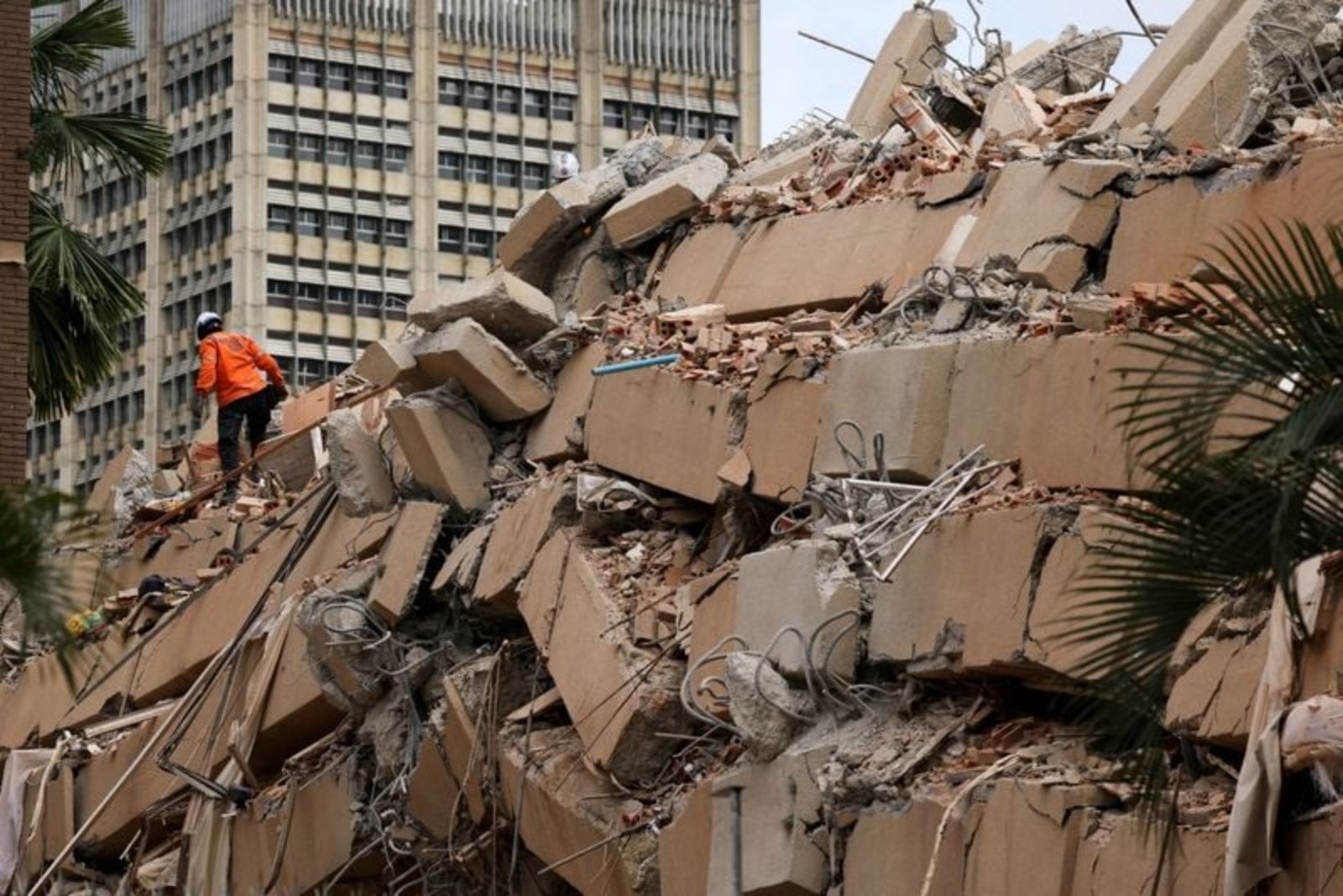
Almost 24 hours after a pair of powerful earthquakes struck in and around Venezuela's capital region, residents of the coastal city of La Guaira and the town of Moron were still using their hands and basic tools to search for survivors among concrete and twisted metal.
“We are trying to help with what we can, but there is a lack of equipment,” said Carlos Borges, who described frustration at the absence of machinery such as backhoes that could move large slabs of concrete left by toppled high-rise apartment buildings. Borges and his team managed to extract three people from the wreckage of one building while other distraught relatives gathered nearby, including the single mother of a missing teenage boy.
Models from the U.S. Geological Survey indicated the earthquake pair could result in a death toll exceeding 10,000, a projection that stands in stark contrast to the figures the acting national government has publicly confirmed - nearly 200 dead and 1,520 injured. The government also reported that 250 buildings were damaged or destroyed, with the majority concentrated in La Guaira.
Residents of La Guaira - a once-popular beach destination hit hardest by the tremors - and Moron, which lies close to the earthquakes’ epicenter, described a scramble for rescue and relief amid limited official assistance.
“Is it not possible to call in the military? Everyone come, come and pitch in. Put them in an armored vehicle and come help the people. Find tractors wherever you can,” said Argenis Martinez, a Los Corales neighborhood resident searching for a relative among the debris.
Despite an interruption to domestic gas service, some rubble ignited overnight, adding fire hazards to the already precarious scene. Many people, fearful to return to damaged structures or without alternate shelter, spent the night on streets or in open spaces where they could keep watch on ruined buildings for signs of life.
The national government announced incoming aid offers from Spain, the United States, Mexico and Qatar and urged the private sector to provide heavy equipment, such as backhoes, to support rescue operations. In the meantime, neighbors and local volunteers continued to pull survivors from the ruins in multiple locations. At one house in La Guaira, residents recovered two deceased people, including a young girl, while elsewhere a mother and two children were rescued from a flattened apartment - injured but alive.
Witnesses reported that at least one group of colectivo members - motorcycle-affiliated groups aligned with the ruling party - were observed assisting at a rescue site. The presence of these actors was noted alongside other improvised local efforts and volunteer teams.
For some survivors, the losses were immediate and personal. “My building is uninhabitable and now I have nothing. It’s just me and my son, and I have no family in the country,” said Suhayl Sarquiz, 50, who also noted she had lost her job months earlier.
In parts of La Guaira, the disruption to supplies and services drove people to seek food and water; looting at least two stores was reported. The Jose Maria Vargas Hospital in the city was overwhelmed with injured patients and some were being treated outside as police restricted access to the facility. Hospital officials at that location provided no information to journalists when approached.
“It’s a tragedy,” said Beatriz Rodriguez, 60, who described how one nephew had required the amputation of his legs after being crushed in the quake and another nephew, aged six, had died.
The armed forces announced they were dispatching field hospitals to La Guaira and said these units would be capable of performing emergency surgeries. Military convoys carrying aid were observed near the local stadium as part of on-the-ground relief efforts.
Outside the capital region, medical centers were likewise struggling. Dr. Augusto Ramirez, working a continuous 24-hour emergency shift at the modest hospital in Moron, described significant shortages of basic supplies and equipment. “We need blood pressure monitors, gauze, thermometers, gloves, plaster, painkillers - everything,” Ramirez said. He and colleagues had treated 112 people since the quakes caused structural collapses and cut off electricity and water in the town; nine patients had died from skull fractures and other severe injuries, among them three children.
With formal rescue assets still arriving or constrained, much of the immediate lifesaving work has depended on neighbors, ad hoc volunteer teams, and limited military assistance. Authorities have said international aid is on the way and have appealed for private sector help with heavy equipment, but for many families the urgent search for loved ones continued amid rubble, shortages and overwhelmed local services.