
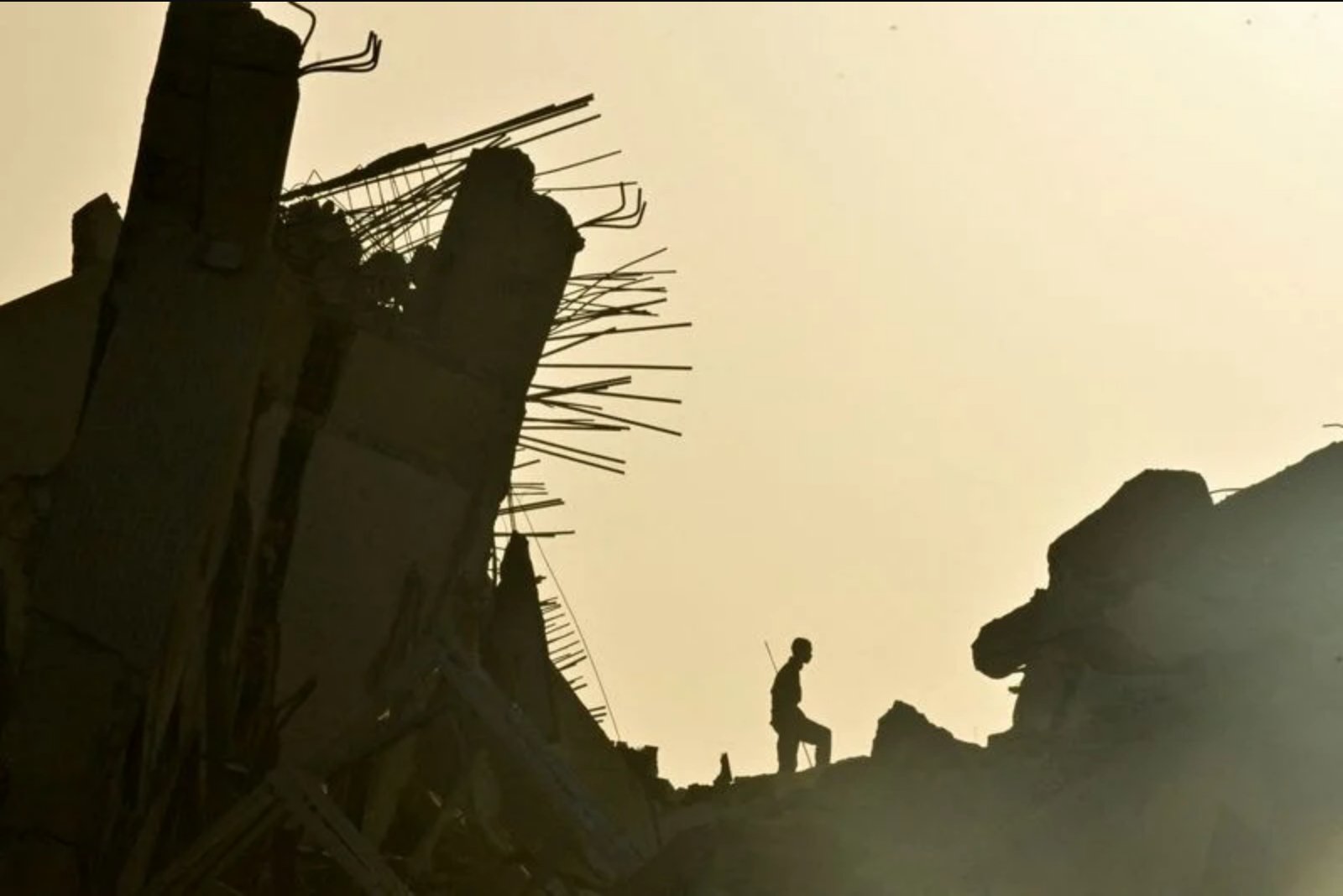
Rescue operations continued through the night after two major earthquakes struck areas in and around Venezuela's capital, leaving hundreds trapped beneath rubble and thousands listed as missing. The twin tremors - measured at magnitude 7.2 and 7.5 - hit roughly 160 km (100 miles) west of Caracas on Wednesday, triggering a frantic search for survivors and urgent appeals for humanitarian assistance.
The government reported that 235 bodies had been taken to medical centers but did not provide a comprehensive casualty total for the seismic events. A website established to track missing persons, which has been circulated by opposition leaders, showed 49,500 individuals as unaccounted for. The U.S. Geological Survey provided a stark projection, predicting more than 10,000 deaths. Spain's foreign ministry confirmed that two Spanish nationals were killed and that about 80 others remained unaccounted for.
With international rescue teams arriving, Venezuelan firefighters, soldiers and members of the public searched through collapsed structures, often resorting to hand tools and flashlights in areas where electricity was knocked out. In La Guaira, a coastal city outside Caracas, residents described desperate attempts to reach loved ones caught beneath concrete and twisted metal.
"He’s under the slabs and there’s no machinery to get him out," said Yamileth Jimenez, speaking of her 19-year-old son who remained trapped in the debris of their seven-story apartment building in La Guaira.
The human cost of the quakes is compounded by the country's long-running economic and political crisis, which has left infrastructure and public services weakened and has driven millions to emigrate. Many residents live in makeshift hillside communities commonly called "barrios", where housing is especially vulnerable to collapse.
"My building is uninhabitable and now I have nothing. It’s just me and my son, and I have no family in the country," said Suhayl Sarquiz, 50, who recently lost her job. Another resident, Beatriz Rodriguez, 60, recounted severe injuries within her family: her nephew's legs were amputated after being crushed by the quakes and another nephew died.
Displacement and damage
The government confirmed that 250 buildings were damaged or destroyed. Reports indicated that at least eight hospitals were badly damaged, along with facilities such as the Venezuelan Red Cross office and the French embassy. La Guaira and nearby areas suffered some of the heaviest damage. Streams of volunteers traveled down the Caracas-La Guaira highway carrying supplies like water, food and medication to affected communities.
Pedro Perez, 64, an upholstery workshop owner, said he had lost both his home and business and was sleeping on the street with his wife and children. "We lost everything," he said, adding that they hoped assistance would arrive soon.
Near the epicenter in Moron, a seaside town in Carabobo state, entire houses crumpled and residents were left without water or electricity. People salvaged what they could from wrecked homes, including mattresses, televisions and washing machines.
Reuters journalists observed members of a "colectivo" - government-allied motorcycle groups that have been accused in the past of harassing opposition supporters - assisting in rescue efforts. The quake prompted pledges of help from countries that have at times been at odds with Venezuela politically, and some nations eased restrictions to permit humanitarian aid.
International assistance and logistics
Venezuela's interim President Delcy Rodriguez, who took over when the U.S. seized her ally and former leader Nicolas Maduro in January, publicly thanked both U.S. President Donald Trump and Russian President Vladimir Putin for their responses. Washington announced an easing of sanctions to allow earthquake aid that would otherwise be prohibited. President Donald Trump said the U.S. was "ready, willing and able to help." U.S. Secretary of State Marco Rubio said Washington would send rescue teams and that the Pentagon would assist with logistics and support for the damaged airport in Caracas.
Footage posted by Rodriguez showed Mexican soldiers and sniffer dogs arriving at La Guaira airport, which was opened only for state and military flights. The U.N. aid chief Tom Fletcher said the United Nations was coordinating international rescue teams and warned that a "massive collective effort" would be needed in a country where, he noted, 8 million people required humanitarian assistance prior to the quakes.
The U.N.'s Venezuelan human rights mission urged the government to lift restrictions on some social media services, calling connectivity a "matter of life and death" in the response phase. SpaceX's Starlink announced it would provide free service through July 25 for new and existing customers in affected areas and said it was working to deploy terminals to the hardest-hit zones to help restore communications.
Critical services and economy
Despite widespread damage to homes, public buildings and hospitals, foreign energy companies operating in Venezuela said their operations had not suffered major disruption and that oil infrastructure appeared largely spared. The Caracas Stock Exchange remained closed and was repurposed as an aid collection center. Prior to these quakes, the deadliest modern quake recorded in Venezuela had occurred in 1967, killing 240 people.
As search-and-rescue operations continued, residents, volunteers and officials confronted significant challenges - from restoring basic utilities to accounting for large numbers of missing people - while international aid and private technology providers sought to shore up communications and logistical support to the hardest-hit areas.