
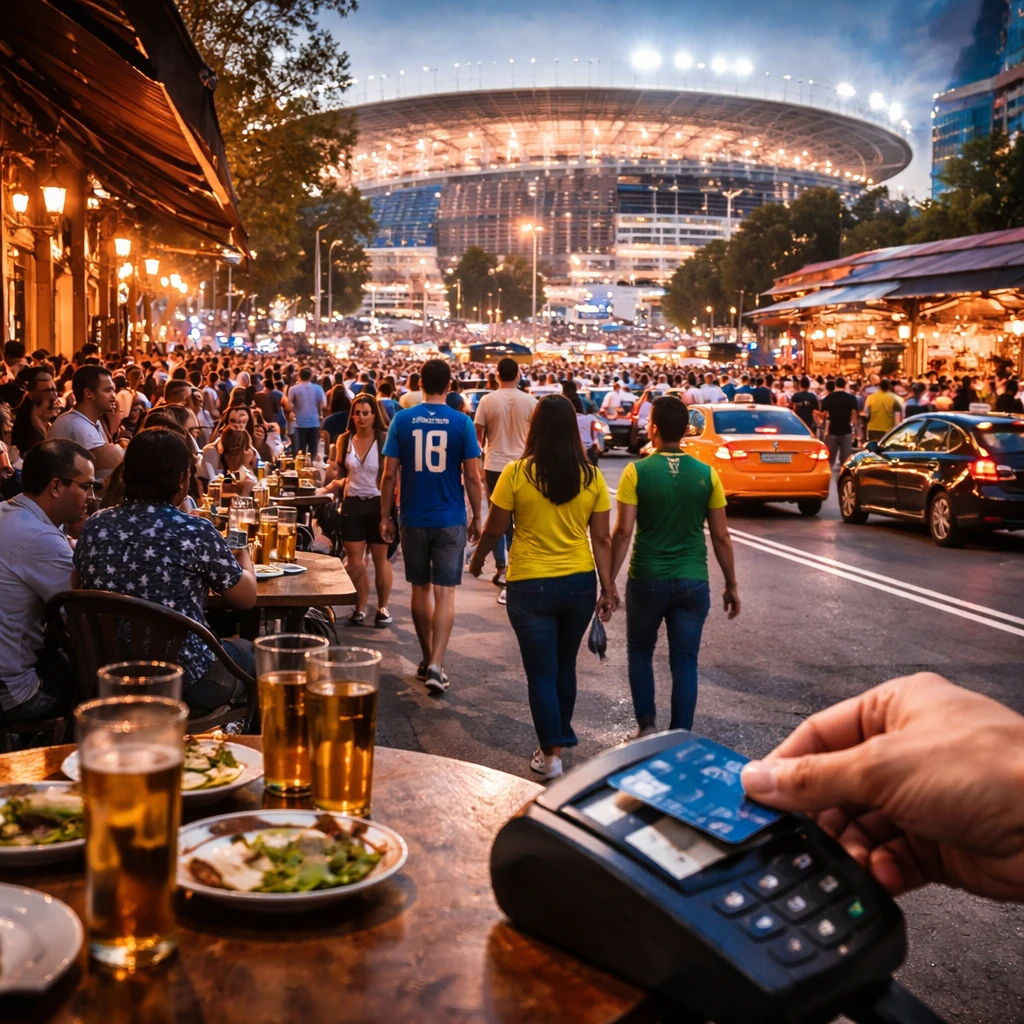
Bank of America reports that consumer spending in cities hosting FIFA World Cup 2026 matches rose 6.3% year-over-year as the tournament moved through the group stage, based on aggregated credit and debit card data tracked across its payment networks.
The uplift in spending was concentrated among visitors from outside the host cities. In-person transactions by non-local visitors increased 16.7% compared with the same period a year earlier, according to the bank's analysis. The bank examined both credit and debit card spending and transaction volumes in the locations staging matches.
To measure the tournament's near-term economic effect, Bank of America monitored card-based purchases made in the host locations. The dataset used captures two elements: the number of transactions and the total dollar value of those transactions, allowing the bank to assess shifts in both activity and spend.
These gains reflect activity during the early portion of the competition. The World Cup group stage is currently under way across multiple host cities in North America, and the figures reported cover this initial phase of matches.
In its commentary on the results, Bank of America described the consumer spending patterns it tracked as evidence of a strong start for the economies of host cities. The characterization is grounded in the year-over-year increases observed in aggregated card spending and transaction counts.
While the data the bank released focuses on card payments routed through its networks, it reports both transaction volumes and spending totals to provide a view of on-the-ground economic activity as the tournament progresses. The metrics cited by the bank are presented as early indicators tied to the group-stage schedule of matches.
Clear summary
- Bank of America finds a 6.3% year-over-year rise in consumer spending in FIFA World Cup 2026 host cities during the group stage based on aggregated credit and debit card data.
- Non-local visitors drove the increase, with their in-person transactions up 16.7% versus the same period last year.
- The bank tracked both transaction counts and total spending amounts across host locations and called the results a strong start for host-city economies.