
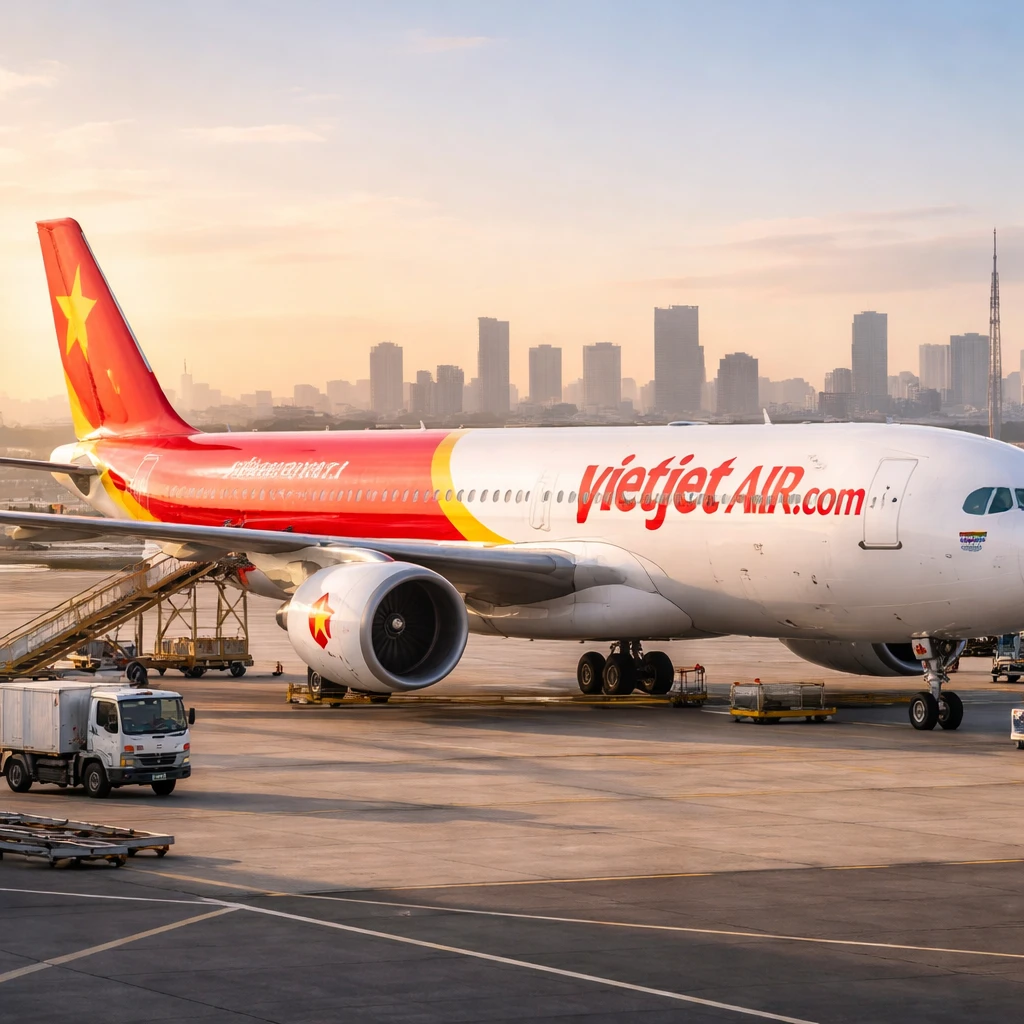
Vietjet Air will take delivery of the first A330neo from an order placed last year, board member Philipp Rosler said Friday. The Vietnam-based low-cost carrier ordered 20 A330neo wide-body jets during a state visit by France's president last year, and the arrival of the initial aircraft is being framed as a prerequisite for the airline's planned expansion into Europe.
Rosler said the carrier has identified the Czech Republic, Germany, Britain and France as potential European destinations. The launch of any direct long-haul services, however, hinges on obtaining wide-body aircraft capable of extended-range flights. Delivery schedules for the A330neo fleet will be set by the manufacturer, Airbus, Rosler added.
Beyond route expansion, Vietjet is pursuing a regional finance strategy tied to its growth. The airline aims to help develop Ho Chi Minh City into an aviation finance hub for the Asia-Pacific region, bringing aircraft financing, leasing, insurance and capital markets activities closer to fast-growing regional markets. That effort is intended to reduce dependence on established European centers such as Ireland for key aviation financial services, Rosler said.
Operationally, Rosler said Vietjet made schedule adjustments last month in response to potential fuel shortages but that overall operations remained normal. The carrier also confirmed that two COMAC aircraft it previously leased for services to Con Dao island are no longer on its network. Vietjet plans to continue using Chinese-made planes, particularly on flights to China.
In April, the airline formalized a financial lease for 10 COMAC C909 narrow-body aircraft with SPDB Financial Leasing of China. Vietjet's current fleet is approximately 135 aircraft, predominantly Airbus models, and the airline holds orders for about 600 planes from Airbus and Boeing that are scheduled for delivery over multiple years.
Context and strategic implications
The imminent A330neo delivery represents a material step in Vietjet's stated ambition to enter long-haul markets in Europe. Securing wide-body jets and aligning delivery timing with route launches will be central to that plan. At the same time, the carrier is positioning Ho Chi Minh City as a regional node for aviation finance activity, a move targeting the financing, leasing and insurance segments that underpin aircraft procurement and fleet strategy.
Rosler's comments also signal a continued role for Chinese-built aircraft within Vietjet's network mix, even as the airline relies largely on Airbus equipment and maintains a substantial backlog of orders with both Airbus and Boeing.