
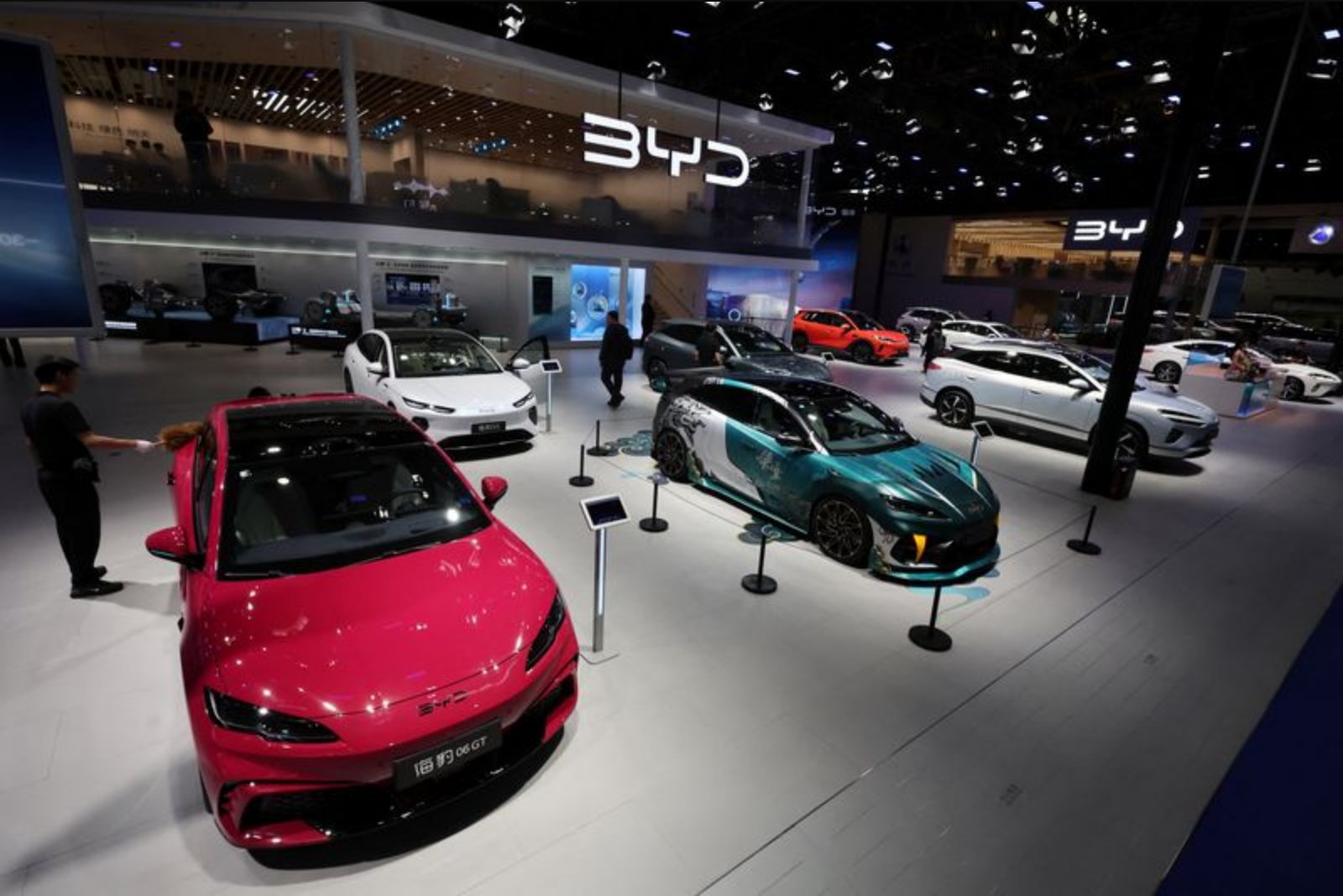
China's BYD is intensifying its focus on ultra-fast charging technology as a tool to convert drivers who remain loyal to internal combustion vehicles and to defend its position in the world's largest auto market. The initiative, according to the company's No. 2 executive, aims to remove remaining consumer hesitation about EV adoption linked to charging time and range.
Executive vice president Stella Li said on the sidelines of the Beijing Auto Show that BYD is expanding the number of models capable of so-called "flash" charging. The company describes its second-generation battery system as able to recharge from 20% to 97% in under 12 minutes, even at temperatures as low as minus 20 degrees Celsius, while delivering a driving range of 777 kilometres (483 miles).
"Flash charging is so important for BYD because this solves the last barrier for EV adoption," Li said. "This means we now can compete with the gas market." The automaker views the faster-charge capability as a potential defensive moat that could blunt the advances of rivals in China and preserve consumer confidence in battery-electric alternatives.
To back the technology with infrastructure, BYD plans to build about 20,000 flash-charging stations within China and an additional 6,000 overseas over the coming 12 months. The scale of that deployment is intended to give owners ready access to rapid top-ups and to support broader consumer acceptance of EVs that can match the convenience of refuelling petrol cars.
BYD's push comes against a backdrop of weakening domestic momentum. After a rapid ascent to become the largest global EV manufacturer, the company has experienced seven consecutive months of falling domestic sales amid a fierce price war and mounting competition from local rivals. The slowdown has erased some of the earlier invulnerability that BYD displayed in China.
Company-wide sales surged from 420,000 vehicles in 2020 to 4.6 million in 2025, a more-than tenfold rise that helped BYD rank as the world's fifth-largest automaker by volume. The group overtook Volkswagen to become China's top carmaker in 2024, ending a long period of German leadership in the market, and surpassed Tesla last year as the world's leading EV maker.
Still, the business has shown signs of strain. BYD's shares have declined 25% since their peak in late May of last year, and the company reported its first annual profit decline in four years in its latest results. Domestic sales have been pressured by competitors such as Geely and Leapmotor, which has prompted BYD to introduce its first significant battery upgrade in six years.
Industry observers point to the challenge of sustaining the breakneck growth the company enjoyed. "It’s not that BYD is necessarily doing badly," said Gartner analyst Pedro Pacheco. "But they were growing so fast, where they are now seems bad." The rapid expansion earlier in the decade raised expectations that are now more difficult to meet amid a more crowded market.
Geely briefly overtook BYD in new-car sales in China in January and February, pushing BYD down to fourth place in that stretch. A source within Geely told analysts the company seeks to become China’s No. 1 automaker on a sustainable basis within 12 to 18 months. Automotive analyst Felipe Munoz commented, "It’s not that they are misjudging consumers in China. BYD knows very well what consumers want, but there is just more competition."
Despite the domestic slowdown, BYD is expanding rapidly overseas. The company reported a 270% rise in sales in Europe in 2025 and a 156% increase in the first quarter of the year. Outside China, BYD sold 1 million vehicles in 2025 and has told analysts it is "highly confident" of meeting a 2026 target of at least 1.5 million overseas units. The firm has set an objective that by 2030 roughly half of its new-car sales will originate from international markets.
The fast-charging strategy, the company says, is intended to underpin both domestic resilience and overseas competitiveness. By addressing one of the most persistent barriers cited by petrol drivers - long recharge times and concerns about range - BYD hopes to make battery-electric vehicles a more straightforward alternative for those consumers.
How that plays out will hinge on execution across product upgrades, the charging network rollout and competitor responses in the near term.