
Executives from Ukraine’s emerging drone industry have been actively promoting their systems to partners in East Asia as governments and militaries in the region increase spending and planning to deter potential conflict involving Taiwan. In April, the chief executive of UFORCE traveled to Tokyo to press the case for Japanese production of thousands of UFORCE drones, arguing that the systems could strengthen Japan’s and its allies’ defenses.
UFORCE’s CEO Oleg Rogynskyy said the company’s maritime and attack drones had demonstrated operational effects in multiple theaters. He cited a recently held U.S. exercise in which U.S. forces used waterborne UFORCE drones to sink a ship during a classified operation taking place where the South China Sea meets the Pacific, and he pointed to UFORCE’s Magura surface vessel, which the company says has helped make parts of the Black Sea effectively off-limits to the Russian navy. Rogynskyy said that although the maritime geography in East Asia differs from the Black Sea, "the impact is extremely similar." The Tokyo trip and the company’s discussions with Japanese defense entities have not previously been reported.
The outreach to Japan is part of a broader Ukrainian push to access a surge in defense demand across Asia by U.S. allies who are intent on deterring an increasingly assertive China. Twenty people interviewed for this reporting - including defense contractors and Ukrainian and Japanese government officials - described a campaign by Ukrainian firms to find production partners, customer governments, and component suppliers in the region.
Ukrainian firms are leveraging the practical experience they have gained in the conflict with Russia, where the use of drones has been a defining feature of Kyiv’s defense. That reputation has been instrumental in unlocking diplomatic and defense conversations in Europe and the Middle East, and, according to Ukrainian President Volodymyr Zelenskiy, Kyiv signaled in February that it was "ready to open up our technologies" such as sea drones to Japan.
Engagements in Japan
Former Japanese defense minister and influential lawmaker Itsunori Onodera said he welcomed Ukrainian efforts to cooperate and emphasized Tokyo’s need for equipment that "is actually demonstrating effective power." Several Ukrainian defense companies - including UFORCE, Skyeton and General Cherry - are looking to find production partners in Japan, a major industrial producer that this year eased long-standing export restrictions on arms.
One Ukrainian firm, Swarmer, a U.S.-listed software maker known for coordinating drone swarms, said it staged a demonstration for a unit of Japan’s military. Swarmer’s president, Alex Fink, said a late-April test used the company’s artificial intelligence software to coordinate a swarm in a seek-and-hit mission on Japanese territory. The demonstration was arranged, Fink said, by Japanese e-commerce company Rakuten, whose founder has been publicly supportive of Ukraine; Rakuten declined to comment on the demonstration but said it is backing Swarmer’s expansion in Japan.
Other meetings between Japanese officials and Ukrainian firms were described by participants as exploratory. Japan’s defense ministry declined to comment specifically on any engagement but said Tokyo is "examining all possible options to ensure acquisition of equipment needed for Japan’s ‘new way of warfare.'" That position reflects a national debate over how fast and how broadly to integrate unmanned systems into Japan’s defense posture.
Taiwan, the Philippines and the Indo-Pacific context
Executives from three Ukrainian firms and a drone-industry association said they have also been exploring business with Taiwan, though they are proceeding cautiously because Ukraine maintains no formal diplomatic relations with the island. U.S. law requires Washington to provide Taiwan with means to defend itself, and regional military leaders have highlighted drones as central to a defensive response.
Adm. Samuel Paparo, the U.S. commander for the region, stated in 2024 that drones could create an "unmanned hellscape" that would buy time for U.S. and allied forces to respond. Naval analysts such as Bryan Clark of the Hudson Institute have argued that unmanned systems will be a critical element to close gaps along the chain of islands that stretch from Japan through Taiwan to the Philippines.
The U.S. drone exercise in April took place off Itbayat, a Philippine island roughly 100 miles south of Taiwan, according to UFORCE and U.S. military statements. Officials in China and Taiwan declined to comment on the various outreach efforts; Ukraine’s presidential office also declined to comment. U.S. Pacific Command did not answer detailed questions about Kyiv’s efforts to build drone partnerships in Asia but confirmed it has met with Ukrainian drone makers "to discuss how Black Sea operations could apply to the Indo-Pacific."
Ukraine’s ambassador to the Philippines, Yuliia Fediv, said Kyiv has discussed drone-technology cooperation with Manila. Two Ukrainian drone executives said that any systems sold to the Philippines would most likely be manufactured in Japan, given Japan’s stronger industrial base. Manila, which has been engaged in multiple maritime confrontations with China, is already a significant customer for Japanese defense equipment. The Philippines defense ministry did not respond to a request for comment.
Supply chains and component sourcing
Ukrainian companies are also working to reduce dependence on Chinese-made drone components amid concerns about Beijing’s control over certain parts and restrictions on exports. While China is a major producer of drone components, many of the same components - cameras, microelectronics and other subsystems - are also manufactured in Japan and Taiwan.
The Ukrainian drone association IRON took a delegation of about a dozen member companies to Taichung, Taiwan, in May, seeking suppliers in the island’s industrial hub. IRON chief executive Volodymyr Cherniuk said the primary goal was to help Ukrainian companies identify alternative parts suppliers. In some cases, the collaboration has gone beyond supply-chain introductions: Elson Zhang of Jiin Ming Industry, a Taiwanese firm that met the delegation, said his company is collaborating on an early-stage drone project with a Ukrainian partner that may eventually result in a system sold back to Taiwan; Zhang declined to identify the partner.
Cherniuk said he plans to bring a larger IRON delegation to Tokyo later this year to pursue Japanese production partnerships. "We would be happy for our drones to protect any country from invasion," he said. "We know the best how it feels."
Japanese industrial and policy shifts
Japan’s defense posture has been reshaped since 2022 by concerns that the war in Europe could presage conflict in East Asia. That momentum accelerated after the election of Prime Minister Sanae Takaichi late last year, whose administration has urged domestic firms to increase weapons production, including unmanned systems. Japanese defense manufacturers, many of which also sell consumer goods in markets including China, have historically been cautious about entering arms markets because of reputational concerns.
In its current budget, Tokyo allocated nearly $2 billion to support drone systems. The government has set an ambitious target to raise annual drone production to 80,000 units by the end of the decade, a sharp increase from the roughly 1,000 units the Japan UAV Association reported were manufactured in 2024. That Japanese ambition stands in contrast to Ukraine’s own production goals, with Kyiv aiming to build as many as 7 million drones this year.
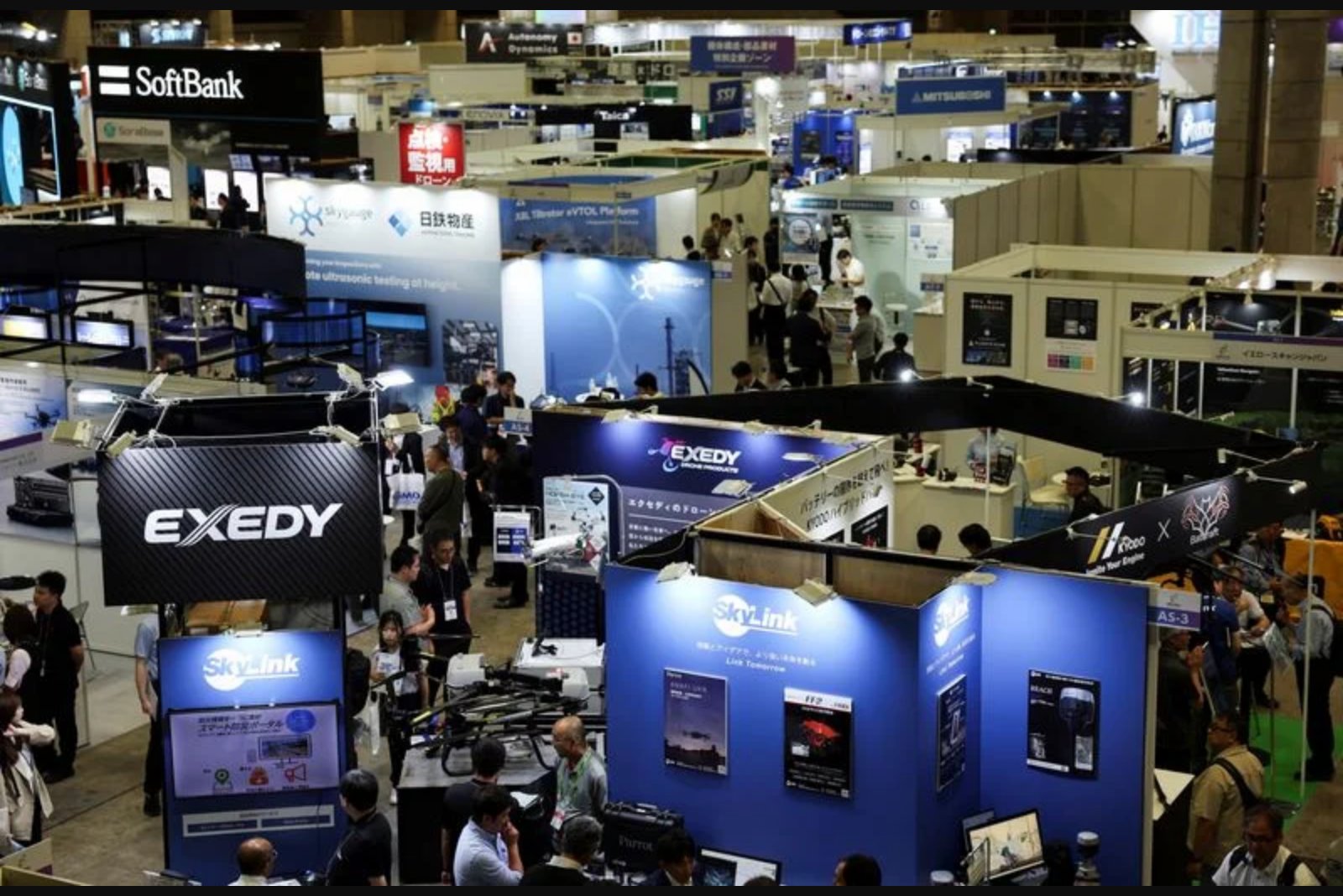
Several Ukrainian companies see Japan as a strategic gateway into broader Asian defense markets. Skyeton, which produces surveillance drones, has argued its long-range systems could assist patrols across Japan’s more than 14,000 islands. General Cherry, focused on kamikaze-style loitering munitions, and Skyeton both held meetings in Japan; General Cherry co-founder Stanislav Gryshyn said on a recent Tokyo visit that "Japan is the best way to the Asian market." Gryshyn exhibited at a drone show, met potential local partners, and attended networking events hosted by Ukraine’s embassy.
Industry outlook and considerations
Ukrainian drone companies are pursuing three related objectives in Asia: to find production partners for manufacturing military hardware for regional customers, to identify non-Chinese parts suppliers that can support resilient production, and to demonstrate their operational expertise to governments seeking proven capabilities. These aims intersect with national policy shifts in Japan and with security needs in Taiwan and the Philippines, creating potential commercial opportunities for firms born out of the Ukrainian conflict.
At the same time, much of the engagement remains exploratory. Some Japanese discussions are early-stage, and diplomatic sensitivities - including the absence of formal ties between Kyiv and Taiwan - are influencing how companies approach potential deals. Several governments and ministries declined to comment on these engagements when approached.
As the Asian defense market expands its interest in unmanned systems, Ukrainian companies appear intent on converting battlefield experience into formal industrial and diplomatic ties in the region, while also addressing supply-chain vulnerabilities by seeking parts and production capacity in Japan and Taiwan.