
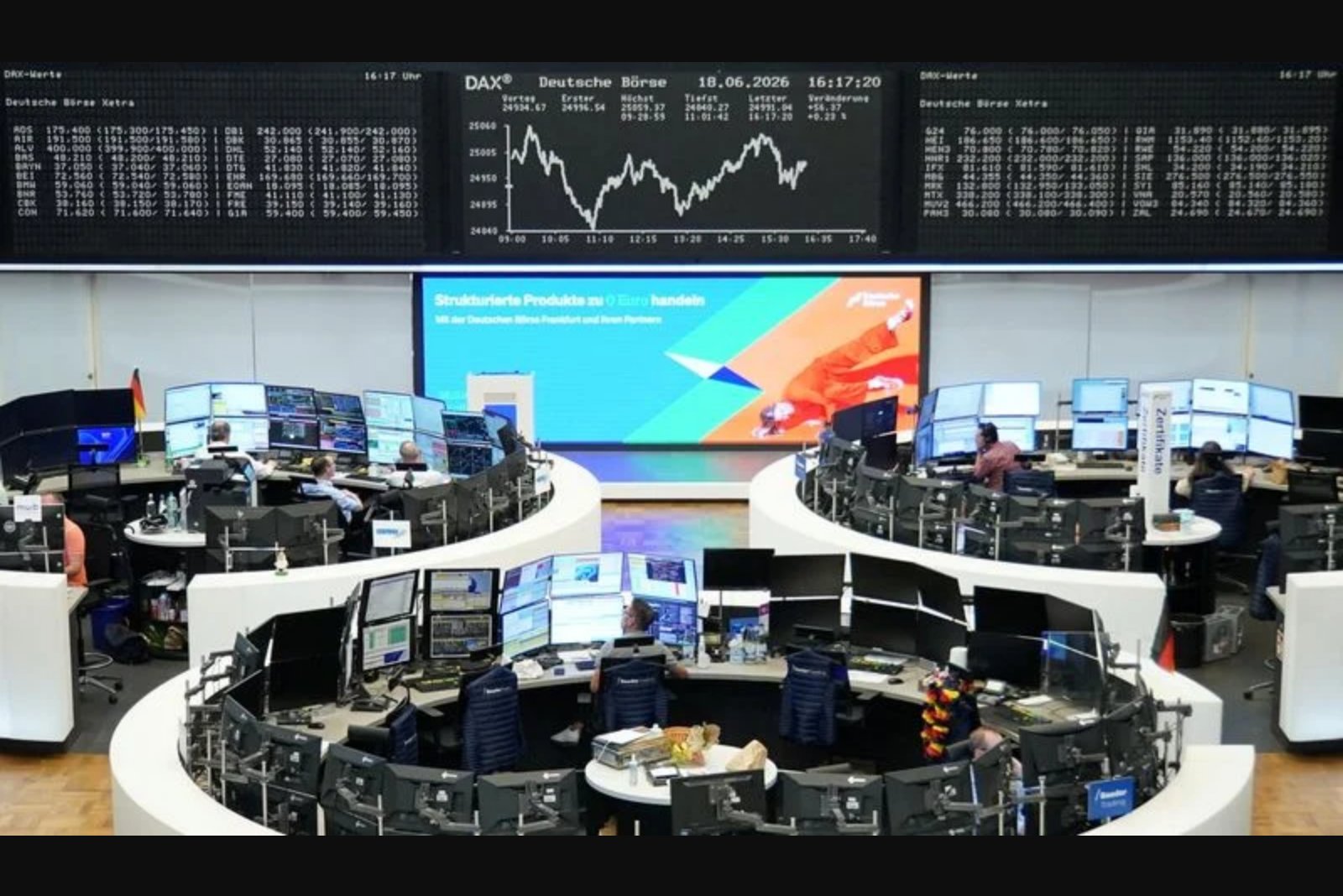
Equity markets climbed after what President Donald Trump described as a major diplomatic breakthrough with Iran, a development that has pushed stock indices to fresh highs and concentrated investor demand in chip-related names. Traders treated the move as if Federal Reserve warnings about further rate increases were not an immediate deterrent.
Market activity was uneven across the region with half of Asian bourses closed for holidays and U.S. markets observing Juneteenth on Friday. Within the trading day, Japan and South Korea extended the global momentum to notable gains before giving back some advances later in the session. The Nikkei remained on pace for a weekly gain of 7.6% while the KOSPI staged an 11% rally for the week.
European equities, which have less exposure to artificial intelligence-driven rallies, were positioned for a lower start with pan-region futures down about 0.5% heading into the session.
Part of the relief across commodities stems from renewed movement of crude tankers through the Strait of Hormuz. Three Saudi-flagged vessels laden with crude have transited the strait, though market participants noted it remains unclear when supply will return to pre-war levels.
Brent crude fell sharply this week, sliding 9% to $79.42 a barrel, a level roughly equivalent to its price on March 3. The contract is also down 37% from its late April peak, a decline that has reduced immediate inflationary pressure and provided some breathing room for global central banks.
The holiday period also focused attention on currency policy risk. Observers questioned whether the timing could present an opportunity for Tokyo to intervene in currency markets to support the yen. The U.S. dollar has strengthened amid expectations of tighter U.S. policy, and the yen has weakened to 161.3 per dollar, surpassing the oft-cited 160 threshold. Market commentary in the session suggested that the Bank of Japan's recent rate increase to 31-year highs has had little visible effect on yen strength.
In the United Kingdom, the creation of a new parliamentary seat for Labour mayor Andy Burnham was flagged as a potential political development that could pose a challenge to British Prime Minister Keir Starmer. Sterling showed little reaction in early trading, but gilt markets were expected to display a more pronounced response when they reopened.
Market participants were also watching a handful of scheduled data releases and appearances that could influence sentiment later in the day, including German producer price index data for May and U.K. retail sales for May, along with public appearances in Paris by European Central Bank board members Philip Lane, Piero Cipollone and Frank Elderson.
What investors are asking now
With rapid market moves and a compressed calendar, investors are weighing allocation decisions against fresh macro signals. Product and data providers are promoting tools that marry institutional-grade datasets with analytics to aid selection. One such platform described its combination of broad data and AI-powered insights as a way to find more winners more often, while noting that no service can guarantee outcomes. The platform also encouraged users to consult an AI assistant to surface investment ideas for the year.
Market snapshot
- Nikkei set for a 7.6% weekly advance.
- KOSPI up around 11% for the week.
- Pan-region European futures down approximately 0.5% ahead of the open.
- Brent crude down 9% this week at $79.42 a barrel, 37% below late April peak.
- USD/JPY at about 161.3, beyond the 160 level many had viewed as a line in the sand.
These dynamics are likely to keep traders focused on energy, semiconductor, currency and sovereign bond markets as the market digests both the diplomacy-driven relief and upcoming policy signals.