
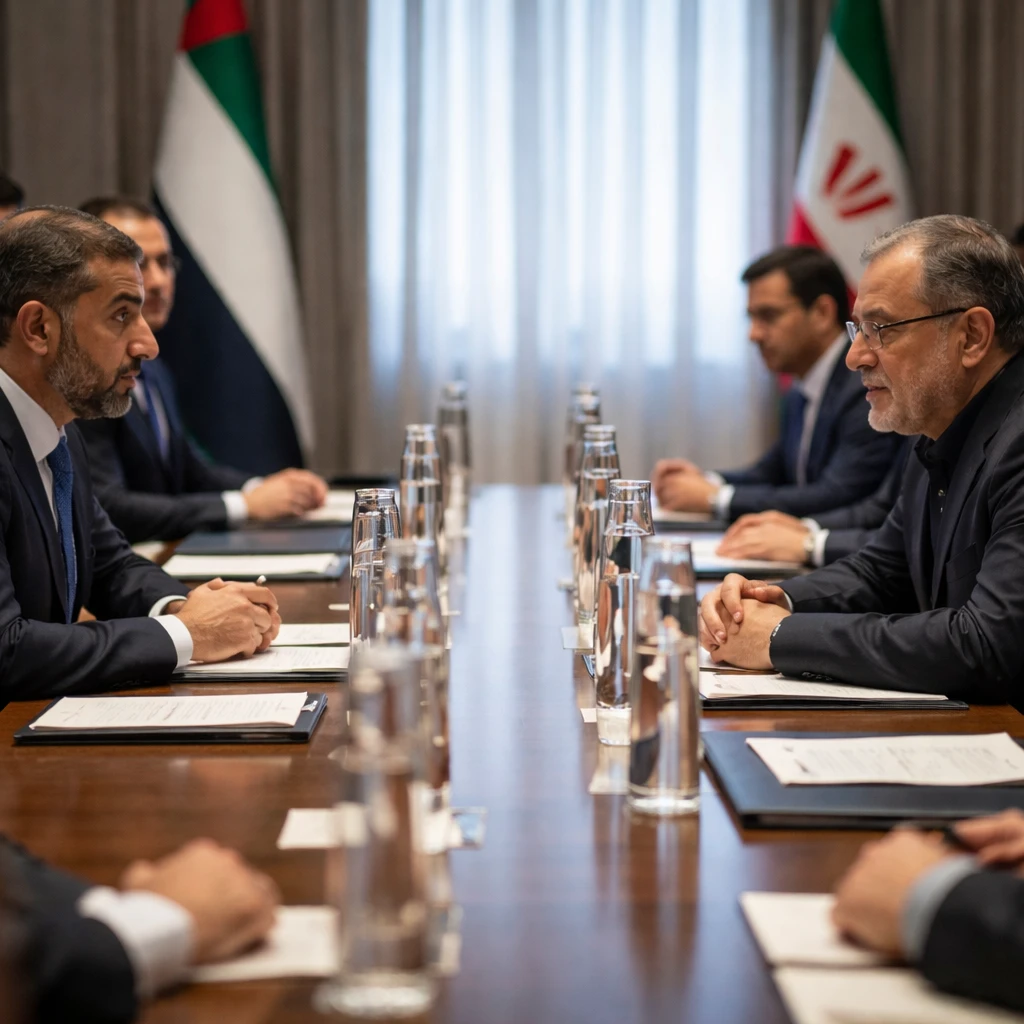
Senior national security officials from the United Arab Emirates and Iran met in person this week, marking the first direct, face-to-face talks between the two governments since the US-Israeli war against Tehran began in late February, people familiar with the discussions said.
Those people, who requested anonymity because of the sensitive nature of the talks, described the meeting as a notable shift in posture for both capitals. According to them, leaders on each side have begun to place greater value on rebuilding or improving bilateral relations in light of ongoing regional tensions.
Sources said the UAE's engagement has been shaped in large part by economic considerations. Abu Dhabi is intent on advancing a slate of commercial projects and investments, including plans to channel billions into expanded oil production capacity and to develop artificial intelligence data center infrastructure.
From Tehran's perspective, the relationship with the UAE retains strategic importance. Before the war began, the UAE was among the Islamic Republic's largest trading partners and functioned as a significant conduit for Iranian oil that had been subject to sanctions, the people added.
Officials familiar with the conversations characterized Abu Dhabi's outreach as largely pragmatic - driven by a wish to temper hostilities with a government it regards as hostile but that it also sees as unlikely to be removed from power. That assessment informed the decision to pursue dialogue, the people said.
The accounts do not provide additional details on the agenda, the duration of the meeting, or any follow-up steps. They also do not identify the officials by name. Observers described the encounter as an initial diplomatic effort focused on reducing immediate frictions while protecting ongoing economic aims.
What this means
- The meeting represents the first direct, senior-level security contact between the UAE and Iran since late February, when the US-Israeli war against Tehran began.
- Abu Dhabi's outreach is tied to its economic priorities, notably large-scale investments in oil production and AI data center capacity.
- Iran continues to view its ties with the UAE as significant because of pre-war trade volumes and the UAE's past role as a channel for sanctioned Iranian oil.
Key sectors affected
- Energy - given UAE plans for expanded oil production and Iran's historical oil trade links with the emirate.
- Technology and infrastructure - reflected in the UAE's stated investment focus on AI data centers.
- Trade - owing to the UAE's former position as one of Iran's largest trading partners prior to the conflict.
Reporting limitations
The available accounts come from unnamed individuals familiar with the talks and do not disclose participant names, precise locations, or concrete outcomes. No timelines for any future discussions were provided by those sources.