
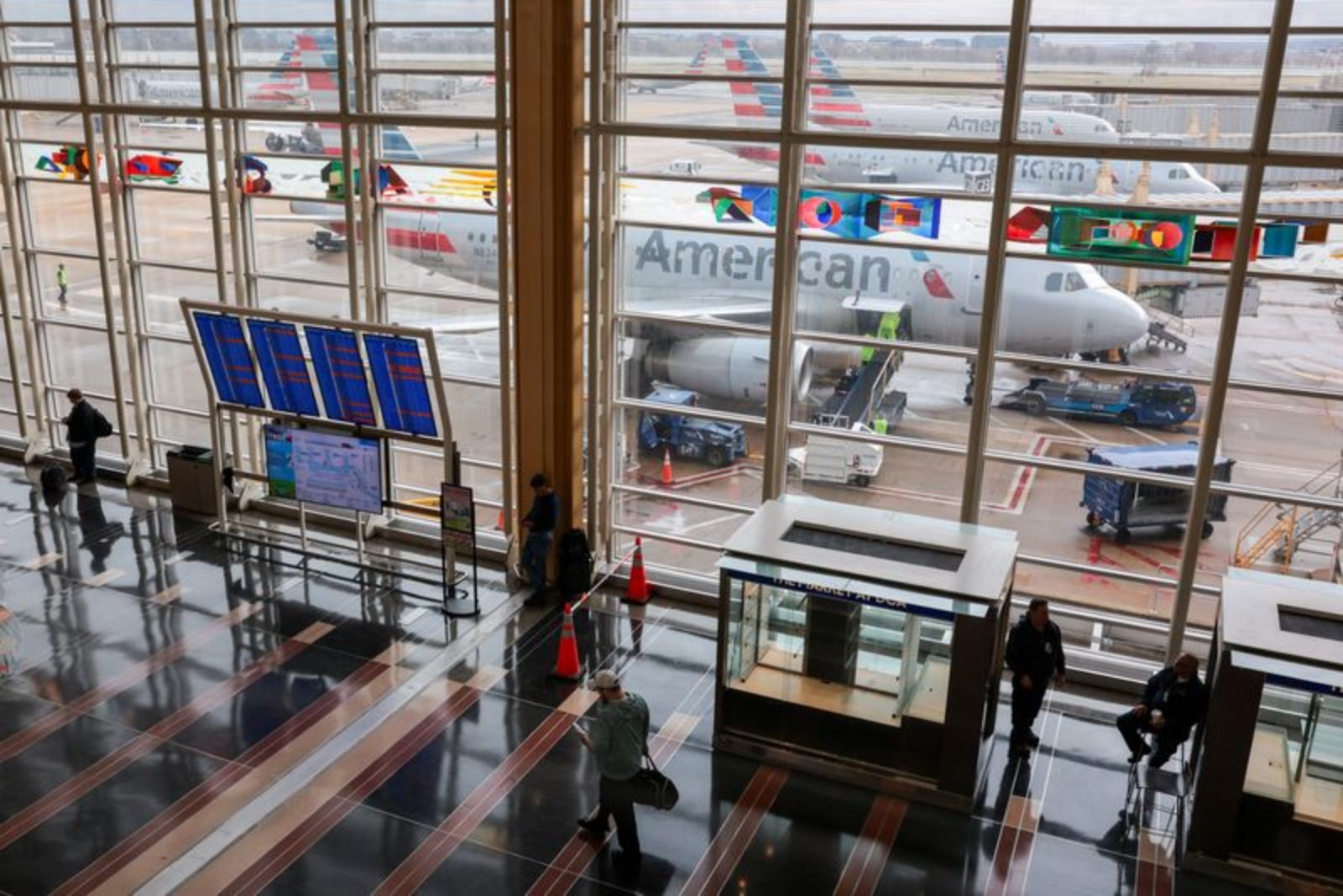
American Airlines has reduced its profit forecast for 2026, attributing the move to exceptionally high jet fuel costs that have eaten into margins across the business. Jet fuel, which normally represents about a quarter of an airline's operating costs, has nearly doubled since the conflict in Iran began, placing acute pressure on carriers unable to fully pass rising input costs onto previously sold ticket inventory.
The company now projects earnings between a $0.40 per share loss and $1.10 per share profit for 2026, a marked revision from its earlier range of $1.70 to $2.70 per share in profit. That downgrade comes as American reported a net loss of $382 million, or $0.58 per share, for the quarter through March, compared with a net loss of $473 million, or $0.72 per share, in the comparable period a year earlier.
Fuel prices spiked after U.S.-Israeli strikes on Iran interrupted traffic through the Strait of Hormuz, a vital maritime route for global oil shipments. That disruption produced what the airline industry is describing as its most significant operational shock since the COVID-19 pandemic, with jet fuel costs climbing sharply and eroding planned profitability even where travel demand remains intact.
Within the U.S., demand has largely held up, but elevated fuel expenses have narrowed carriers' profit margins. To mitigate some of the pain from higher fuel bills, airlines have adopted a range of measures including raising fares, trimming capacity, and increasing fees for ancillary services such as checked baggage.
Those adjustments aim to recapture some lost revenue, yet advance ticket sales at fixed prices limit how quickly carriers can respond to cost spikes. The combination of locked-in ticket pricing and rapidly rising input expenses is central to American Airlines' decision to lower its 2026 earnings guidance.
Financial snapshot
- Revised 2026 earnings outlook: a loss of $0.40 per share to a $1.10 per share profit.
- Prior 2026 earnings outlook: $1.70 to $2.70 per share profit.
- Quarter through March: net loss of $382 million, or $0.58 per share, versus a $473 million loss, or $0.72 per share, a year earlier.
Operational and market response
Airlines have reacted to the fuel-driven cost shock with a mix of pricing and capacity moves. Fare increases, capacity reductions and higher ancillary fees are being used to blunt the impact of rising jet fuel expenses, but these measures are only partially effective when a portion of sales were already booked at lower fares.