
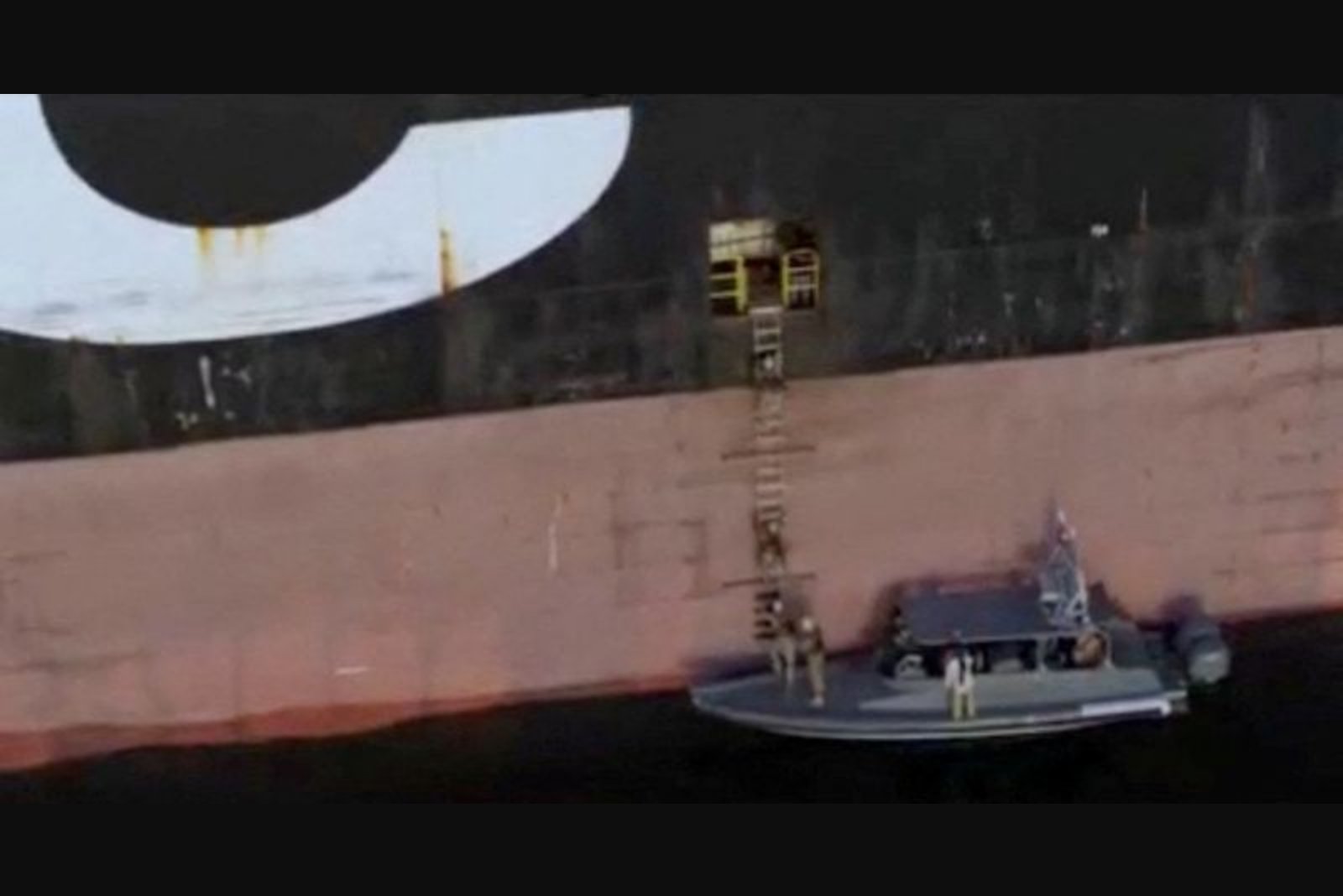
Iran has directed two container ships seized earlier this week toward the port of Bandar Abbas, maritime sources said, after forces from the Islamic Revolutionary Guard Corps boarded the vessels near the Strait of Hormuz. The two ships together carry roughly 40 crew members, and authorities representing seafarers' home countries said they were working to confirm the welfare and release of those on board.
One of the seized vessels is operated by MSC, the world’s largest container shipping group. Sources identified the other ship as having been chartered by MSC. Officials and relatives provided limited details about the onboard personnel and their circumstances.
A relative of one seafarer described the incident, saying: "Some 20 Iranians armed to the teeth stormed the ship. Sailors are under Iranians' control, their movements on the ship are limited, but the Iranians are treating them well." That relative told Reuters the ship was anchored nine nautical miles from the Iranian coast.
Montenegro's minister of maritime affairs, Filip Radulovic, told state broadcaster RTCG that "negotiations between MSC and Iran are ongoing, our sailors are fine." He said four sailors on the MSC Francesca, including its captain, are from Montenegro. Croatia's foreign ministry confirmed that two Croatian nationals are also aboard the MSC-operated vessel.
Further crew details for the Panama-flagged ship were not released. The report noted that large container ships normally require a minimum of about 20 crew members.
The second vessel, the Liberia-flagged Epaminondas, was reported by the Greek coast guard to have a 21-member crew made up of Ukrainians and Filipinos. That ship had been bound for India prior to the seizure.
Both crews have been reported as safe so far, but officials in the sailors' home countries said they were actively seeking additional information about their condition and working on securing their release.
Maritime tracking systems on both ships had their transponders switched off after the boardings, though maritime security sources said other shipping data indicated the vessels were near Bandar Abbas.
Background to the seizures includes a separate incident earlier in the month. On April 19, U.S. forces fired upon and seized an Iran-flagged vessel, the Touska. In response, a military spokesperson for Iran said: "The armed forces of the Islamic Republic of Iran will soon respond and retaliate against this armed piracy by the U.S. military." Iran's foreign ministry demanded the immediate release of that vessel and its crew and their families. No further details about the crew of the Touska were provided.
U.S. Central Command has also reported operational actions in the region. Since the start of its blockade against ships entering or exiting Iranian ports, U.S. forces had directed 31 vessels to turn around or return to port, the command said.
The situation has had immediate effects on energy markets. Oil prices rose sharply amid what market participants interpreted as dimmed prospects for a quick reopening of the strait - a key transit route that handles a significant share of the world's daily oil and liquefied natural gas flows. Benchmark Brent crude futures were trading up about 2% at $104 a barrel on Thursday, compared with $72 a barrel prior to the outbreak of the war on Feb 28, according to the figures cited in reports.
No official information has been released about the cargoes on either container vessel. Governments and shipping companies involved have so far limited public comment while diplomatic and commercial channels seek clarification and, where possible, the safe release of seafarers.
At present, negotiations and inquiries are continuing, with states and industry stakeholders monitoring developments closely as the two vessels are moved toward Bandar Abbas.