
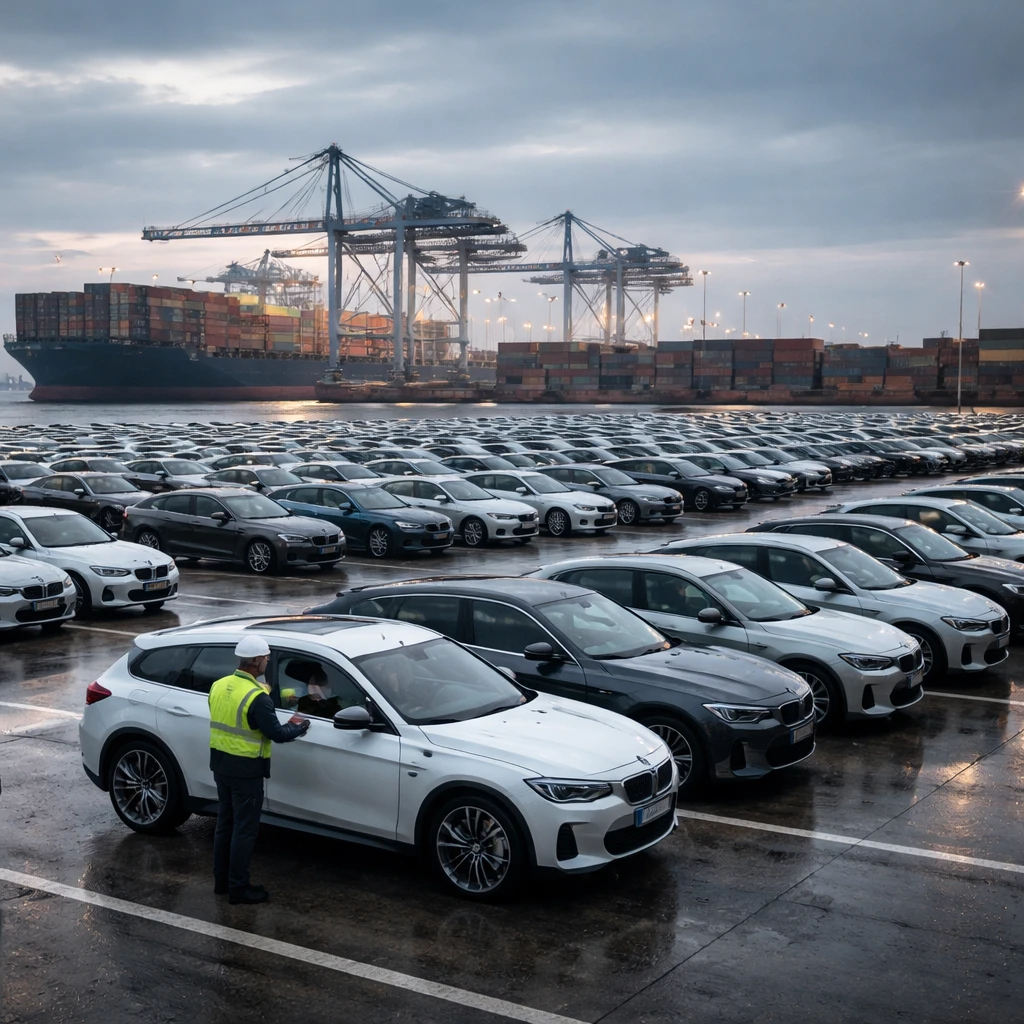
BMW’s global shipments in the first quarter of 2026 fell 3.5% compared with the same period a year earlier, driven by weaker demand in two major markets despite stronger returns in Europe.
The company delivered 565,748 vehicles between January and March. Sales of the BMW and MINI brands in Europe rose 3%, but that improvement did not offset declines of 4.3% in the United States and 10% in China.
Germany was a regional bright spot: deliveries there reached 68,022 units, up 10.7% year-on-year.
Looking at brand breakdowns, the BMW core marque recorded 496,050 vehicle deliveries globally, a decline of 4.6% from the prior year. The high-performance BMW M division, which followed a record 2025, saw a 5.9% drop to 47,544 units. MINI continued to expand, delivering 68,427 vehicles, a 5.9% increase and marking its fifth straight quarter of year-on-year growth, with battery-electric vehicle volumes notably strong in Europe.
The group also reported movements in its luxury and two-wheel segments. Rolls-Royce deliveries fell 8% to 1,271 vehicles. BMW Motorrad, which includes motorcycles and scooters, delivered 42,735 units, down 4.2% year-on-year.
On the electrification front, BMW said incoming orders for fully electric vehicles in Europe rose roughly 40% year-on-year in the first quarter of 2026, a trend the company attributed in part to the introduction of the Neue Klasse model.
BMW additionally noted that demand for combustion-engine models remained slightly above the prior year’s already elevated levels.
Summary analysis - The quarter presents a mixed set of operational signals: regional divergence with Europe and Germany performing ahead of other territories, brand-level variability with MINI and electric orders expanding, and a pullback in flagship and performance ranges following strong prior-year comparisons.