
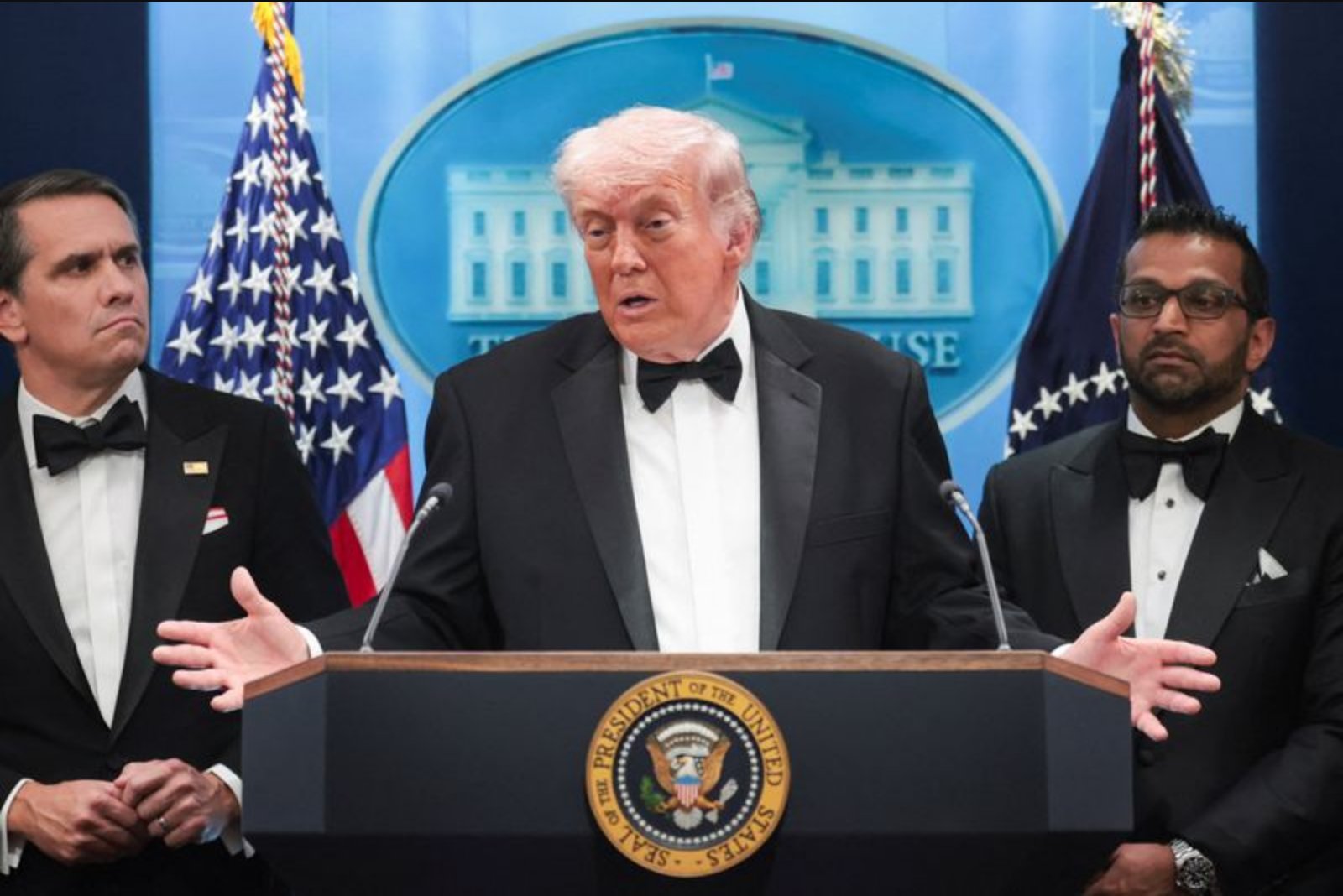
WASHINGTON, April 27 - The shooting at a formal Washington event attended by President Donald Trump left no deaths, yet it renewed scrutiny of the United States’ formal procedures for replacing or temporarily delegating the presidency if the president or other top officials are harmed. Federal law and the Constitution establish a clear order of succession that spans elected congressional leaders and cabinet secretaries.
The potential vulnerability of the entire leadership chain when many officials assemble in one place has been a concern since events like the September 11, 2001 attacks. To mitigate that risk, presidential administrations have long used a precautionary practice: keeping at least one senior official out of attendance at major gatherings so there is always a living successor available to assume charge if catastrophe strikes.
Eligibility and constitutional requirements
The Constitution sets minimum requirements for anyone in the presidential line of succession. Successors must be at least 35 years old, be natural-born citizens of the United States and have resided in the country for at least 14 years. In addition, the Senate must have confirmed them for the relevant offices they hold.
The immediate line
Under the Constitution and statutory provisions, Vice President JD Vance is first to assume presidential duties if President Trump were killed or otherwise unable to carry out the office. The constitutional 25th Amendment indicates that a vice president who assumes the presidency would serve out the remainder of the term - in this case through January 2029 - and would nominate a new vice president to be confirmed for that vacancy.
If both the president and vice president were incapacitated, the next official in the succession line is the Speaker of the House, currently Mike Johnson. Should the speaker also be unavailable, the succession moves to the president pro tempore of the Senate, a position typically held by the longest-serving senator of the majority party. At present, that position is occupied by Republican Senator Chuck Grassley of Iowa, who is 92 years old.
Cabinet order and particular uncertainties
After congressional leaders, members of the president's cabinet follow in a statutorily defined order that is based on how long each department has been part of the federal government. In the current sequence, Secretary of State Marco Rubio is first among cabinet officers, followed by Treasury Secretary Scott Bessent and Defense Secretary Pete Hegseth. The attorney general would ordinarily come next, but questions exist about whether Todd Blanche qualifies for that spot because his Senate confirmation was for the Justice Department's second-ranking role rather than the top post; he has not been nominated and confirmed for attorney general.
Following that point, the line continues with the Secretary of the Interior, Secretary of Agriculture, Secretary of Commerce, Secretary of Labor (a post that is currently vacant), Secretary of Health and Human Services, Secretary of Housing and Urban Development, Secretary of Transportation, Secretary of Energy, Secretary of Education, Secretary of Veterans Affairs and, finally, the Secretary of Homeland Security.
Designated survivor practice
To make sure at least one person eligible to step into the presidency remains available, administrations have used the informal practice of naming a "designated survivor" - a cabinet member who does not attend high-profile events where the nation’s leadership is concentrated. This precaution is not a legal requirement, but it has been standard practice since the 1980s. Historically, the Secretary of Agriculture has been the most frequent pick for the role over that period. In the recent past, President Trump named Veterans Affairs Secretary Doug Collins as the designated survivor in both 2025 and 2026.
Not every event draws this measure of protection. The White House Correspondents' Association dinner, while a prominent fixture of the Washington social calendar, typically does not mandate keeping a designated survivor away. President Trump did not attend the dinner during his first 2017-2021 term and also boycotted it last year, but he did attend the dinner this year.
His presence at the event, alongside Vice President Vance, Speaker Johnson, Secretary Rubio and Secretary Hegseth and many other cabinet officials, concentrated several people in the line of succession in one venue. Had the shooter succeeded in killing top administration officials, the risk of a sudden leadership vacuum was raised. However, Senator Grassley did not attend the dinner, meaning at least one person high in the statutory order was not present at the event.
Implications for continuity
The legal framework provides an ordered path for presidential succession and sets clear eligibility standards. The practice of designating a survivor is an additional, though informal, layer intended to preserve continuity when senior officials gather. Recent events underline why both the constitutional provisions and the ancillary practices remain relevant to preserving an unbroken chain of government authority.