
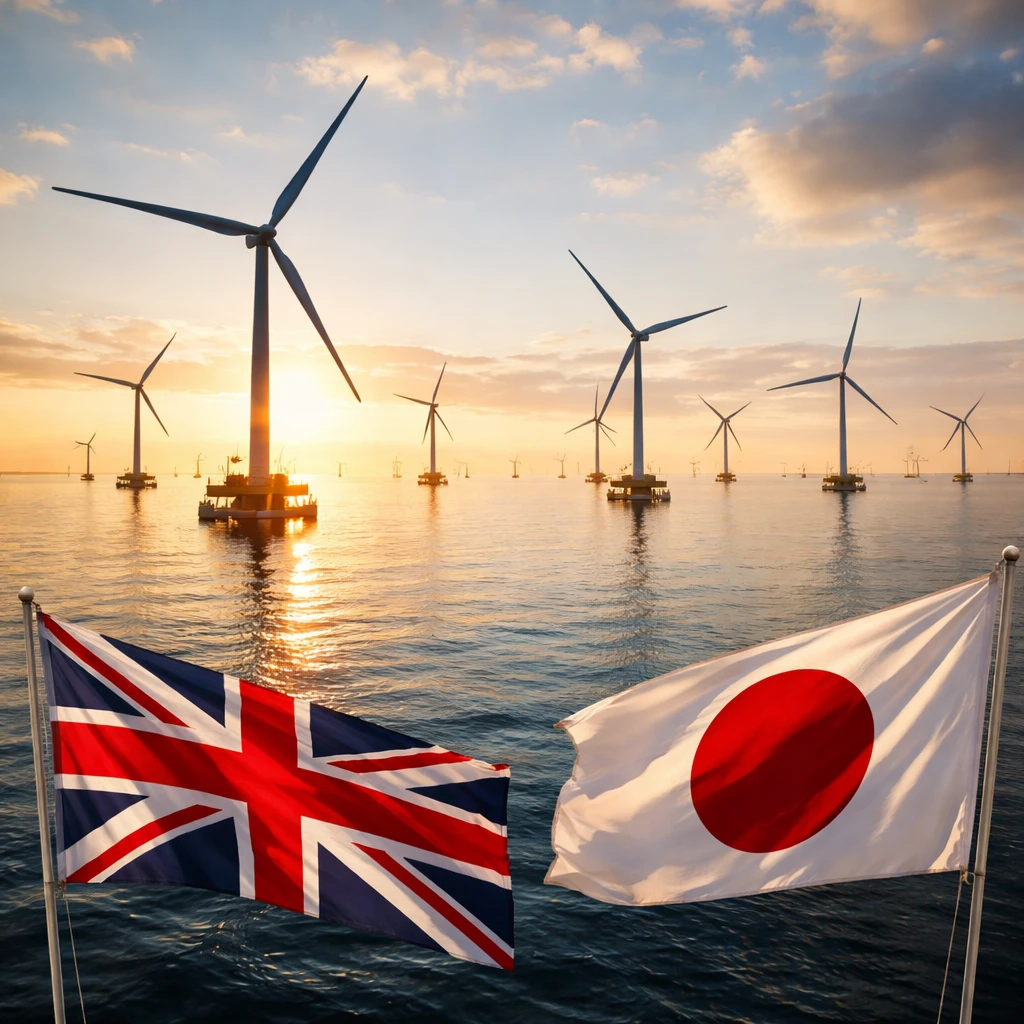
The United Kingdom and Japan are advancing toward the signing of a landmark £18 billion investment pact, a move designed to deepen bilateral economic integration across clean energy, infrastructure, and financial services. According to reports from Bloomberg, the agreement is poised to include approximately £9 billion in Japanese capital allocation specifically earmarked for the development of 5.9 gigawatts of floating offshore wind capacity within British waters. The UK government projects that these renewable projects will eventually generate enough electricity to power around 8 million households.
This announcement arrives just before a scheduled meeting on Sunday at Downing Street between UK Prime Minister Keir Starmer and Japanese Prime Minister Sanae Takaichi. Business executives from both nations are anticipated to participate in the discussions, which will take place ahead of the Group of Seven summit in France. The British government indicated that the broader investment package is structured to stimulate job creation across the offshore wind, infrastructure, and financial services sectors.
The pact reflects a coordinated strategy by both nations to fortify economic linkages and expand cooperation within strategic industrial domains. The UK government has been actively pursuing greater foreign direct investment into its clean energy sector, a policy direction driven by long-term energy security mandates and objectives to expand domestic renewable power generation. Japan, conversely, has escalated its overseas capital deployment into energy and infrastructure projects, as its corporations seek sustainable long-term growth opportunities and contribute to the global energy transition.
In an official statement, Starmer emphasized that the partnership will facilitate deeper collaboration on technology, research, and industrial development. He noted that as G7 economies and close security partners, the two nations are jointly working on some of the world's most innovative technologies. The investment announcement occurs against a backdrop of escalating public and private capital expenditure on renewable energy projects across Europe and Asia, including offshore wind developments, as governments strive to meet climate commitments and reduce reliance on fossil fuels.