
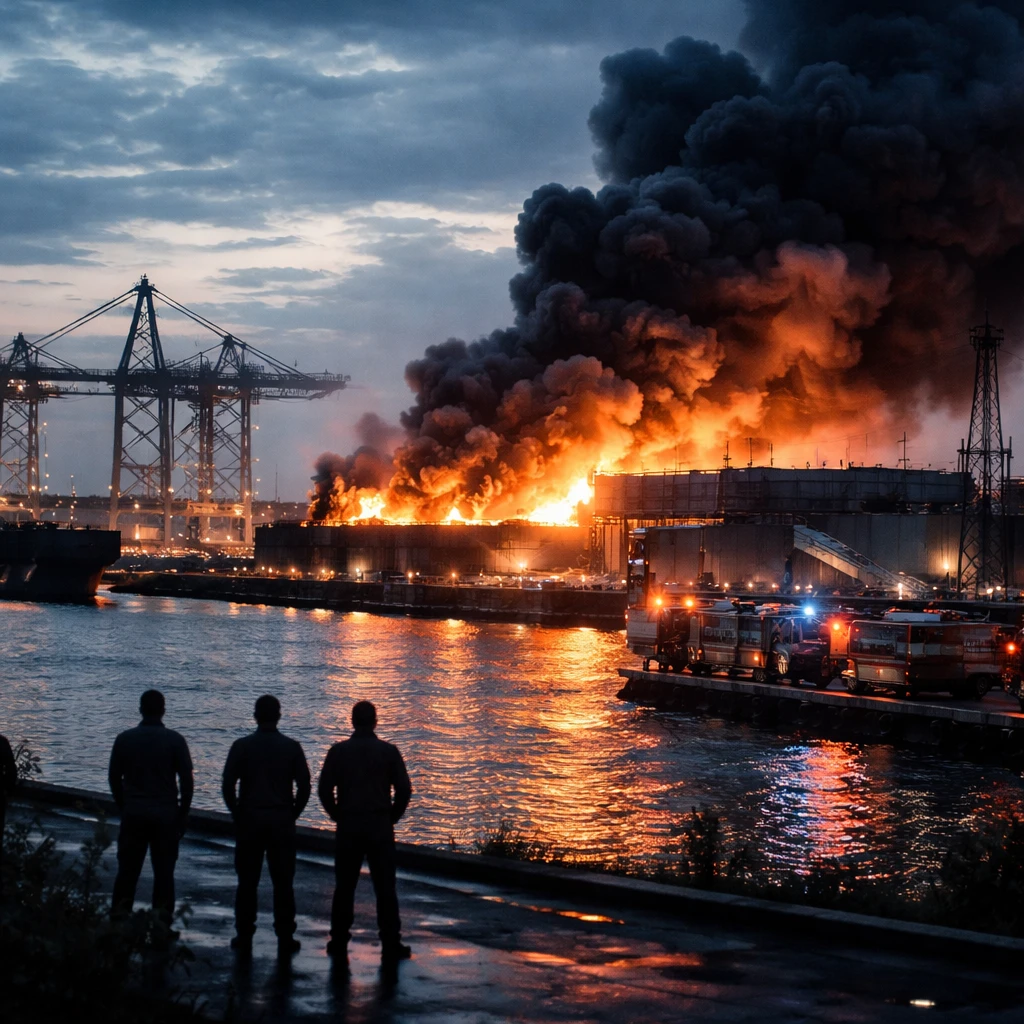
A regional governor said a drone strike on a sea terminal in the Russian port of Temryuk, in the Krasnodar region, killed one person and caused a fire at the facility.
Veniamin Kondratiev, the region's governor, identified the southern port city as the location of the attack and confirmed that a terminal there caught fire. Russian authorities have not released immediate details on the overall extent of the damage or the operational impact on the port.
Temryuk has been struck previously this year. In late May, Ukraine's security service stated that it had hit a gas terminal at the same port.
On the same day, officials in Russia's Volgograd region reported a separate incident after a drone attack in the Kotovo district. Regional governor Andrei Bocharov acknowledged a fire in an industrial area but did not identify which facilities were affected or provide an assessment of the damage.
These recent events form part of a wider pattern of strikes. Ukrainian forces have intensified operations aimed at Russian energy, fuel and logistics infrastructure following the breakdown of ceasefire efforts and stalled peace negotiations, according to statements accompanying recent operations.
Recent Ukrainian actions have included strikes on oil refineries, fuel depots, pumping stations and export terminals across several Russian regions. Earlier in the week, Ukraine's military reported a strike on the Afipsky oil refinery in the Krasnodar region, which it said caused a fire at that facility. Russian officials acknowledged a fire in the area but characterized it as resulting from falling drone debris.
Analysts and observers note that the campaign against Russian energy infrastructure has broadened this year, with strikes disrupting refinery operations and fuel supplies in various regions, including Crimea. At the same time, Russian forces have continued to launch missile and drone attacks on Ukrainian cities and infrastructure, illustrating the reciprocal nature of attacks and counter-attacks.
The immediate human toll in Temryuk is the confirmed death of one person and a terminal fire. Administrative sources have not provided further details on casualties beyond that confirmation, nor have they shared assessments of the economic disruptions to port operations.
Authorities in the affected regions have so far limited public comments on the full scope of damage, leaving questions about longer-term impacts on fuel logistics and export capacity in the southern regions. The available statements place the incidents within the context of an escalating pattern of strikes that target energy and transportation nodes on both sides of the front lines.
Context and implications
The confirmed fatality and fires at port and industrial sites underscore ongoing vulnerabilities in energy and logistics infrastructure amid the conflict. Official statements indicate continued pressure on facilities that support fuel distribution and exports, but authorities have provided limited public detail about operational losses or timelines for recovery.