
Stock Markets April 14, 2026 05:18 PM

Volkswagen to Record Q1 Charge After Halting ID.4 Production in Tennessee

Analysts say a majority of retooling costs for Chattanooga ID.4 line will be written down; earnings would have grown without the charge

By Derek Hwang
Volkswagen to Record Q1 Charge After Halting ID.4 Production in Tennessee

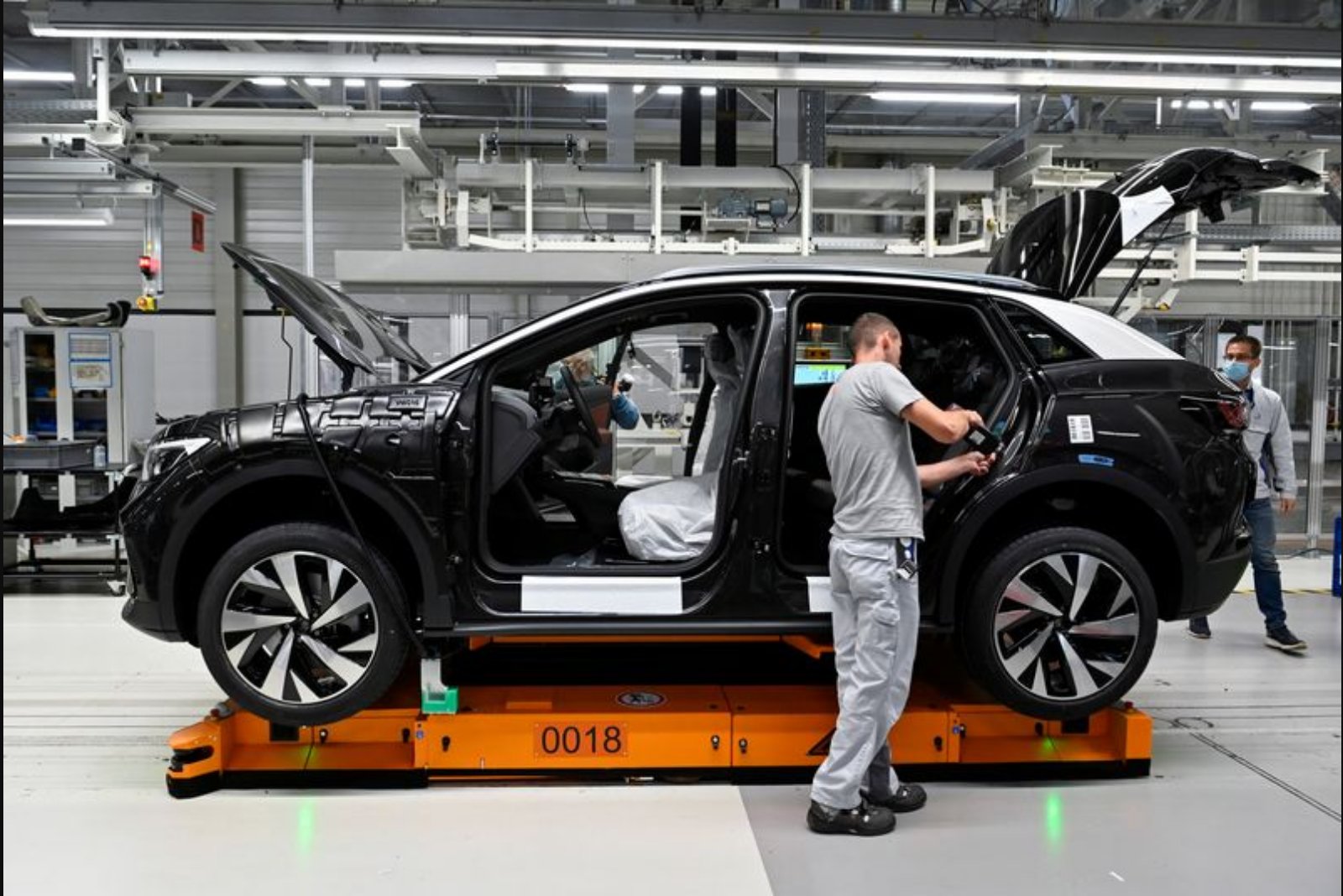
Volkswagen will book a significant first-quarter write-down tied to its decision to stop making the ID.4 electric SUV at its Chattanooga, Tennessee plant, analysts said after a management briefing. Bernstein calculated the charge at 60% to 75% of the $800 million retooling outlay, a figure the company confirmed. Absent the writedown, Volkswagen's operating profit would have risen year-on-year in the first quarter, and the automaker could benefit later from no longer selling the unprofitable model.

Key Points

  • Volkswagen will record a Q1 charge equal to 60% to 75% of its $800 million investment to retool the Chattanooga plant for ID.4 production.
  • A Volkswagen spokesperson confirmed Bernstein's calculation; Bernstein said that excluding the writedown the group's operating earnings would increase year-on-year in the first quarter.
  • Volkswagen announced on April 9 it would end ID.4 production in Chattanooga this month, citing a challenging U.S. EV market; automakers have cut or cancelled EV programs after the federal government last fall ended the $7,500 purchase tax credit.

BERLIN, April 14 - Volkswagen is set to take a hit to first-quarter results as a consequence of halting production of its ID.4 electric SUV at the automaker's Tennessee assembly site, analysts said following a call with management on Tuesday.

Bernstein analysts estimated that Volkswagen will record a charge equal to 60% to 75% of the $800 million that was invested to convert the Chattanooga plant to ID.4 production. A Volkswagen spokesperson confirmed that Bernstein's calculations were accurate.

The analysts added that, excluding this writedown, the group's operating earnings would have increased on a year-on-year basis for the first three months of the year. In addition, Bernstein noted a benefit that would extend beyond the immediate quarter, saying Volkswagen would also benefit later "from no longer selling this unprofitable vehicle."

Volkswagen disclosed on April 9 that it would end ID.4 production in Chattanooga during this month, citing a difficult environment for the U.S. electric vehicle market. The announcement comes amid wider adjustments across the industry, with automakers having scaled back or cancelled EV production after the federal government last fall ended the use of a $7,500 tax credit toward the purchase of an electric vehicle.

The move to take a substantial portion of the retooling cost as an accounting charge will directly affect the group's first-quarter bottom-line, even as analysts indicate underlying operating performance, excluding the writedown, showed year-on-year improvement. The confirmation from Volkswagen's spokesperson aligned with Bernstein's math, making the size of the charge clearer to investors.

For the automotive sector and market participants, the write-down highlights the financial and operational consequences of shifting demand conditions in the U.S. EV market. The company's decision to cease ID.4 output at Chattanooga and to recognize much of the retooling expense in the first quarter are immediate developments that will shape near-term reported results.


Clear summary

Volkswagen will register a first-quarter charge amounting to 60% to 75% of the $800 million invested to retool its Chattanooga plant for the ID.4, a figure confirmed by a company spokesperson. Excluding the charge, Bernstein said Volkswagen's operating earnings would have risen year-on-year in Q1, and the firm expects a longer-term benefit from stopping sales of the unprofitable ID.4.

Risks

  • The sizable writedown will depress first-quarter reported earnings for Volkswagen, affecting automotive sector financial results.
  • Reduced demand and a more challenging U.S. EV market environment may continue to prompt production cuts or cancellations across automakers, impacting manufacturing and EV supply chains.
  • Changes in policy on EV incentives, such as the federal government ending the $7,500 tax credit last fall, contribute to market uncertainty for EV sales and production planning.

More from Stock Markets

OpenAI Opens Limited Access to GPT-5.4-Cyber as Rival Mythos Raises Alarm Apr 14, 2026 NewHold Investment Corp IV Prices $175 Million IPO, Units to Begin Trading on Nasdaq Apr 14, 2026 Mexican equities retreat - S&P/BMV IPC falls 0.94% as consumer and industrial names slide Apr 14, 2026 OpenAI Releases GPT-5.4-Cyber for Defensive Security Work, Expands Trusted Access Program Apr 14, 2026 Colombian Equities Gain as COLCAP Climbs to One-Month High Apr 14, 2026