
Background and career
Kevin Warsh is an American economist who served on the Federal Reserve's Board of Governors from 2006 to 2011, including throughout the global financial crisis. During his time at the central bank, he helped shape the Fed's response to market turmoil and acted as a principal liaison to Wall Street. After leaving the Fed, he continued to speak on monetary policy topics such as inflation and interest rates.
What he said at the hearing
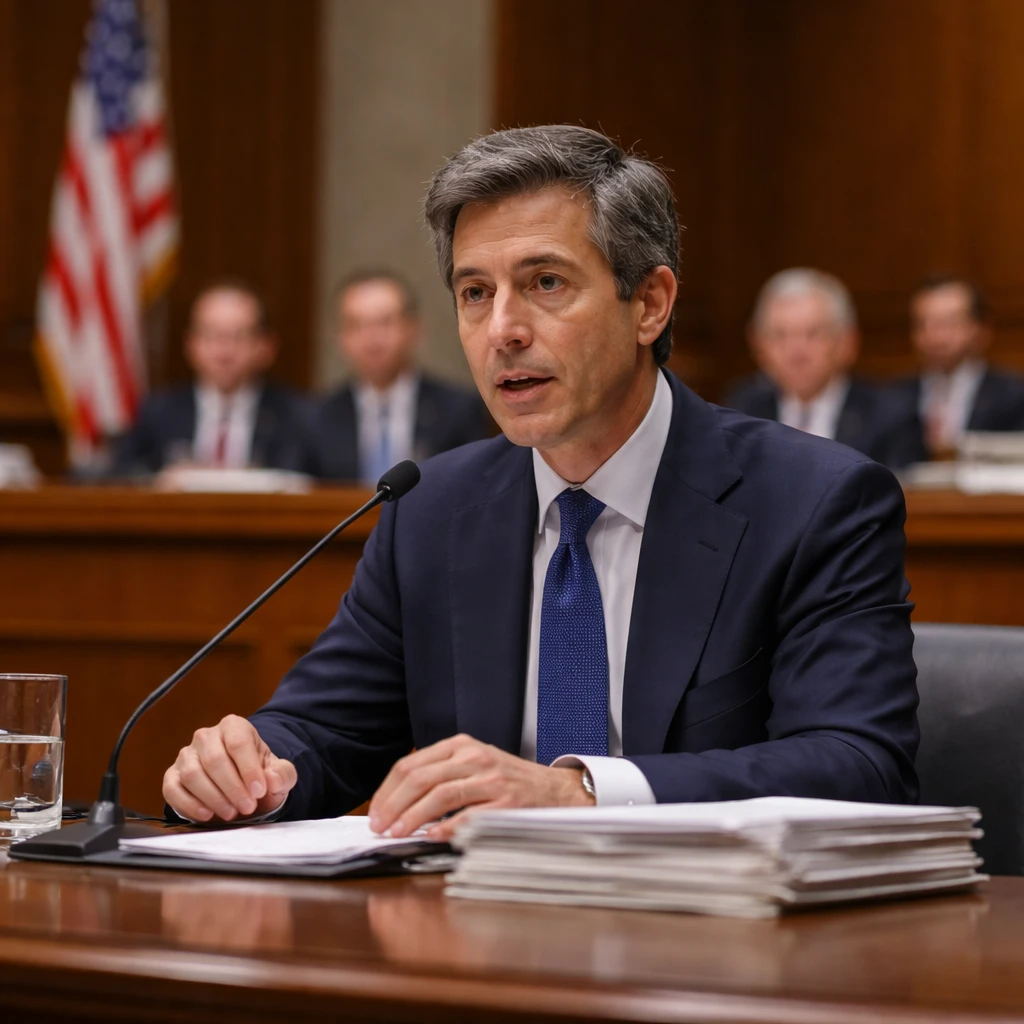
At a Congressional hearing on Friday, Warsh emphasized the importance of Federal Reserve independence, saying the institution is responsible for maintaining price stability and that keeping inflation low is proof of its independence. He added that "independence has to be earned," a comment that observers noted could be read as a hawkish posture.
Despite the tone of that assertion, analysts at KB Securities observed a disconnect between the rhetoric and the specific policy tool Warsh endorsed. "This could easily have come across as hawkish. Yet when it came to what he would actually do, his remarks were not hawkish," the firm said.
Trimmed PCE explained
The measure Warsh favors is Trimmed PCE. According to the reporting, the Dallas Fed said he would prefer to use Trimmed PCE, which removes the top 31% and bottom 24% of detailed price components to assess inflation. By contrast, the Federal Reserve's preferred gauge, core PCE, excludes only volatile food and energy prices.
Trimmed PCE currently reads 2.3%, while core PCE is at 2.8%. Critics have suggested that the lower Trimmed PCE could be interpreted as indicating there is no room to cut interest rates, a point they argue could make Warsh's stance seem restrictive for monetary easing.
How analysts interpret the metric
KB Securities pushed back on the notion that Trimmed PCE is designed to understate inflation. The firm noted that the purpose of the measure is to provide a clearer read on inflation by excluding large swaths of high- and low-moving items, which can give a different sense of the persistent trend in prices.
The analysts characterized Trimmed PCE as a "trend-confirmation tool" rather than a forward-looking gauge. They said many critics expect a leading indicator from Trimmed PCE in the current environment, but "trimmed PCE was never meant to be a leading indicator in the first place. Its real role is to help confirm whether an inflation trend has shifted."
KB Securities pointed to the experience in 2021 as an example: Trimmed PCE served as an indication that inflation had begun to accelerate at a time when the Federal Reserve labeled inflation expectations as transitory.
The measure can also signal when inflation is cooling even if the trend is not yet apparent in core PCE, the analysts added.
Critics and uncertainties
Critics remain concerned that using a measure such as Trimmed PCE could mask persistent pressures in specific price components and thereby influence the perceived timing and scope of policy action. The lower trimmed reading at 2.3% compared with core PCE at 2.8% has been cited as a basis for concern that Warsh's preferred metric might be used to justify a more constrained path for rate cuts.
KB Securities summarized the tension succinctly: "His commitment to controlling inflation sounds hawkish, but the policy tool he actually proposed is dovish." That framing underscores the uncertainty about whether Warsh's statements point to tighter policy in practice or simply represent a different analytical approach to measuring inflation.
Implications
The debate over which inflation metric to follow highlights how measurement choices can shape interpretations of monetary policy. While Warsh's comments on the need to preserve Fed independence and keep inflation low read as firm, the preference for Trimmed PCE complicates a straightforward hawkish reading of his likely actions.
Note: This report reflects the statements and analysis presented during the hearing and in commentary by KB Securities and does not add additional factual claims beyond those described.