
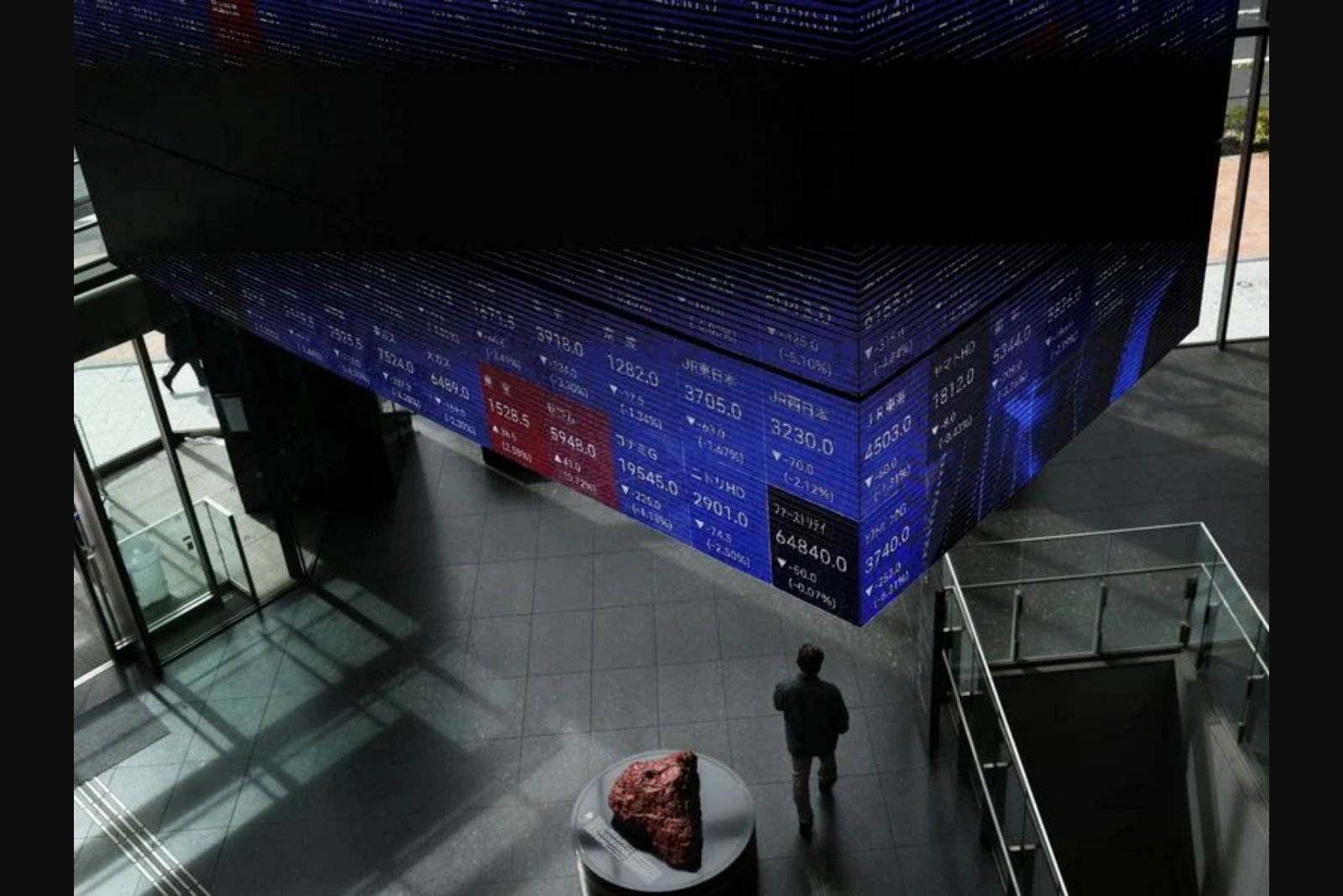
Asian equity markets participated in a synchronized global rally on Friday, buoyed by renewed expectations that a Middle East peace agreement may finally be finalized. The shifting geopolitical landscape triggered a broad retreat in both the U.S. dollar and bond yields, while crude oil prices dropped to their lowest levels in two months. This convergence of events served to substantially dampen immediate inflationary concerns across global financial markets.
Market attention was simultaneously divided by the historic market debut of SpaceX, Elon Musk’s aerospace manufacturer. The company executed an initial public offering that established a new record for capital raised, securing $75 billion in funding. This transaction valued the rocket and spacecraft enterprise at $1.77 trillion, simultaneously elevating Musk to the status of the world's first individual trillionaire.
The catalyst for the equity surge was political commentary indicating advanced diplomatic progress. President Donald Trump stated on Thursday that a formal peace agreement could potentially be signed by the upcoming weekend. This announcement followed hours in which he had threatened additional military strikes against Iran, marking a sharp rhetorical pivot. The president indicated that negotiations with Tehran had progressed to the highest echelons of Iranian leadership and had secured approval from a wide coalition of regional powers.
These optimistic remarks represent a continuation of previous presidential statements that historically failed to produce tangible results, often causing volatility in market sentiment. However, financial strategists noted a distinct shift in the credibility of these claims. Ray Attrill, head of FX strategy at the National Australia Bank, observed that the current diplomatic posture appears more realistic than preceding iterations. He suggested that if positive indications emerge directly from Iran, the probability of a finalized deal could reverse significantly.
A confirmed agreement would represent the most substantial diplomatic advancement to date in ending a three-month conflict that has previously driven global energy costs upward with considerable velocity. The economic repercussions of this escalation had already forced policy adjustments elsewhere; specifically, the European Central Bank was compelled to raise interest rates for the first time in nearly three years. This monetary tightening was explicitly aimed at curbing inflationary pressures directly induced by the regional hostilities.
Market reactions were immediate and pronounced across major indices. Japan's Nikkei index climbed 4.3 percent, while Australia's resource-intensive share market advanced by 1.8 percent. In South Korea, the KOSPI registered a substantial surge of 8.3 percent. Overnight trading in the United States mirrored this momentum, with three major Wall Street indexes recording their largest single-day gains since April 8. That previous date coincided with the implementation of a temporary ceasefire agreement between the United States and Iran.
The Nasdaq composite index rose 2.5 percent during overnight sessions. This performance was partially supported by investor anticipation surrounding the robust market debut of SpaceX, demonstrating how distinct corporate milestones can influence broader technological sector sentiment even amid macroeconomic geopolitical shifts.
Underlying economic data presented a complex backdrop to these equity gains. Official figures revealed that U.S. producer prices increased more than anticipated in May. This acceleration resulted in the largest annual price gain over a three-and-a-half-year period, a trend directly attributed to the Middle East conflict driving up energy costs.
Simultaneously, labor market indicators suggested ongoing stability. The number of Americans filing new claims for unemployment benefits rose only marginally during the previous week. This data point indicated that the U.S. labor market maintained its resilience entering early June, despite the broader economic uncertainties associated with global energy shocks.
Fixed income markets adjusted rapidly to the diplomatic developments. Hopes for a Gulf peace agreement caused traders to significantly reduce their wagering on an upcoming interest rate hike by the Federal Reserve this year. Specifically, the market-implied probability of a rate increase in October retreated from 51 percent down to 36 percent.
Treasury yields reflected these revised expectations. Two-year Treasury yields remained stable at 4.066 percent on Friday, having decreased by six basis points during overnight trading. The benchmark ten-year Treasury yield held at 4.4631 percent, after experiencing a decline of almost eight basis points in the same period.
Currency markets mirrored the shift away from rate hike expectations. The dollar index, which tracks the greenback against major global currencies, sustained losses and settled at 99.78, having declined 0.4 percent overnight. However, the exchange rate between the U.S. dollar and the Japanese yen edged upward by 0.1 percent to reach 160.19 yen, following a 0.4 percent retreat on the preceding session.
Foreign exchange traders remain highly vigilant regarding potential intervention from Japanese monetary authorities, as the yen continues to trade below the critical psychological level of 160 yen per dollar.
Precious metals benefited marginally from the depreciation in the U.S. dollar. Spot gold prices increased by 0.2 percent to settle at $4,222 an ounce. This modest gain followed a substantial 3.5 percent jump that occurred during overnight trading. Similarly, spot silver rose 0.3 percent to reach $67.52 an ounce, building upon a significant 5.8 percent advance recorded previously.