
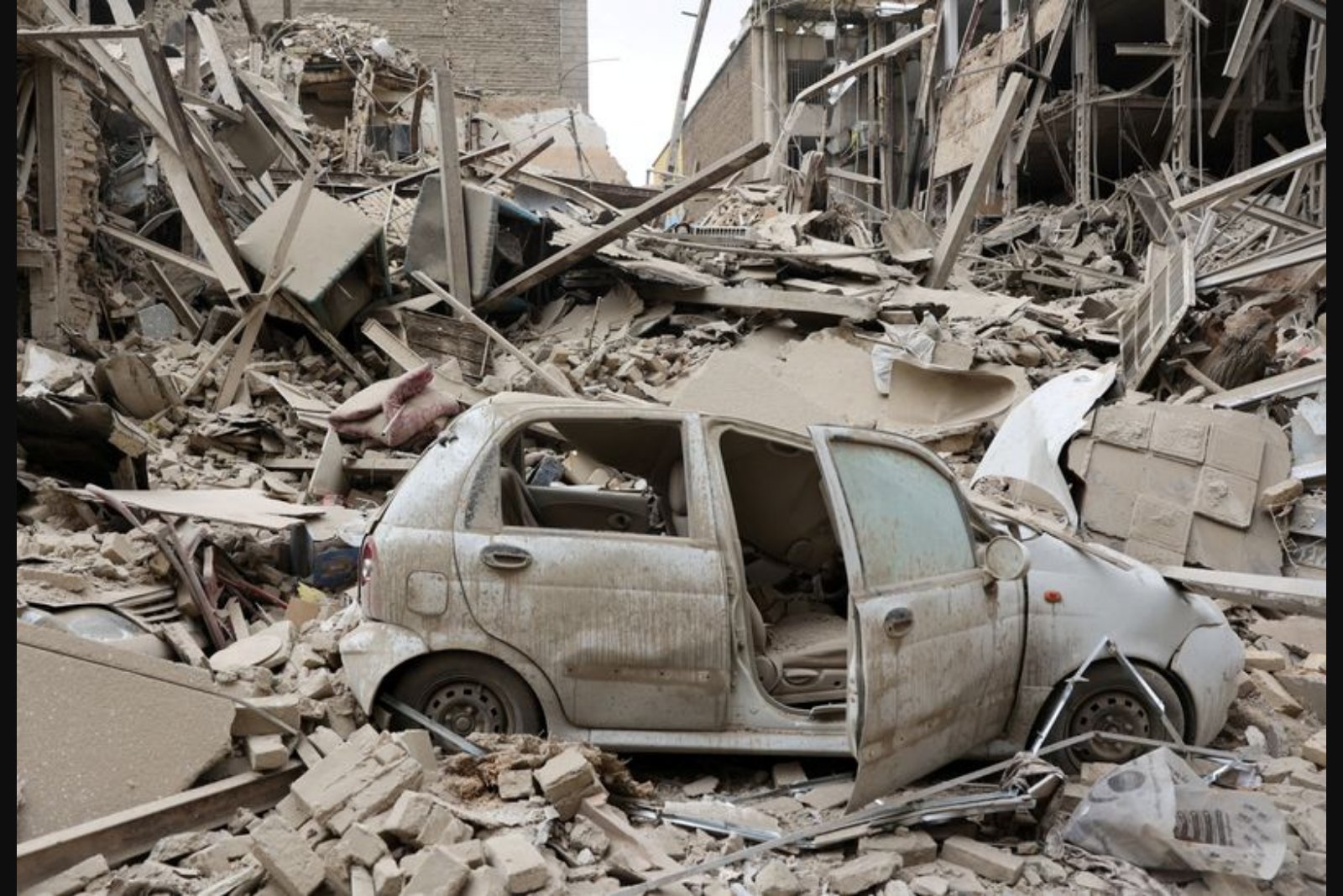
Two months into the Iran war, the economic fallout is moving well beyond regional battle lines and into the balance sheets and policy rooms of emerging and developing economies. Disrupted trade flows through the Strait of Hormuz, higher crude prices and resurgent inflationary dynamics are creating a cascade of effects - from trade deficits in Gulf states to renewed pressure on sovereign finances and central bank policy elsewhere.
Direct, immediate damage in the Gulf
The most immediate and visible impacts are concentrated in the Middle East and neighbouring countries. Qatar recorded its first ever trade deficit of $1.2 billion in March after the closure of the Strait of Hormuz cut exports by more than 90% and reduced imports by roughly half. Damage to a liquefied natural gas plant has prompted JPMorgan economists to forecast a 9% contraction in Qatar’s economy this year - a sharper downturn than the International Monetary Fund’s minus 6.1% projection for Iran.
The IMF has lowered its growth outlook for emerging and developing economies as a group to 3.9% from 4.2%, and the IMF and World Bank meetings in Washington this month included stark warnings about the widening economic consequences. "A full-fledged impact is coming and it is not far away," Qatar Finance Minister Ali Ahmed Al-Kuwari told the event.
Trade chokepoints and winners further afield
Emerging Asian economies are particularly exposed because more than 50% of crude imports and more than a third of gas imports traditionally pass through the Strait of Hormuz, raising their vulnerability to supply disruptions. At the same time, some non-neighbouring commodity producers have benefited from higher oil prices: the currencies of Brazil and Kazakhstan have strengthened more than 9% year-to-date, and emerging market equities have recovered to record highs, with tech-heavy markets such as South Korea and Taiwan contributing to the rally.
Monetary policy turning more restrictive
The rise in energy costs has intensified inflationary pressures and reduced the latitude for central banks to ease policy. Instead of cuts, several central banks have either raised rates or signalled a return to tighter settings. The Philippines increased rates last week, while Turkey, Poland, Hungary, the Czech Republic, India and South Africa have all shifted toward more hawkish stances amid concern over potential second-round effects - where higher energy costs feed into wages and other follow-on price increases.
Markets and forecasters are pricing in further tightening. JPMorgan says most of the 15 major emerging economies it monitors are pricing in tighter monetary policy over the next six months. "Rising inflationary pressures and risk-off sentiment could tighten financing conditions, pushing (bond) yields higher," Zahabia Gupta at S&P Global wrote in a research note.
Subsidy bills and fiscal stress
Governments in many emerging markets already spend large sums cushioning households from high energy prices. The IMF estimates global fossil fuel subsidies amounted to $725 billion in 2024 - or 6% of global GDP - down from 12% in 2022 when the earlier shock to energy markets occurred. The Fund notes that the Middle East, North Africa, Europe and Central Asia region accounts for roughly three quarters of those subsidies worldwide.
Analysts warn that sustained higher energy prices could worsen fiscal shortfalls through broader use of subsidies, price caps and tax cuts. "We see growing fiscal risks in EM from capping prices, from tax cuts and subsidies if this energy shock is more persistent," Citi’s Joanna Chua said, flagging Egypt, Turkey, Indonesia, India, Hungary and Poland as particularly vulnerable.
The fragile few: crisis-scarred low-income countries
A subset of lower-income, crisis-prone countries is of especial concern. Egypt, Sri Lanka and Pakistan sit in a vulnerable group where renewed shocks could tip already fragile finances back toward trouble.
In Egypt, rising fuel and food prices are colliding with risks to tourism and remittances. Tourism earned almost $20 billion last year, but revenues could fall, and remittances from workers in the Gulf may decline. The Egyptian pound has weakened about 9% this year, raising the domestic cost of repaying nearly $30 billion of external obligations due.
Sri Lanka, which defaulted in 2022, has reintroduced fuel subsidies and obtained a temporary easing on IMF financing to buy breathing space. Pakistan’s gross foreign exchange reserves stood at $16.4 billion at the end of March, covering less than three months of basic imports; analysts caution that reserves may be effectively negative if the central bank’s foreign currency liabilities are considered.
Sub-Saharan Africa and a widening fiscal map
The IMF has highlighted that many of the poorer countries in Sub-Saharan Africa are being hit particularly hard by the current dynamics. The Fund’s analysis points to a troubling overlap: countries that rely heavily on imported oil and those with stretched public finances are clustered in the quadrant most exposed to prolonged high crude prices. The longer elevated energy costs persist, the more fiscal pressure compounds in these economies.
"We have a negative supply shock," IMF Managing Director Kristalina Georgieva said at an event in London last week, adding that "the worst thing to do is to try and balloon demand," noting some governments are responding with broad subsidies rather than targeted support. She said the Fund expects it will need to provide an additional $20 billion to $50 billion of emergency support as a result of the crisis.
This evolving picture underscores how a conflict centred in one region can transmit through global energy and trade channels, constrain policy options and exacerbate vulnerabilities in countries with limited fiscal and monetary buffers.