
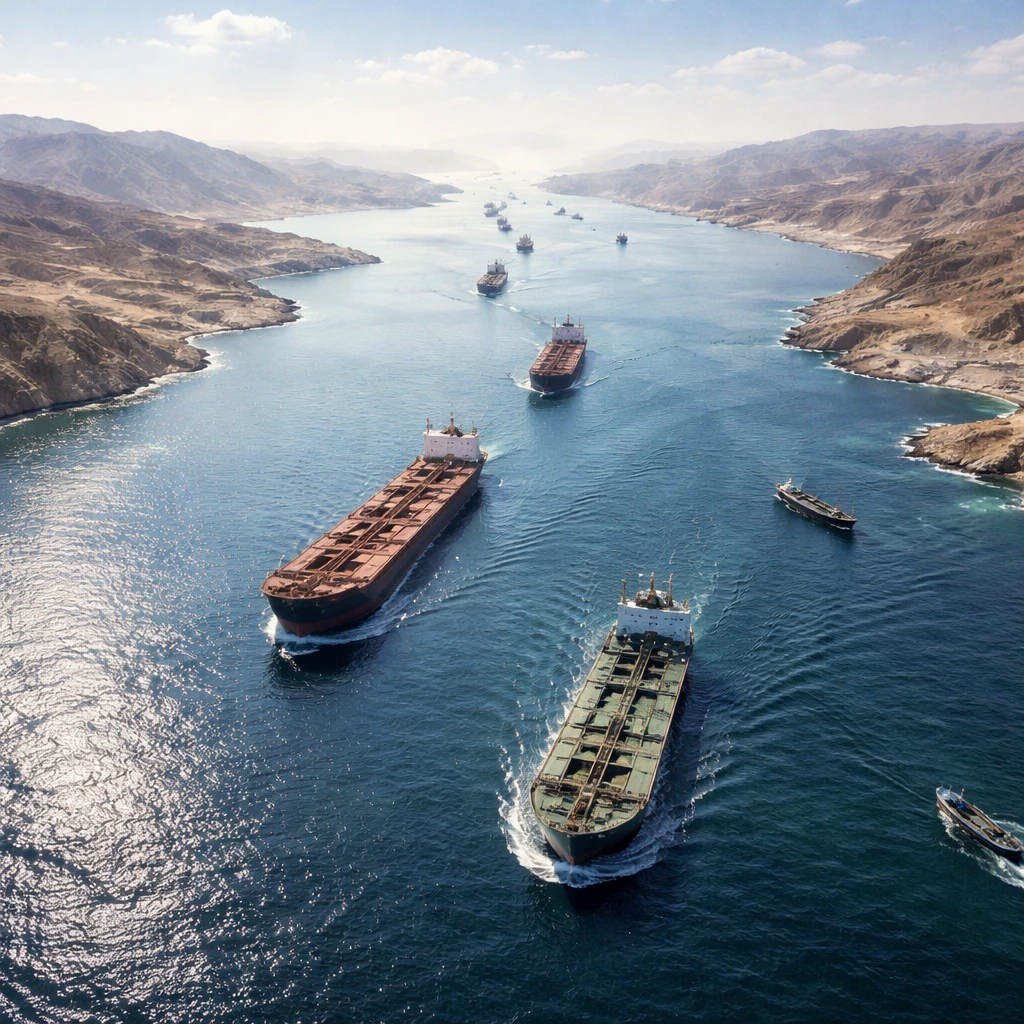
Around seven ships, mostly dry bulk vessels, crossed the Strait of Hormuz in the past 24 hours, according to ship-tracking and satellite data, as diplomatic negotiations between Iran and the United States have stalled.
Analysis of vessel movements by Kpler, together with satellite assessments from SynMax, indicates the transits included several ships leaving Iraqi ports and one dry bulk vessel departing from an Iranian port. The counts reflect movements recorded across the waterway that forms the entrance to the Gulf.
That level of traffic represents a small portion of the volume observed before the outbreak of the Iran war on February 28, when the average was about 140 passages a day. Data from Monday showed shipping activity through the Strait remained broadly in line with the modest levels recorded on recent days.
Separate tracking by TankerTrackers.com documented U.S. forces turning back six tankers carrying roughly 10.5 million barrels of Iranian oil in recent days; those vessels were returned through the Strait of Hormuz to Iran. TankerTrackers.com also reported that about 4 million barrels of Iranian oil onboard tankers passed through the U.S. blockade on April 24.
The current movement patterns in the Strait, recorded by multiple maritime analytics providers, highlight a constrained but ongoing flow of commercial vessels and oil shipments while diplomatic contacts between Washington and Tehran have not advanced.
Sectors potentially affected: Maritime shipping, oil and energy markets, and regional logistics chains.
Data sources cited: Vessel-tracking analysis from Kpler and SynMax satellite assessments; TankerTrackers.com analyses of tanker movements and cargo volumes.