
Overview
Global commodity markets reacted abruptly after reports emerged that Iran’s Islamic Revolutionary Guard Corps attacked a Singapore-flagged container ship in the Strait of Hormuz, according to the Wall Street Journal citing two senior U.S. officials. The reported strike pushed crude oil prices up and interrupted a period of easing geopolitical tensions that investors had been pricing into energy markets.
What happened
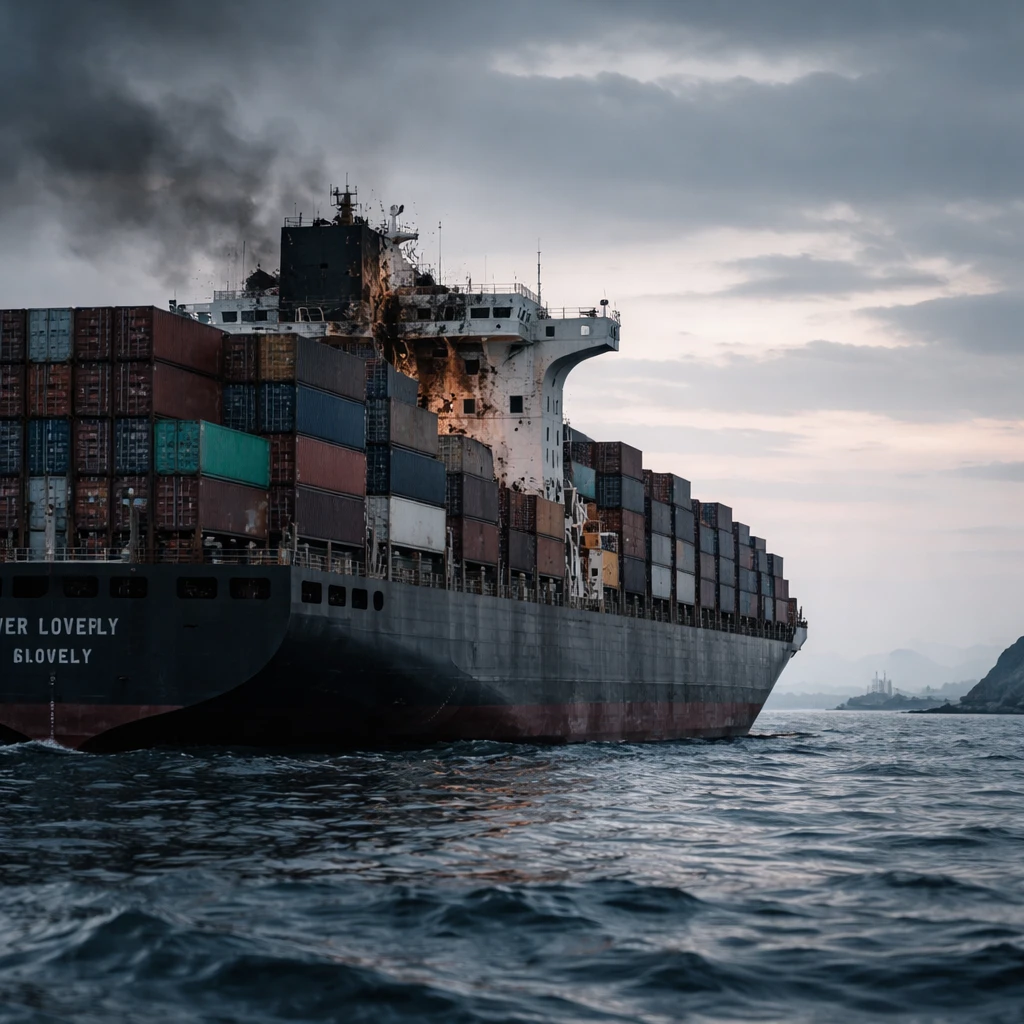
The vessel identified in official statements was the Ever Lovely, a Singapore-flagged container ship. The U.K. Maritime Trade Operations (UKMTO) reported that the projectile struck and damaged the vessel’s bridge. UKMTO also said the incident produced no casualties and no environmental impact. The hit occurred while the ship was navigating near the coast of Oman and came within hours of a stern warning issued by Iran’s paramilitary navy against commercial vessels using unauthorized routes through the waterway.
Market response
Traders moved quickly to reinsert a geopolitical risk premium into oil futures after the attack, reversing a recent downward trend in crude prices that had followed the diplomatic agreement between Washington and Tehran. The unexpected escalation jolted investors and reversed momentum that had been building on the assumption that the accord would keep the waterway secure and commerce flowing without interruption.
Diplomatic fallout
The strike directly challenges the 60-day diplomatic agreement reached earlier between the U.S. and Iran. Under the terms of that deal, Tehran had pledged to make its best efforts to ensure the safe passage of commercial vessels through the Strait of Hormuz. In return, the U.S. lifted a blockade of Iranian ports and waived key sanctions on Iranian oil sales, including permission for the regime to trade its crude in U.S. dollars, concessions that market participants had assumed would underpin a period of lower risk.
Operational impacts in the Gulf
Earlier in the week the International Maritime Organization (IMO) informed shippers that it was coordinating an evacuation route for hundreds of commercial ships stranded in the Persian Gulf, working with Iran, Oman, the U.S., and other coastal states. The reported strike occurred against that backdrop of active operational coordination, amplifying concerns among ship operators and charterers about the security of transit lanes and route management.
Implications for traders and shippers
The sudden act of aggression created immediate price volatility and forced market participants to reassess the probability of prolonged supply disruptions. For shippers and logistics planners, the incident underscores the fragility of transit security arrangements even when formal diplomatic steps appear to be in place.
Summary of confirmed facts
- The attack was reported by the Wall Street Journal, citing two senior U.S. officials.
- The struck vessel was the Ever Lovely, Singapore-flagged; its bridge was damaged.
- UKMTO reported no casualties and no environmental damage.
- The incident occurred near the coast of Oman and followed a warning from Iran’s paramilitary navy about unauthorized commercial routes.
- The event disrupted a recent downward trend in crude prices and put the 60-day U.S.-Iran agreement under immediate strain.
Conclusion
The reported IRGC attack on the Ever Lovely removed a measure of calm from markets that had been encouraged by diplomatic progress earlier in the week. With crude prices responding and shipping operations under renewed scrutiny, both energy and maritime sectors face fresh uncertainty while authorities and market participants reassess risk and route management in the Strait of Hormuz.