
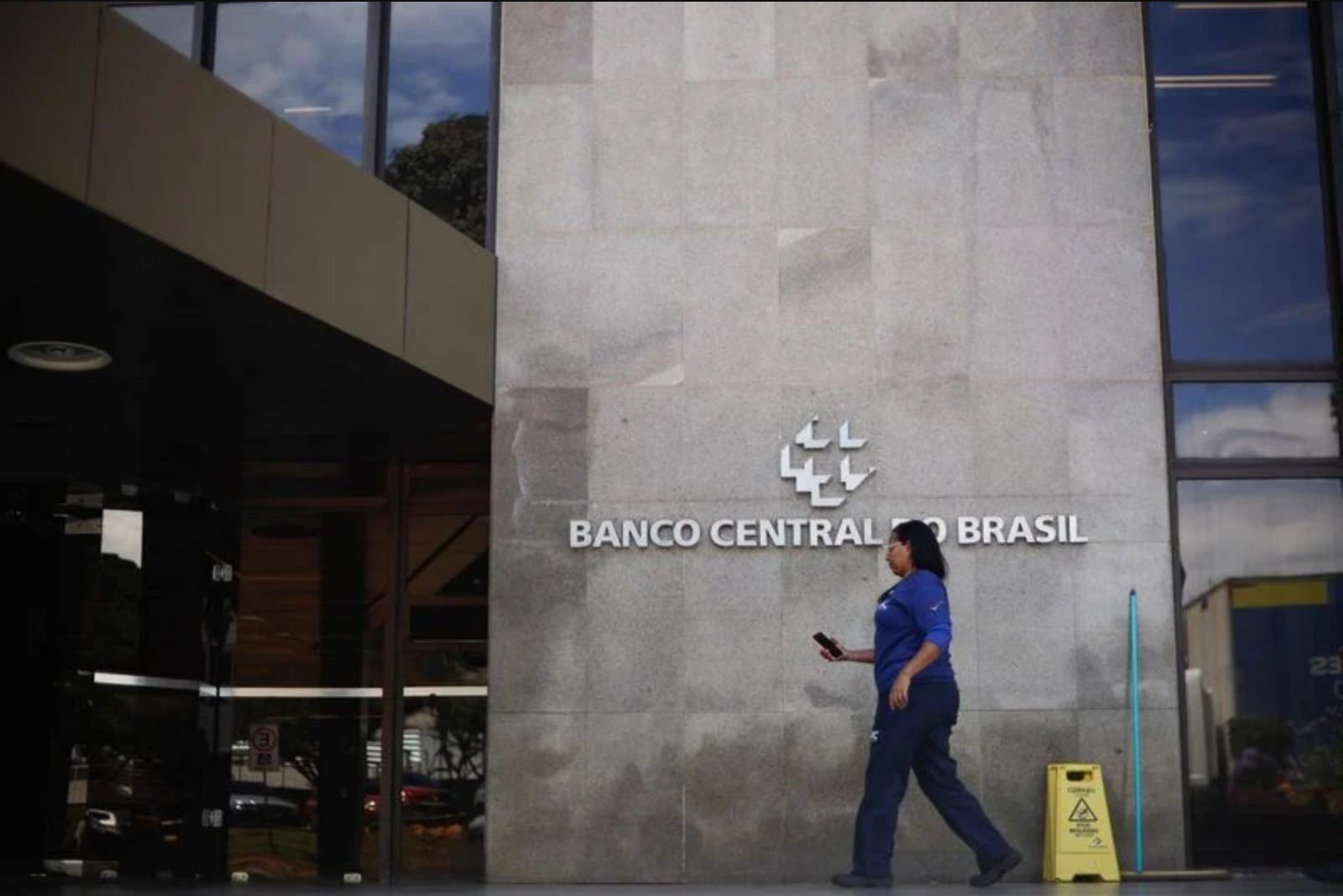
Brazil's central bank pushed back on market readings of its latest policy signals after a rate decision that steepened the sovereign yield curve, saying it had not extended the time frame that guides monetary policy. The bank reduced its benchmark rate by 25 basis points to 14.25% - the third straight cut - and sought to explain how its projection framework translated into reference dates used for upcoming meetings.
In its new projections the bank indicated that bringing inflation back to target within the horizon it considers relevant - centered on end-2027 - would imply consumer price inflation dropping below the 3% goal in the first quarter of 2028. That first-quarter-2028 point will act as the reference horizon for the central bank's August policy meeting, a detail markets took as evidence the bank had stretched its policy horizon to justify the easing cycle despite a tougher inflation backdrop.
Officials said the intent was clarifying, not shifting, the horizon. Interim economic policy director Paulo Picchetti explained at a press conference that the reference to early 2028 was meant to shed light on the size and nature of the shock that is expected to affect annual inflation in the fourth quarter of 2027, which the bank projects at 3.7% for that quarter. Picchetti highlighted new central bank projections showing consumer prices around 3.1% to 3.2% in every quarter of 2028, describing that profile as evidence that "the bruise fading."
"Even if we doubled or tripled interest rates, that would not reopen the Strait of Hormuz or offset El Niño effects," Picchetti said, using the metaphor to underline limits to monetary policy in the face of certain external and climate shocks. "We are not extending the relevant horizon, and we do not intend to do so," he added.
The decision and accompanying text produced a steeper yield curve in short-to-medium maturities, a market reaction that prompted further clarification from central bank governor Gabriel Galipolo. Galipolo said there had been "noise" and "misunderstanding" surrounding the communication of the policy decision, attributing the confusion to an effort by policymakers to explain too much within a limited statement.
Galipolo emphasized that the amendments in the policy statement should not be read as signaling a change in the bank's monetary policy stance. Picchetti reiterated that the total amount of easing in the ongoing rate-cutting cycle will be driven by incoming data, and cautioned against committing to explicit forward guidance at this time because doing so would constrain policymakers' flexibility.
The central bank also flagged specific risks that could complicate the outlook: the conflict in the Middle East and a stronger domestic economy resulting from stimulus measures introduced by President Luiz Inacio Lula da Silva's government. Those factors were cited as potential upward pressures on inflation that could alter future policy decisions.
Contextual note - The bank's language and market response underline the challenge of communicating policy intentions clearly while preserving optionality in a volatile global and domestic environment. Officials are signalling a data-dependent approach to the remaining easing in the cycle, while warning that some shocks are beyond the reach of interest rate adjustments.