
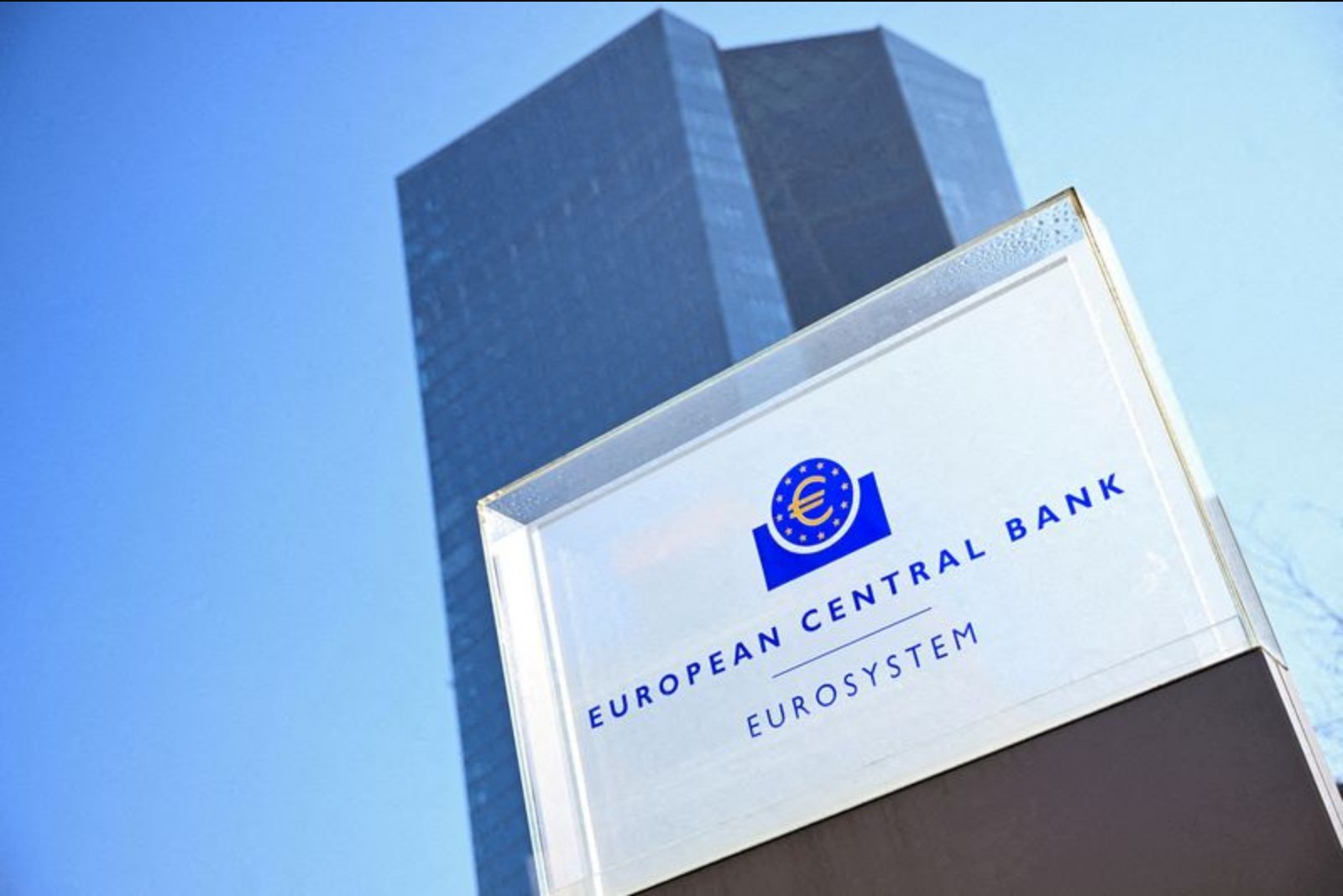
The European Central Bank meets next Thursday under markedly different market conditions than a few weeks ago. A ceasefire in the Iran war has taken some heat out of crude markets and eased the near-term inflation outlook, but the prospect of a lasting resumption of energy supplies through the Strait of Hormuz remains unclear. Traders continue to expect rate hikes later in the year despite the more benign near-term picture.
Where policy stands
Most observers expect the ECB to maintain its policy rate at 2% at the upcoming meeting - a marked shift from market pricing only weeks ago, when a run-up in oil toward $120 prompted traders to bet on an immediate tightening. The subsequent ceasefire has brought oil back down somewhat, and markets now put a higher probability on the ECB holding in April. Even so, officials are likely to make clear they have not ruled out further action later in the year, keeping their options open as new data arrive.
"The ECB can afford to sit tight at the April meeting, collect more evidence, and decide whether it would be appropriate to lean against this shock come the June meeting," said Mark Wall, chief European economist at Deutsche Bank.
Has the ceasefire materially changed the outlook?
In the near term, yes. The retreat in oil prices has brought the economic outlook closer to the baseline the ECB laid out in March, which envisages inflation peaking around 3% this quarter. With natural gas prices also below that scenario, ECB chief Christine Lagarde has said the adverse outcome - in which inflation tops 4% in the second half of 2026 - has not occurred.
Markets have reacted by cutting back bets on immediate rate increases. Still, some economists caution that improvements hinge on how quickly oil production and flows can be revived. "There are a lot of concerns about how long it will take to ramp up (oil) production and get the flow going again," said Anatoli Annenkov, senior European economist at Societe Generale.
Economic effects to date
The primary inflationary channel from the conflict has been higher energy costs. At the same time, indicators point to weakening activity: euro zone business activity contracted in April, services sectors were particularly weak, and factories reported sharply higher production costs and the fastest rise in factory gate prices in 37 months. Inflation rose to 2.6% in March, but core measures that strip out food and energy, as well as services inflation, have eased. April inflation data are due on Thursday and will be closely watched for signs of wider pass-through.
Germany has already adjusted its outlook, cutting growth forecasts for 2026 and 2027 while raising its inflation estimates in response to the war. Policymakers are monitoring whether higher energy prices will broaden into a more generalised inflation that would force a stronger policy response.
How is this shock different from 2022?
Economists flag several contrasts. The current energy shock appears smaller in scale and scope than the surge seen in 2022. Early-warning indicators that signalled the 2022 inflation spike are not flashing this time, and labour markets and economic momentum are weaker now than during the post-pandemic rebound. Notably, inflation was near the ECB's 2% target before the Iran conflict erupted; by contrast, it was well above target when Russia invaded Ukraine in 2022.
Fiscal and monetary backstops are also more constrained. Tight public budgets reduce the ability of governments to offer big support to households and businesses, and financing conditions are not as loose as they were in the immediate post-pandemic period. Europe is not confronted with the same single-source scramble for supplies as it faced with Russia in 2022, and the shock is global rather than Europe-centric. The euro has also held up, unlike in 2022 when a sharper currency depreciation amplified the inflationary impact.
Will the ECB raise rates later in the year?
Market pricing points toward additional tightening, with traders expecting at least two hikes, most likely beginning in June. Nevertheless, the path forward is finely balanced and closely tied to developments in oil markets and shipping through the Strait of Hormuz. Investment managers differ in their views: Insight Investment describes the outlook as roughly a coin toss between two hikes and no further moves if oil remains below $100.
Analysts argue that a modest tightening - for example two rate increases - would not unduly burden the economy but would serve to anchor wage setters and contain inflation expectations. "They do need to put up rates a little bit just to make sure that secondary effects don't kick in," said David Zahn, head of European fixed income at Franklin Templeton.
What markets and sectors should watch most closely
- Energy markets - oil and gas prices will remain the primary driver of both inflation expectations and policy reaction.
- Banking and fixed income - expectations for future ECB moves will affect bond yields and borrowing costs.
- Manufacturing and services - weaker activity readings and costs at the factory gate could shape the degree of policy tightening required.
For now, the ECB appears to be holding a fragile equilibrium: pausing for further information while leaving the door open to action should energy-driven inflation reaccelerate. The next few data releases and developments around energy flows will therefore be decisive in determining whether the pause is a pause in name only or the prelude to renewed tightening later in the year.