
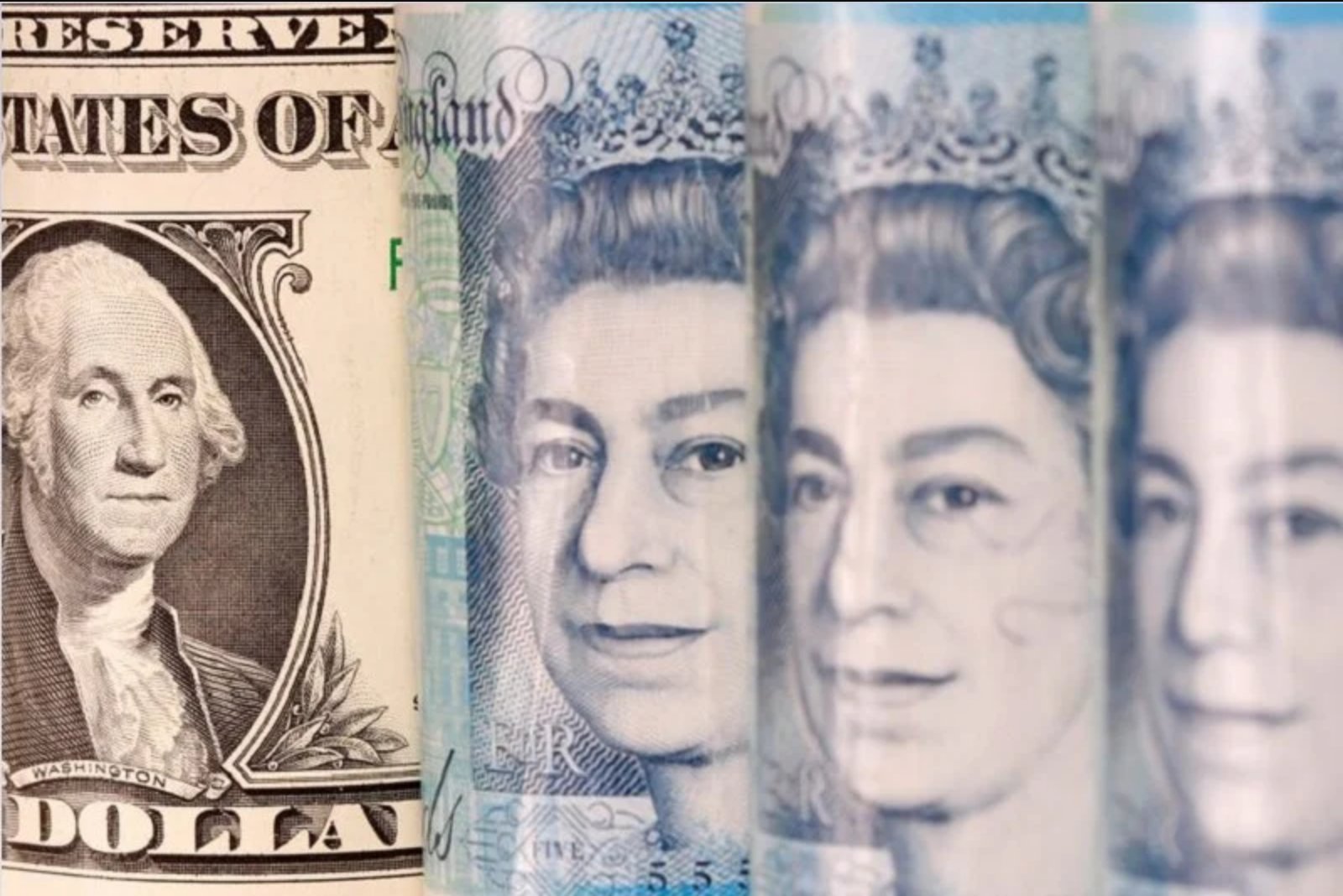
Sterling pushed higher on Thursday, reaching its loftiest level since Aug. 29 as traders recalibrated the outlook for Bank of England policy. The move came even as global oil prices surged and geopolitical risks in the Middle East escalated.
As of 05:10 ET (09:10 GMT), GBP/USD was trading at 1.3554, up 0.07%. EUR/USD was also firmer, quoted at 1.1639, up 0.08%.
Market attention was split between the energy complex and central bank expectations. Brent crude moved above $100 a barrel for the first time since July, while political tensions intensified after Iran signalled readiness to heighten the conflict and U.S. President Trump warned the war is likely to continue until just after the November midterm elections.
Despite the rise in oil, sterling’s advance has largely been driven by a reassessment of how aggressive the Bank of England may become. Traders generally do not anticipate an immediate rate increase at the next BoE meeting, but they are pricing in at least two hikes by March next year and assign approximately a 40% probability to a third increase in that window. By contrast, markets currently expect only two Federal Reserve rate hikes over the same period.
Data have reinforced the case for tighter policy in the UK. Consumer price inflation accelerated to 2.9% in July from 2.6% in June, supporting speculation that monetary authorities may need to move further to contain inflationary pressures. At the same time, higher oil and gas prices add strain to an economy that imports a large share of its energy needs.
The Bank of England has sought to cool some of the more forceful market bets. Governor Andrew Bailey has highlighted that additional monetary tightening is not certain, and officials have pointed to elevated oil prices and the fiscal risks associated with the upcoming autumn Budget as sources of uncertainty.
Turning to the dollar, ING FX strategist Francesco Pesole noted that weak price action for the U.S. currency persisted through most of Wednesday until the U.S. Treasury disclosed a $6 billion long-term bond buyback. That operation was triple the amount conducted in August but fell short of the roughly $10 billion the market had been speculating about.
"The currency market is unlikely to shelve the debasement narrative just yet," Pesole said. He added that the buyback announcement "could help create a better environment for the dollar, potentially allowing it to respond more efficiently to external drivers such as higher oil prices and weaker equities, both USD positives."
Pesole flagged upcoming U.S. inflation data as important. He said Thursday’s producer price index release would attract attention ahead of Friday’s consumer price index and next week’s Federal Open Market Committee meeting. "Unless inflation delivers material downside surprises today or tomorrow, the conditions appear in place for DXY to return to 99.0," he said.
The euro experienced a short-lived gain on Wednesday before reversing course after the Treasury’s buyback disclosure. Pesole attributed the moves to a 7-8 basis-point tightening in EUR/USD two-year swap differentials, which he said was "entirely the result of an almost 10bp rise in the euro leg." He linked that activity to energy-price spillover and positioning ahead of the European Central Bank decision on Thursday.
ING expressed scepticism about the extent of hawkish pricing in euro-area markets. The bank said markets were pricing around 50 basis points of ECB tightening by the end of the year and about 85 basis points by next July, forecasts ING said may not be validated. "We aren’t convinced," Pesole said, adding, "We doubt the ECB is ready to semi-commit to another hike by year-end, as it did in July," pointing to softer inflation projections and tensions in eurozone bond markets.
Looking ahead, ING expects some downward repricing in the euro curve that could allow EUR/USD to test 1.160 again ahead of next week’s FOMC meeting, and the bank has a one-month target of 1.150.
Summary
Sterling strengthened to its highest level since Aug. 29 as markets increased the probability of further Bank of England rate hikes, even as Brent crude surpassed $100 a barrel and Middle East tensions rose. GBP/USD and EUR/USD were modestly higher early Thursday, with traders weighing UK inflation data, BoE commentary and U.S. Treasury operations as they positioned ahead of upcoming U.S. inflation releases and central bank meetings.
Key points
- GBP/USD rose to 1.3554, up 0.07%, while EUR/USD traded at 1.1639, up 0.08% as of 05:10 ET (09:10 GMT).
- Markets now price at least two Bank of England hikes by March next year, with about a 40% chance of a third; investors expect only two Fed hikes in the same period.
- UK consumer price inflation accelerated to 2.9% in July from 2.6% in June, strengthening expectations for tighter BoE policy amid rising energy import costs.
Risks and uncertainties
- Rising oil and gas prices increase inflationary pressure and pose downside risks to real incomes and growth, affecting sectors sensitive to energy costs such as transportation and manufacturing.
- Escalation of Middle East tensions could amplify market volatility, influencing commodity prices and risk sentiment across equities and fixed income markets.
- Central bank signalling - particularly from the BoE and ECB - and upcoming U.S. inflation prints introduce policy uncertainty that could shift currency and bond markets rapidly.