
Summary
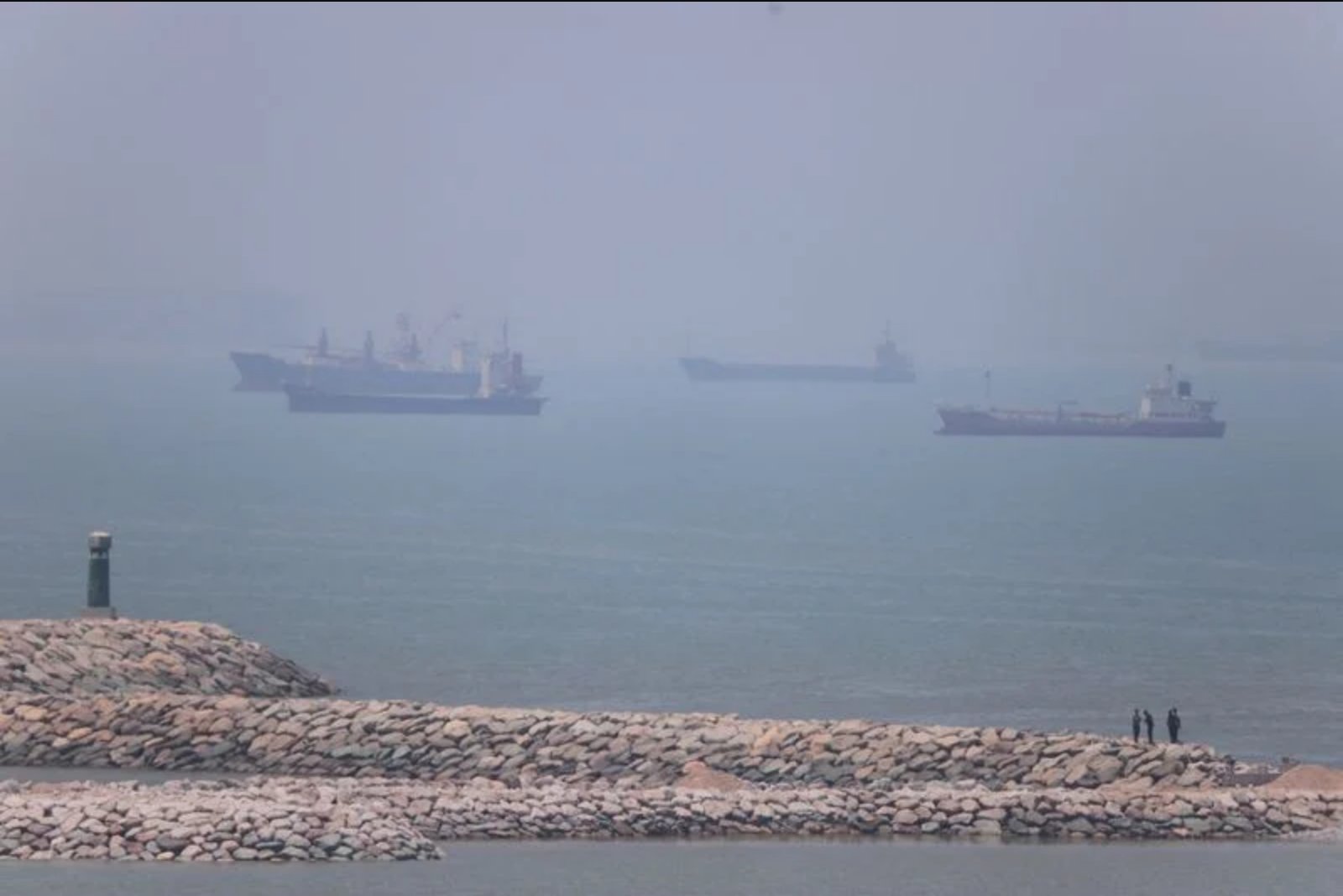
Hours after the presidents of the United States and Iran signed an interim accord to end their conflict, tracking feeds recorded three Saudi-flagged supertankers carrying a total of 6 million barrels of crude transiting the Strait of Hormuz. The ships were broadcasting their locations as they moved through the waterway following weeks in which many vessels concealed voyages by switching off transponders. Additional tankers were observed loading in and moving from the United Arab Emirates' Fujairah terminal.
Movements through the strait
Ship-tracking data indicated that three Saudi-flagged supertankers, collectively transporting 6 million barrels of crude oil, passed through the Strait of Hormuz on Thursday. These departures from Saudi ports represented the largest number of Saudi-origin vessels to use the strait in weeks, according to an analysis of shipping movements. The vessels were broadcasting their positions as they transited the waterway, a change from recent weeks when many ships concealed routes by turning off automatic identification system transponders.
Historically, Saudi Arabia shifted much of its exports through the Red Sea port terminal at Yanbu after the effective closure of the Strait of Hormuz during the conflict. That change in routing prevented hundreds of millions of barrels of oil from departing Gulf ports and strained regional producers' shipping options.
Saudi Arabian shipping group Bahri, which manages the three supertankers involved in the transit, did not immediately respond to a request for comment.
Additional Gulf-region cargo activity
In a further indication of renewed maritime activity, three separate crude tankers were observed loading oil around the port of Fujairah in the United Arab Emirates, located outside the strait. Tracking data showed two of those Fujairah-loaded tankers were already en route to Europe with their cargoes.
Fujairah had been among the terminals struck during the war, which started on February 28 when the U.S. and Israel attacked it. The strikes contributed to disruptions that kept some terminals and shipping lanes under duress during the conflict.
Individual vessel movements and ownership
The Hong Kong-flagged Aframax tanker Tong Lin Wan, which loaded naphtha from Abu Dhabi’s Ruwais Refinery in early March and had remained within the Gulf since then, transited the Strait of Hormuz on Thursday, ship-movement data showed. The QatarEnergy-controlled liquefied natural gas tanker Mraikh also crossed the strait on Thursday, with data showing it had loaded cargo at Ras Laffan on June 12-13 and was scheduled to deliver to Port Qasim, Pakistan on June 18. QatarEnergy did not immediately respond to a request for comment.
Another Hong Kong-flagged medium-range tanker, Ye Chi, sailed past Iran’s Larak island and later stopped at the Strait of Hormuz, according to tracking data. Data further showed that both Tong Lin Wan and Ye Chi are managed by COSCO Shipping Energy Transportation. COSCO Shipping did not immediately respond to a request for comment.
Industry reaction and ongoing caution
Despite the uptick in vessel movements, shipping and insurance industry officials expressed continued caution on Thursday, seeking greater detail and assurances about the terms of the agreement. A senior U.S. official said the United States would allow Iran to immediately begin selling oil and fuel under the memorandum of understanding.
INTERTANKO, which represents independent tanker owners globally, said the industry required clarity on safety of navigation and called for mine clearance to begin "at the earliest point". The group also said mine danger areas should be published so that ships can have confidence in transit routes. Tim Wilkins, Managing Director of INTERTANKO, said that "ships should be assured that they will no longer be subject to attack" and added that some vessels would naturally begin to move.
Sheila Cameron, CEO of the Lloyd’s Market Association, said additional clarification was needed around sanctions, terrorism legislation and toll payments. Cameron noted that restoring normality in the Gulf will be a complex and lengthy process and said it will take months for international shipping to resume regular patterns, given vessels that are out of position and distorted supply chains. Her association represents underwriting interests in the Lloyd’s of London insurance market.
What this means for shipping and markets
The observed movements mark an initial response from commercial shipping to the interim agreement, with some vessels returning to transit the Strait of Hormuz and port activity resuming at Fujairah. However, industry groups and insurers stressed that several operational and legal uncertainties remain before broader shipping flows are likely to normalize.
The full resumption of pre-conflict routing and schedules will depend on the publication of mine danger areas, the start of mine clearance operations, and clarity on sanctions and other regulatory or security risks that affect underwriters and vessel operators.