
Markets initially responded to the Federal Reserve's latest policy decision with higher bond yields and a pullback in U.S. equities, but a concurrent diplomatic development out of the Middle East quickly redirected investor focus.
The Fed left its target range for the federal funds rate unchanged at 3.50%-3.75%, as widely expected. Market commentary noted a hawkish tilt in the statement and in subsequent communications that suggested a tightening bias, prompting an initial rise in short-term Treasury yields and a selloff on Wall Street that extended even to high-profile private firms such as SpaceX.
Despite that initial reaction, global markets shifted course on the release of a 14-point memorandum of understanding between the United States and Iran. The MoU, signed by both President Donald Trump and Iranian President Masoud Pezeshkian, includes a package of measures that, as described in the document, would bring an immediate end to hostilities on all fronts including Lebanon, restore maritime traffic through the Strait of Hormuz - "with no charge" - and lift the U.S. blockade of Iranian ports.
Under the terms detailed in the memorandum, the United States would waive sanctions on Iran, unfreeze Iranian assets and provide a $300 billion investment fund dedicated to post-war reconstruction in the Islamic Republic. The MoU also stipulates a 60-day toll-free window for shipping through the Strait of Hormuz, though the document leaves unclear whether the toll arrangement will persist beyond that period.
Energy markets reacted swiftly. Brent crude slipped to roughly $78 per barrel early on Thursday, marking a three-and-a-half-month low as traders priced in expectations of higher and less-constrained flows through the narrow waterway that anchors global oil shipments. That drop in oil coincided with a lift in broader investor sentiment, with major Asian stock indexes registering record highs and U.S. futures turning positive before the opening bell.
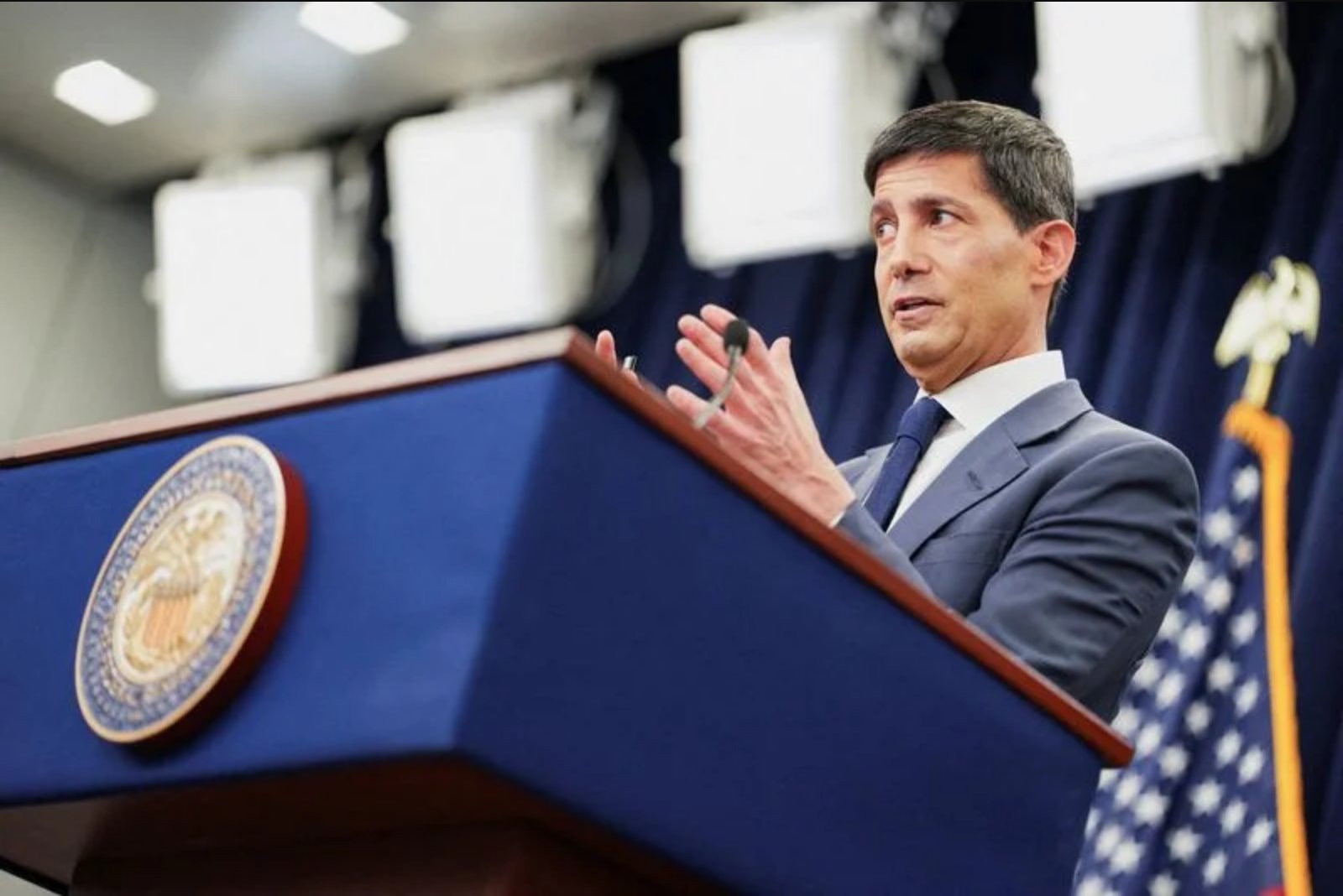
Back in Washington, the Fed's messaging signaled a change in tone under incoming leadership. The period now framed as the Kevin Warsh era began with a Fed statement that removed much of the forward guidance seen in prior communications. Market pricing adjusted to reflect a greater probability of another rate increase, with futures markets factoring in a possible hike as soon as September. Short-term Treasury yields reached levels not seen in 16 months on Wednesday.
At his post-meeting remarks, Kevin Warsh told reporters the Fed would "deliver on price stability." The new quarterly projections released alongside the policy decision, which Warsh did not take part in, showed that nine of 19 policymakers expected an additional rate increase by the end of 2026.
Political noise around the Fed also surfaced. President Donald Trump, who had earlier criticized former Fed Chair Jerome Powell for not easing policy, responded to the policy shift by indicating he would be guided by Warsh's views. That followed signals in recent weeks from the president that he would afford the new chair some policy leeway.
Investors took note of the Fed's move toward brevity in its statement language - a leaner communications approach that suggests a quieter, less telegraphed era of policymaking under Warsh.
Chart of the day
United Kingdom consumer price inflation held at a 13-month low of 2.8% in May. The gauge showed lower food prices offsetting rising airfares and arrived just ahead of a Bank of England policy decision scheduled for Thursday, where rates are widely expected to be held at 3.75% while the BoE assesses potential spillovers from the U.S.-Iran agreement.
Market moves and context
On Wednesday, the S&P 500 and the Nasdaq each closed down by more than 1%, while shorter-dated Treasury yields climbed to their highest point in 16 months. These moves reflected the market's initial read of the Fed's tone - a greater willingness to keep policy restrictive - and the prospect of additional tightening later in the year.
Yet the diplomatic breakthrough with Iran dominated trading on Thursday, with oil weakening and Asian equities rallying. Wall Street futures were trading higher in early activity as investors adjusted positions in response to the new geopolitical landscape and to the Fed's more concise guidance framework.
Events to watch
- U.S. weekly jobless claims - 8:30 a.m. EDT
- Philadelphia Fed Business Index - 8:30 a.m. EDT
- 5-year TIPS auction - 1 p.m. EDT
- Bank of England interest rate decision - 7 a.m. EDT
These data points and policy decisions will be watched closely for signals on labor market resilience, regional manufacturing conditions, demand for indexed Treasury securities and how the BoE interprets shifting energy and inflation dynamics in light of the U.S.-Iran memorandum.
Bottom line
The Fed's hold at 3.50%-3.75% came with a hawkish undertone that initially lifted yields and pressured U.S. equities, but the diplomatic accord between the United States and Iran quickly became the dominant market driver. The MoU's provisions, especially the immediate restoration of toll-free maritime traffic through the Strait of Hormuz and the sizeable reconstruction fund for Iran, pushed oil lower and helped propel Asian stock benchmarks to record levels. Central banks, including the Bank of England, will have to weigh these developments as they assess inflationary pressure and the case for sustained policy stances in the months ahead.