
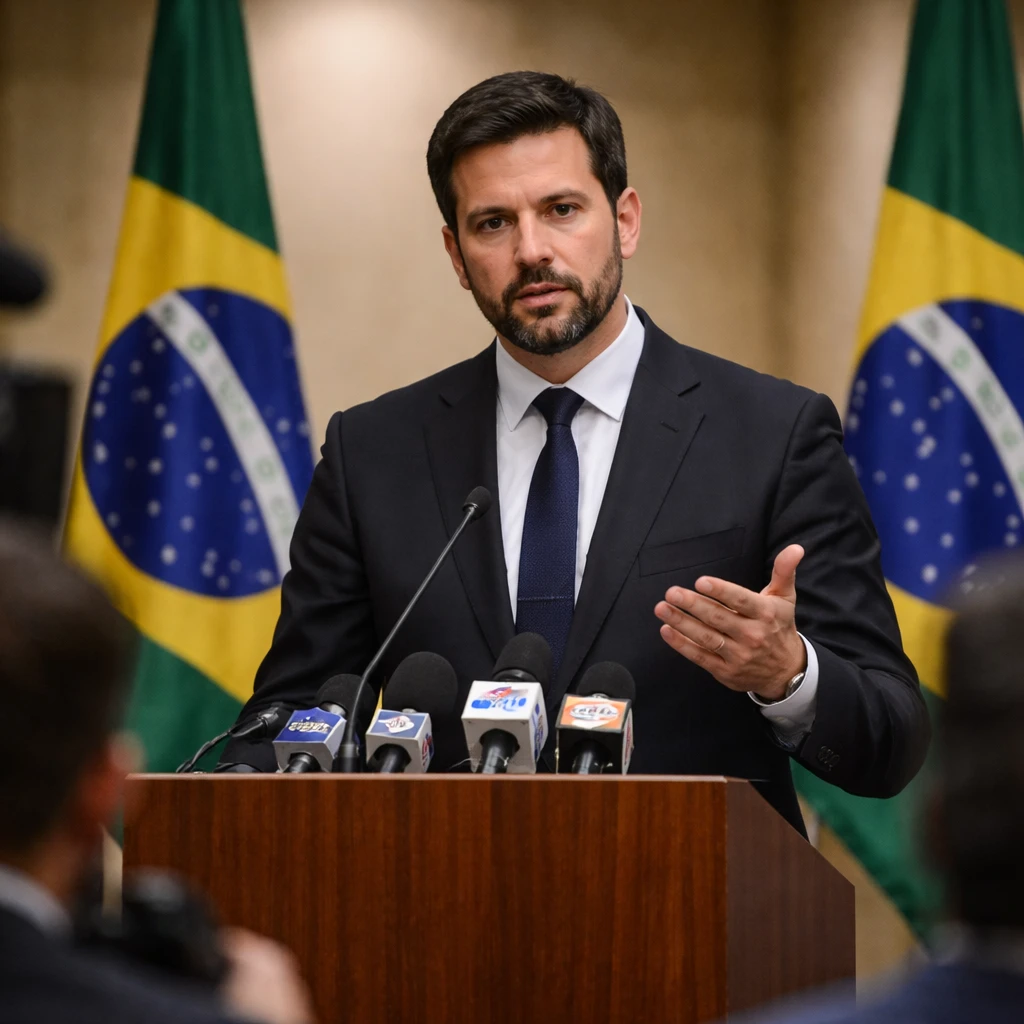
Brazil's Finance Minister Dario Durigan said on Thursday that there is scope for more reductions in the country's benchmark interest rate, but underscored that the central bank alone determines monetary policy.
The central bank cut the Selic rate to 14.25% at its most recent meeting on Wednesday, marking the third consecutive session in which policymakers moved to lower borrowing costs. Despite the easing bias, the bank flagged a worsening inflation picture - revising price projections upward and citing greater upside risks - and left the path for future policy actions uncertain.
Durigan said the government has taken concrete fiscal measures aimed at reining in price pressures, including the decision to block 23 billion reais (about $4.51 billion) in budget spending. He framed the withholding of those funds as fiscal tightening that should help support the work of monetary authorities in stabilizing inflation.
Addressing past remarks related to inflation measurement, Durigan clarified his position on potential changes to the index used to track price movements. He stated that he respects the current inflation readings and denied ever proposing swapping the official index in response to rising prices. Rather, he said his endorsement was limited to studies intended to modernize the methodology so that it better mirrors present-day household consumption patterns.
The minister's comments reinforce a separation of roles between the executive branch and the central bank: while the government is pursuing fiscal steps to curb inflation, responsibility for setting the policy rate remains with monetary authorities. At the same time, the central bank's acknowledgement of higher inflation projections introduces uncertainty about how soon or how quickly the easing cycle might continue.
Clear summary - Durigan signaled that further rate cuts could still occur, highlighted fiscal actions to limit inflationary pressures, and stressed that monetary policy choices rest with the central bank, which trimmed the benchmark rate to 14.25% for the third straight meeting even as it warned of a worsening inflation outlook.
Economic and market context - The interplay between fiscal restraint and central bank decisions frames near-term expectations for interest rates and inflation. The finance ministry's blocked spending is presented as a supportive measure for monetary policy, while the central bank's revised inflation path leaves future rate moves uncertain.