
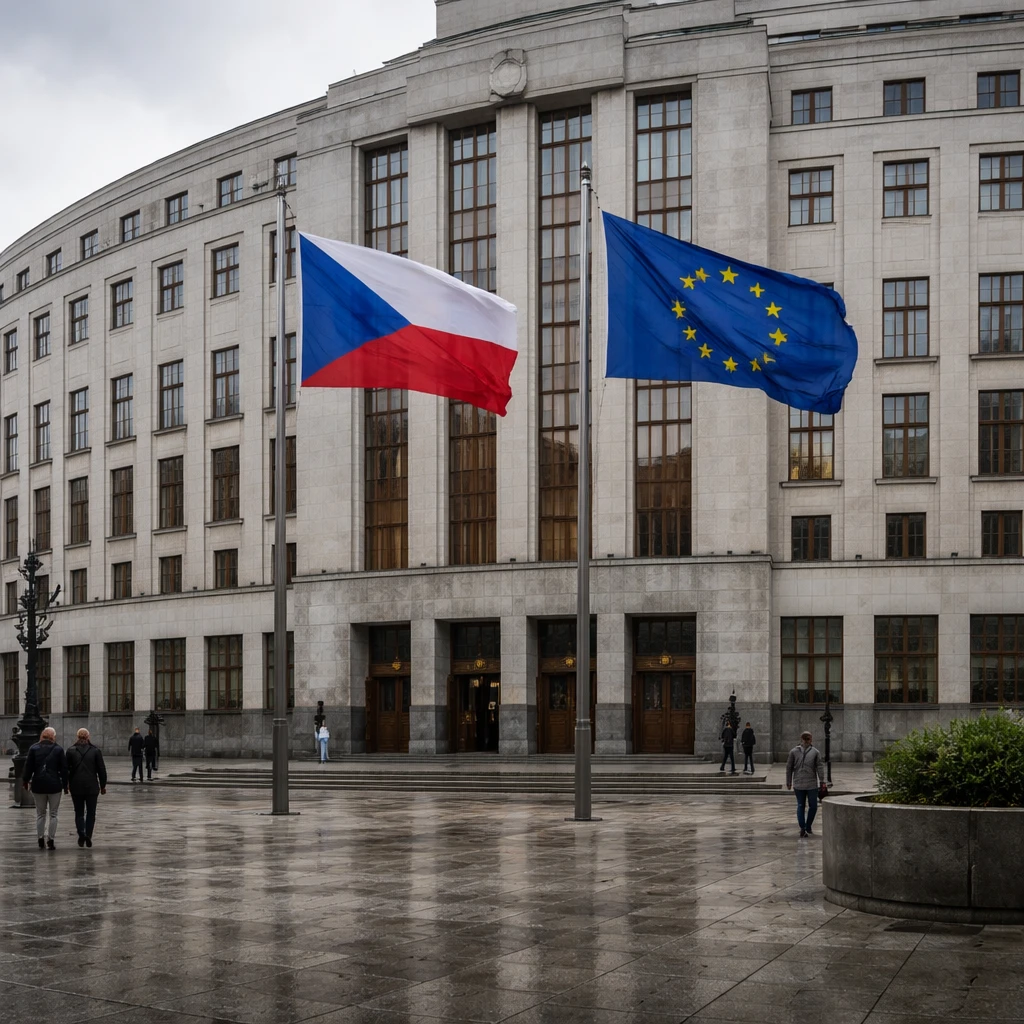
The Czech National Bank increased its main interest rate by 25 basis points on Thursday, taking the policy rate to 3.75% in what is the bank's first rate hike in four years. The move was presented as a response to mounting inflationary pressures originating from wage growth, higher prices in the services sector and economic impacts linked to the recent conflict in Iran.
Officials indicated that these domestic and external pressures had altered the inflation outlook sufficiently to justify a tightening of monetary policy. The 25 basis point adjustment was widely anticipated: most analysts surveyed by Reuters had forecast the rate rise, and financial markets had already factored the change into prices ahead of the decision.
Expectations for further increases have moderated in recent days. Market-implied probabilities of additional tightening declined after an interim agreement between the United States and Iran this week that aims to end the hostilities that began following U.S. and Israeli air strikes on Iran in February. That conflict had disrupted energy flows by prompting the closure of the Strait of Hormuz, a key route for global oil and gas shipments, which in turn pushed oil prices sharply higher.
Oil has since retreated from its peaks above $100 per barrel to below $80, a movement that appears to have reduced near-term pressure on inflation expectations. Nevertheless, markets still assign a non-zero chance of one more Czech rate increase before year-end.
Background and market reaction
The bank's decision reflects concerns about wage-driven cost pressures and inflation concentrated in services, combined with spillovers from geopolitical shocks. Because most market participants had already priced in the move, immediate financial market responses were muted. The near-term path of rates will likely depend on how wages, services inflation and external energy-price dynamics evolve.
Outlook
While the central bank has acted to address current inflationary signals, recent diplomatic developments and the easing of oil prices have reduced the immediacy of additional tightening. As a result, market expectations for further rate increases have softened, though the possibility of another small hike by year-end remains on the table according to prevailing market pricing.