
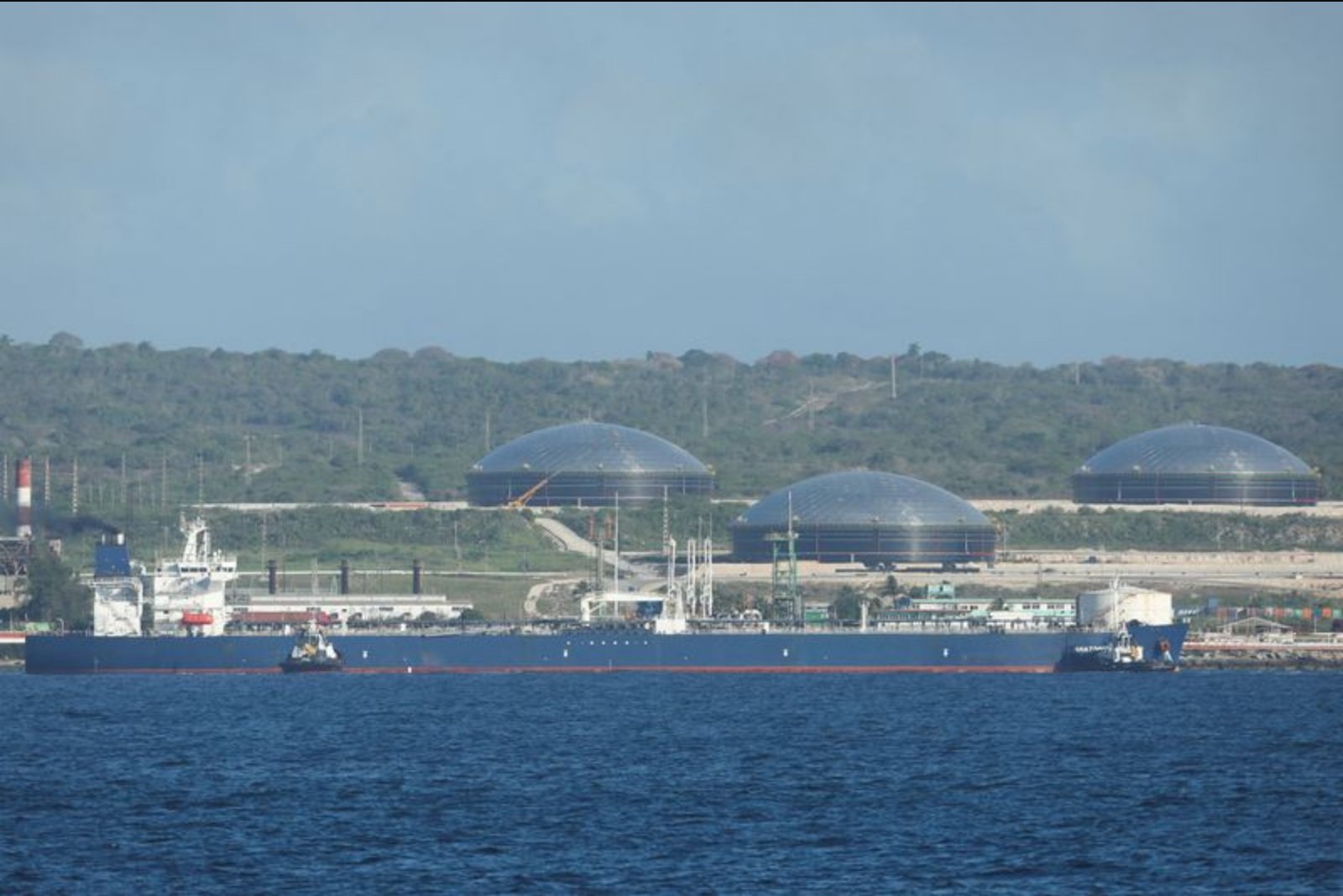
Cuba began to see an immediate though temporary improvement in its energy situation this week after a major delivery of Russian crude oil reached the island late last month. The Russian-flagged tanker Anatoly Kolodkin offloaded roughly 700,000 barrels of Urals crude in late March at Matanzas Bay, a shipment reported as the first significant cargo since the United States tightened fuel access earlier this year.
The U.S. administration allowed the delivery to proceed on what it described as "humanitarian" grounds. Cuban authorities refined the imported crude at the Cienfuegos refinery and started to release finished products - including gasoline, diesel and fuel oil - beginning on April 17, according to government statements.
The incoming fuel has had an observable impact on electricity availability in parts of the country. After nearly four months of extended, hours-long rolling outages that strained daily life for Cuba's roughly 10 million residents, some neighborhoods reported markedly fewer blackouts during the past week.
Residents in Havana described the change. "Putin’s boat has improved the situation, and we’re thankful for it," said Yani Cabrera, a 45-year-old private sector worker who lives in the capital.
Russia's embassy in Havana posted a celebratory message on its social media accounts, writing "Hurray!" and sharing drone footage that showed the city illuminated at night.
Officials caution the supply is temporary
Energy Minister Vicente de la O Levy cautioned viewers on state-run television that the relief afforded by the shipment would not be durable. He said Cuba would need eight shipments of comparable size each month to satisfy the island's generation and industrial needs. "What we’ve got left (of the Russian fuel delivery) is just a few days’ worth, until the end of the month," he said.
Russian officials indicated another delivery is being prepared for Cuba, but at the time of the statements that shipment had not yet been dispatched.
Broader diplomatic and supply context
The temporary respite comes while Cuba's government remains engaged in talks with the U.S. administration, which has signaled that "change" is forthcoming in relations. Washington has long pressed Havana to open its state-run economy, to compensate for properties expropriated under the previous government of then-leader Fidel Castro, and to hold what the U.S. describes as "free and fair" elections. Cuba has repeatedly stated that its socialist political system is not a subject for negotiation.
Earlier this year the United States imposed additional sanctions and curtailed the flow of Venezuelan oil to Cuba after the removal from power of Venezuelan President Nicolas Maduro on January 3. The U.S. also warned it would impose punitive tariffs on any country that supplied crude to Cuba, a threat that prompted Mexico, a prior supplier, to halt shipments.
The fuel shortages that preceded the recent Russian shipment contributed to three major national blackouts and led several foreign airlines to suspend flights to the island.
Not all residents feel fully relieved by the new supply. "The Russian boat won’t solve our problem, but it has been a relief," said Ester Isasis, a 70-year-old retiree in Havana. She added that a persistent shortage of cooking gas meant she still had to cook over charcoal. "We’re still living very stressed."
Key takeaways
- The Russian delivery provided immediate but temporary relief to Cuba's fuel and electricity shortages.
- Cuban authorities estimate they need eight comparable shipments per month to meet energy and industrial demand.
- Diplomatic friction with the United States, and prior halts to Venezuelan and Mexican supply, remain central constraints on Cuba's energy security.
Impacted sectors
- Power generation and utilities - affected by fuel availability for electricity production.
- Transportation and airlines - disruptions and suspensions tied to fuel shortages.
- Household energy use and retail fuel markets - direct effects on cooking fuel and gasoline/diesel availability.
Risks and uncertainties
- Short-term supply gap - Officials say the current shipment covers only a few days' worth of fuel, leaving the country vulnerable if further deliveries do not materialize.
- Reliance on external suppliers - Cuba's energy security depends on regular foreign shipments; diplomatic pressure or trade restrictions could disrupt future inflows.
- Operational and logistical constraints - Even with additional shipments, refining, distribution and storage capacity may limit how quickly fuel eases shortages across the island.
Note: The article reports statements by Cuban officials, residents and diplomatic accounts regarding the recent Russian crude delivery and related developments. It does not include additional analysis beyond the information provided by those sources.