
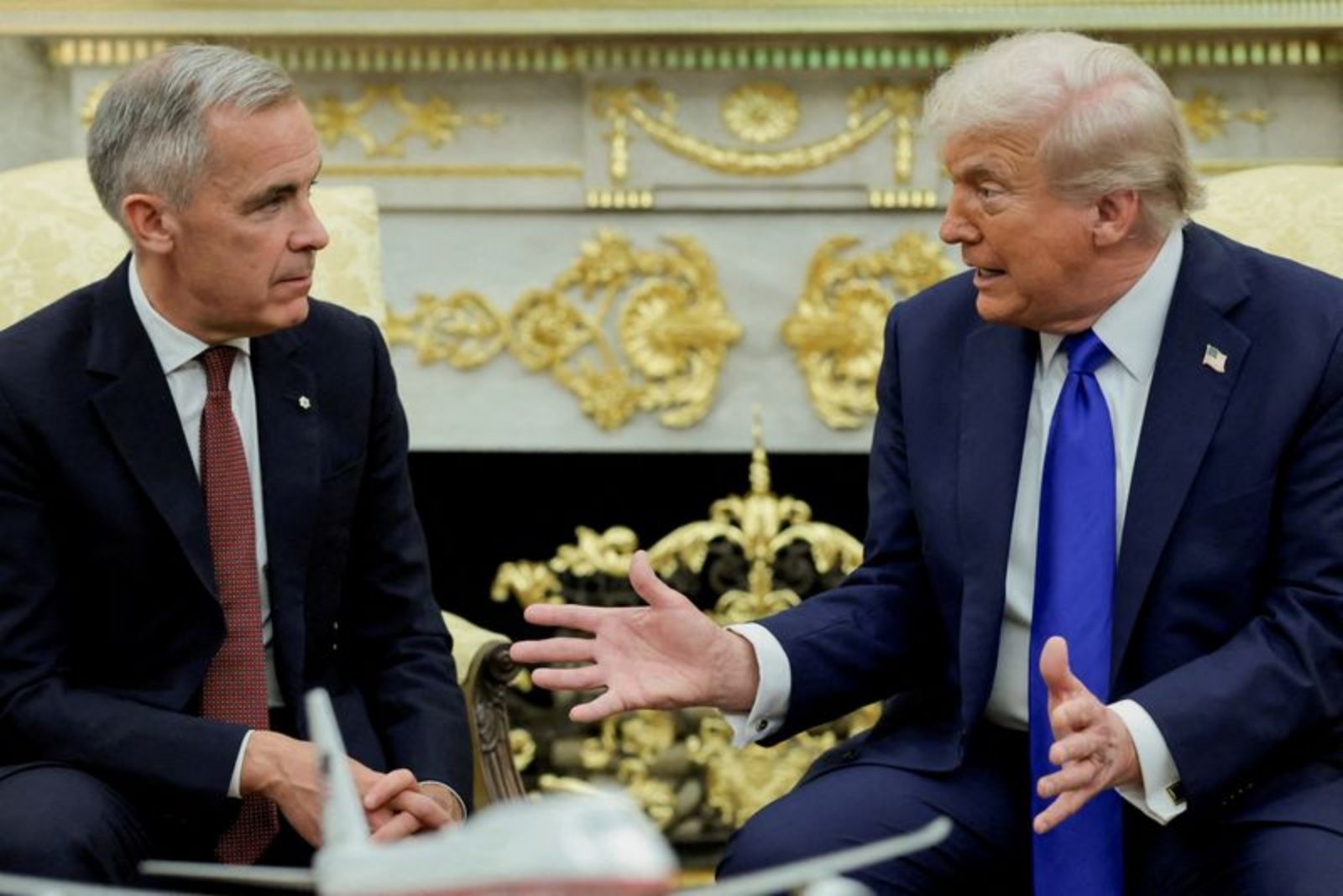
Prime Minister Mark Carney told reporters on Thursday that U.S. President Donald Trump has not raised the concept of Canada paying an "entry fee" as a precondition for beginning the scheduled review of the United States-Mexico-Canada Agreement (USMCA).
The trilateral review is due to conclude by July 1, but Carney said the calendar has been made more difficult by bilateral tensions stemming from tariffs the United States imposed on key imports from Canada last year. He reiterated that while Washington has already set out a list of concessions it would like Canada to make, he has not heard any administration official - including the president - describe those requests as an entry fee.
"I don’t know where the talk of an entry fee is from. It’s certainly not coming from me, it’s not language I’ve ever used, and it’s not language I’ve ever heard from the president of the United States," Carney said.
Carney also rejected the idea that Canada would simply follow U.S. instructions on the review process. He said Ottawa stands ready to undertake detailed negotiations but is prepared to wait if necessary. "We’re not sitting here taking notes and taking instruction from the United States... we’re ready to go into detailed negotiations. We’re also ready to wait, if that’s what has to happen," he told reporters, adding he remained confident that progress could be made.
Canadian officials have signalled that completing the review by the July 1 deadline is unlikely. They have stressed a preference for resolving all outstanding items with the United States at once rather than addressing them separately. Dominic LeBlanc, the federal minister responsible for trade with the United States, told the Globe and Mail newspaper that Ottawa would not make a string of concessions simply to secure a meeting or secure a preliminary statement, only to be presented with an additional set of demands later.
"We’re not going to make a series of concessions... just to get to a table and have a statement appear on a website in the United States (and) then receive a whole second list of things that they’re going to want," LeBlanc said.
The comments underscore the continuing friction between Ottawa and Washington over tariff measures and the sequencing of negotiations. Canadian officials have emphasized an approach that treats all outstanding issues collectively, signalling resistance to a piecemeal settlement that might leave unresolved matters for later rounds. At the same time, Ottawa maintains it is prepared to engage in detailed talks when conditions allow, and indicated a willingness to delay the process rather than accept what it views as incomplete or staged concessions.
Context limitations: The statements reflect the positions relayed by Canadian officials; they do not document any instance in which the U.S. president or other U.S. officials used the term "entry fee."